

DEX
A visual and motion language for Singapore’s data exchange: two films that turn dense data networks into a system you can follow.
- Client
- Hakuhodo Singapore & DEX (a subsidiary of IMDA Singapore)
- Role
- Creative Direction, Motion System Design, 3D Look Development
- Studio
- Robot Playground Media with The Other Lab Co.
- Disciplines
- Motion System Design3D DirectionBrand Identity
The challenge
Mapping the abstract
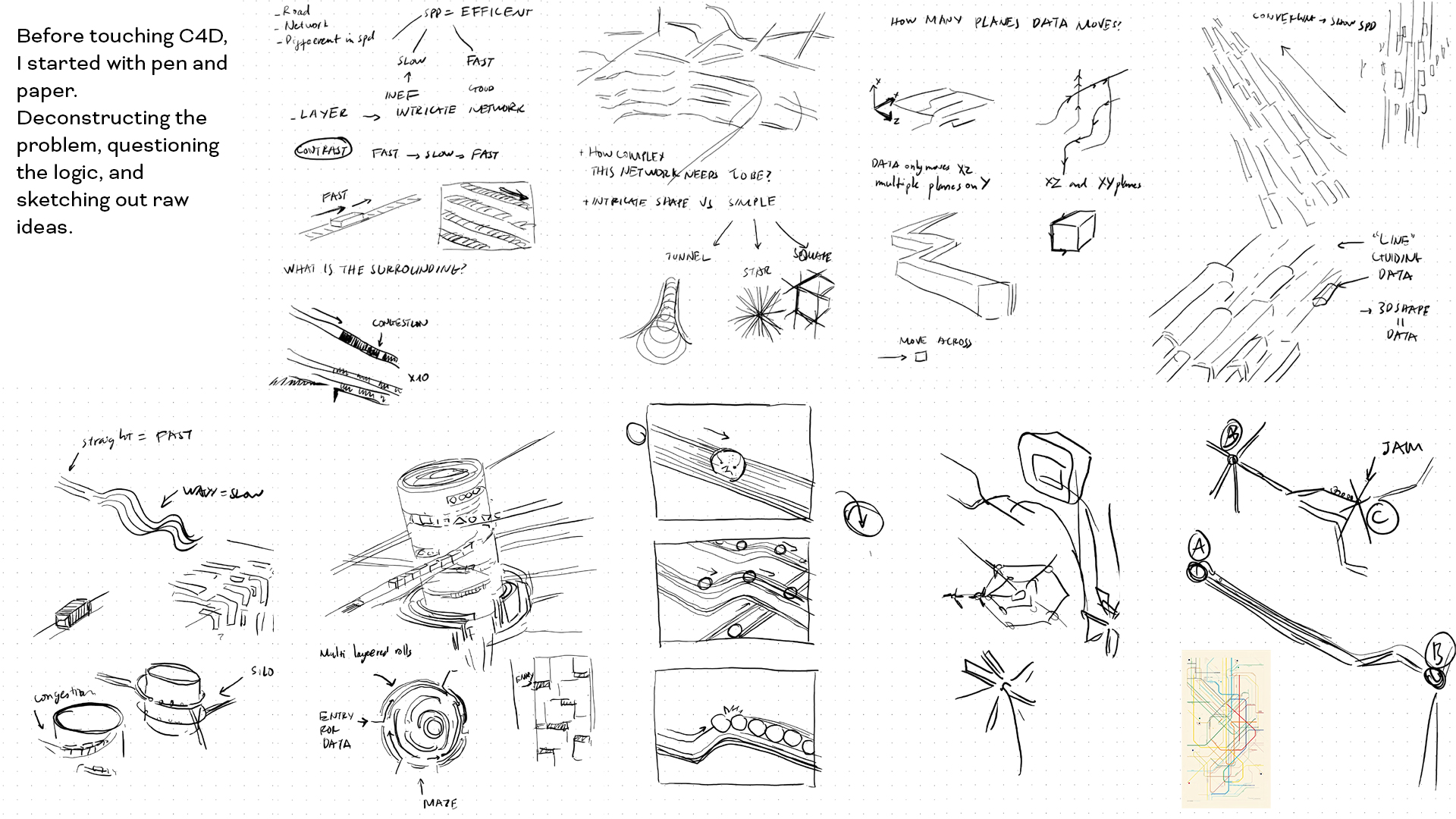
I was handed a stack of data-infrastructure charts from an industry I knew nothing about: dense, technical overload. Instead of getting bogged down in the mechanics, we worked backwards and focused on the why before touching the how. We used the simplest whiteboard drawings and raw sketches to map the core system before thinking about style frames.
Defining the motion language
I joined right after early pre-production, when style references were loosely set and a few technical explainer shots for Video 1 were already soft-locked. My job was to engineer the visual system and motion language for the whole DEX brand universe: one scalable system that starts from microscopic data elements and builds up to industry-wide networks.
The structure
Both films follow a two-part timeline. The first part is tailored to the chaos of each video: disjointed file formats and network traffic jams. The second is a shared resolution, where every data shape streamlines and locks into the clean DEX framework.
Video 1: SGBuildex
The construction industry’s pain point
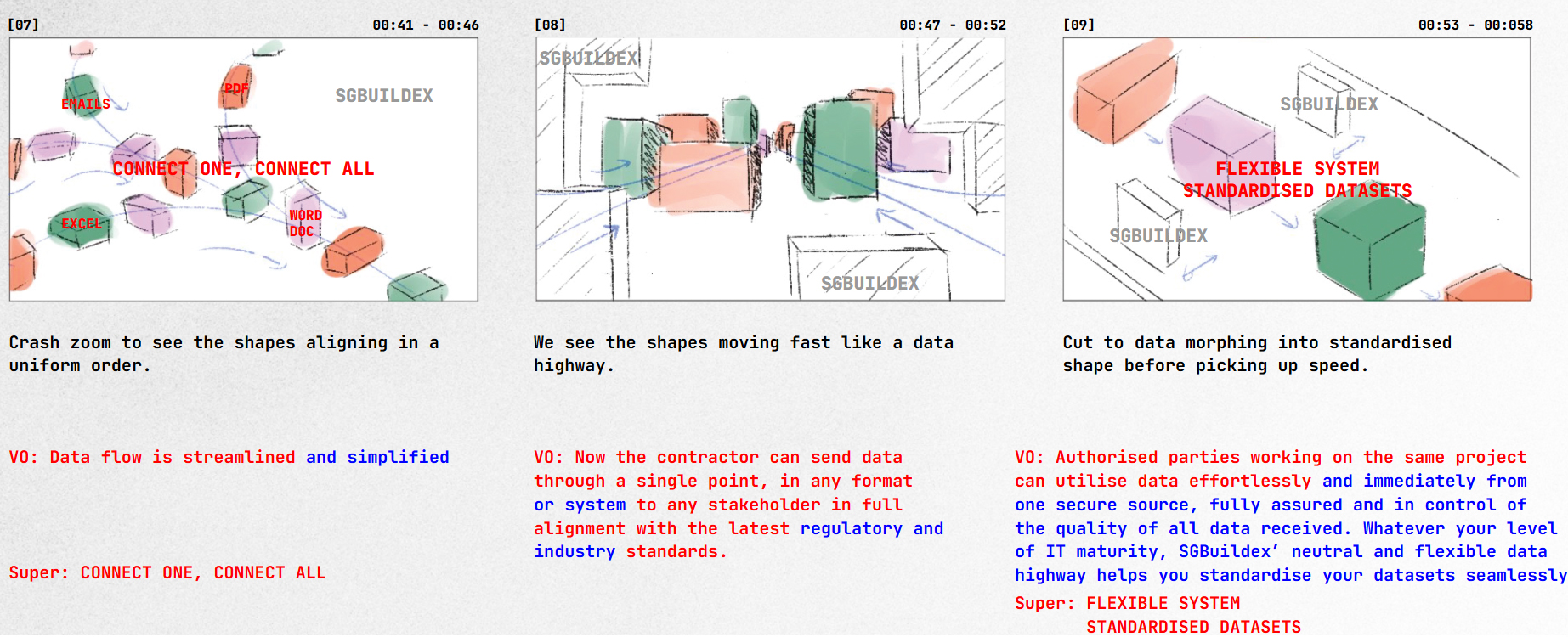
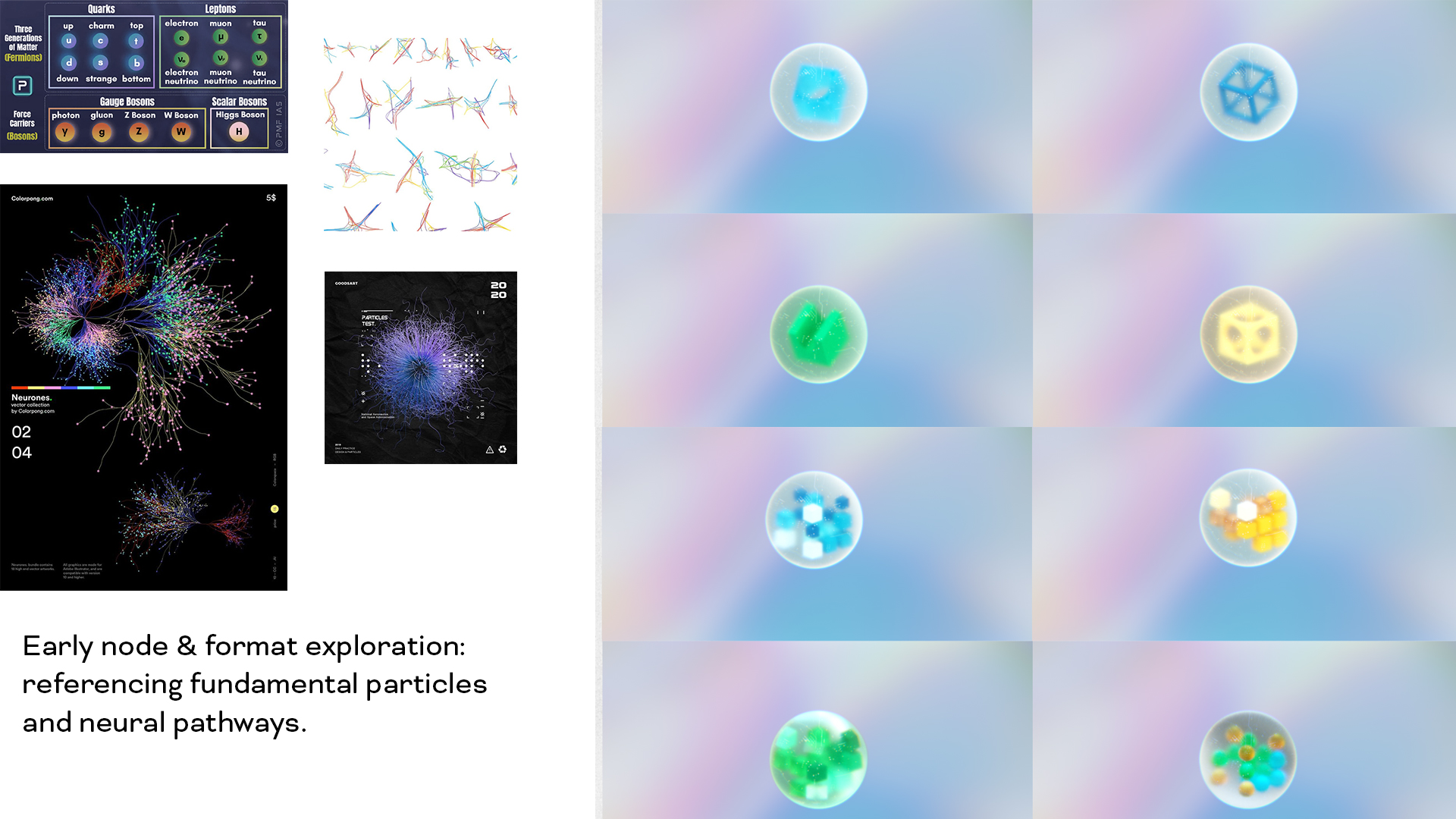
The brief for the first film was specific: rigid, blocky and technical, to speak to the built-environment industry. The base idea was information mapping, small bits of data packing into bytes and scattering out to stakeholders and destinations.
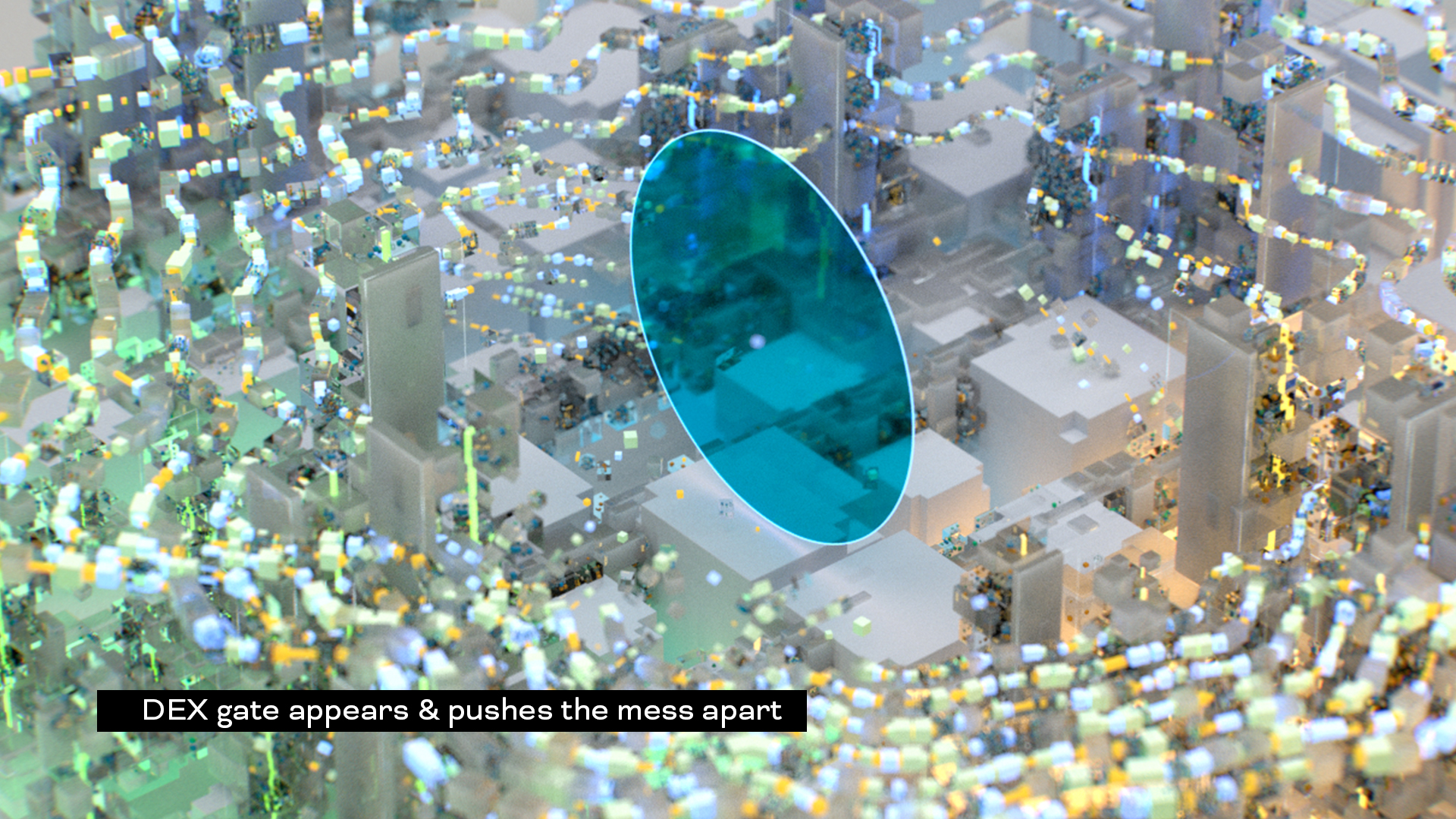
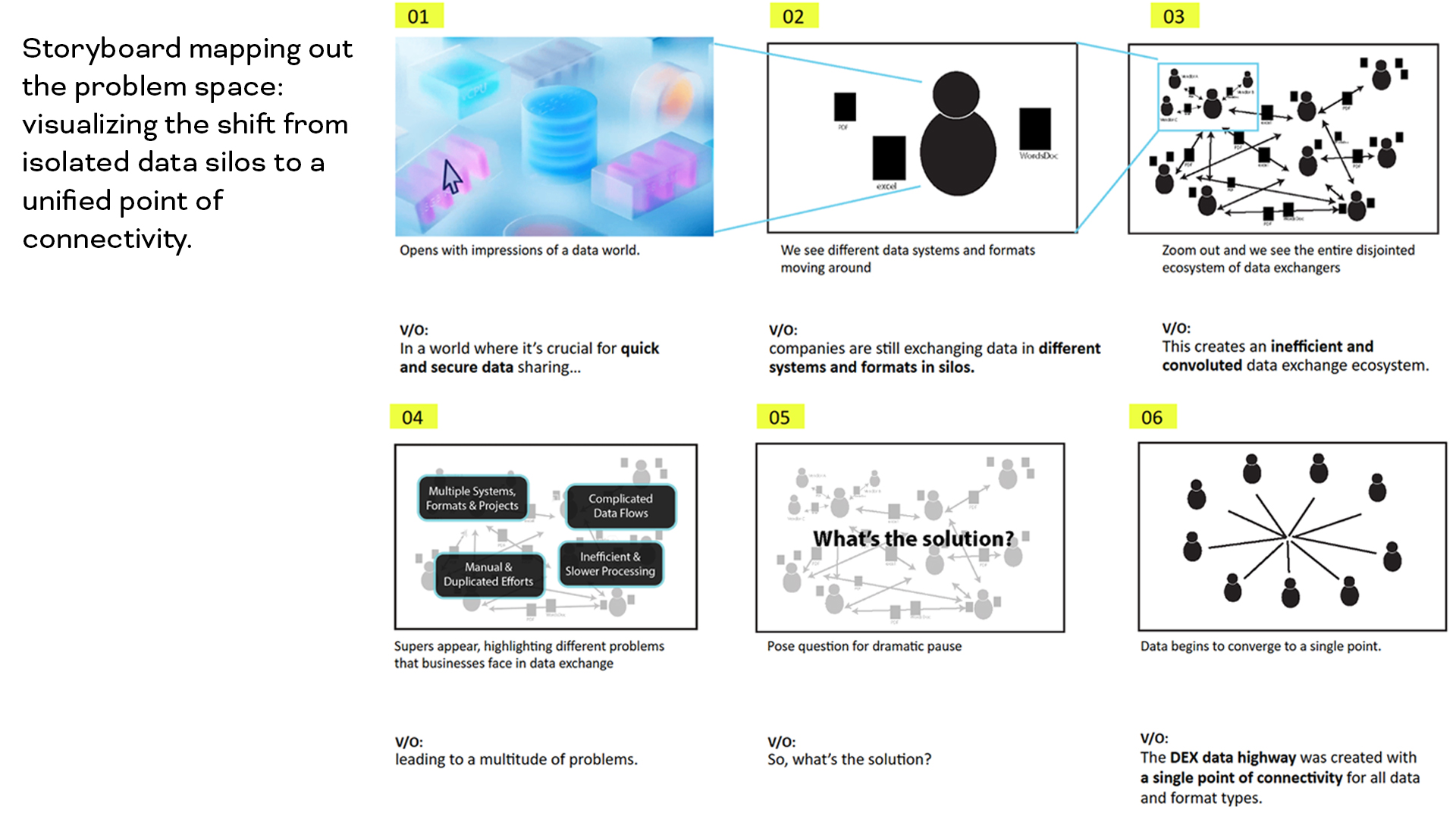
Today’s ecosystem works like a bad logistics route: a train to one neighbourhood for one material, a motorbike across town for another, a cab somewhere else for the rest. DEX had to be the shortcut, one highway where all traffic passes through a single processing gate.
Building blocks
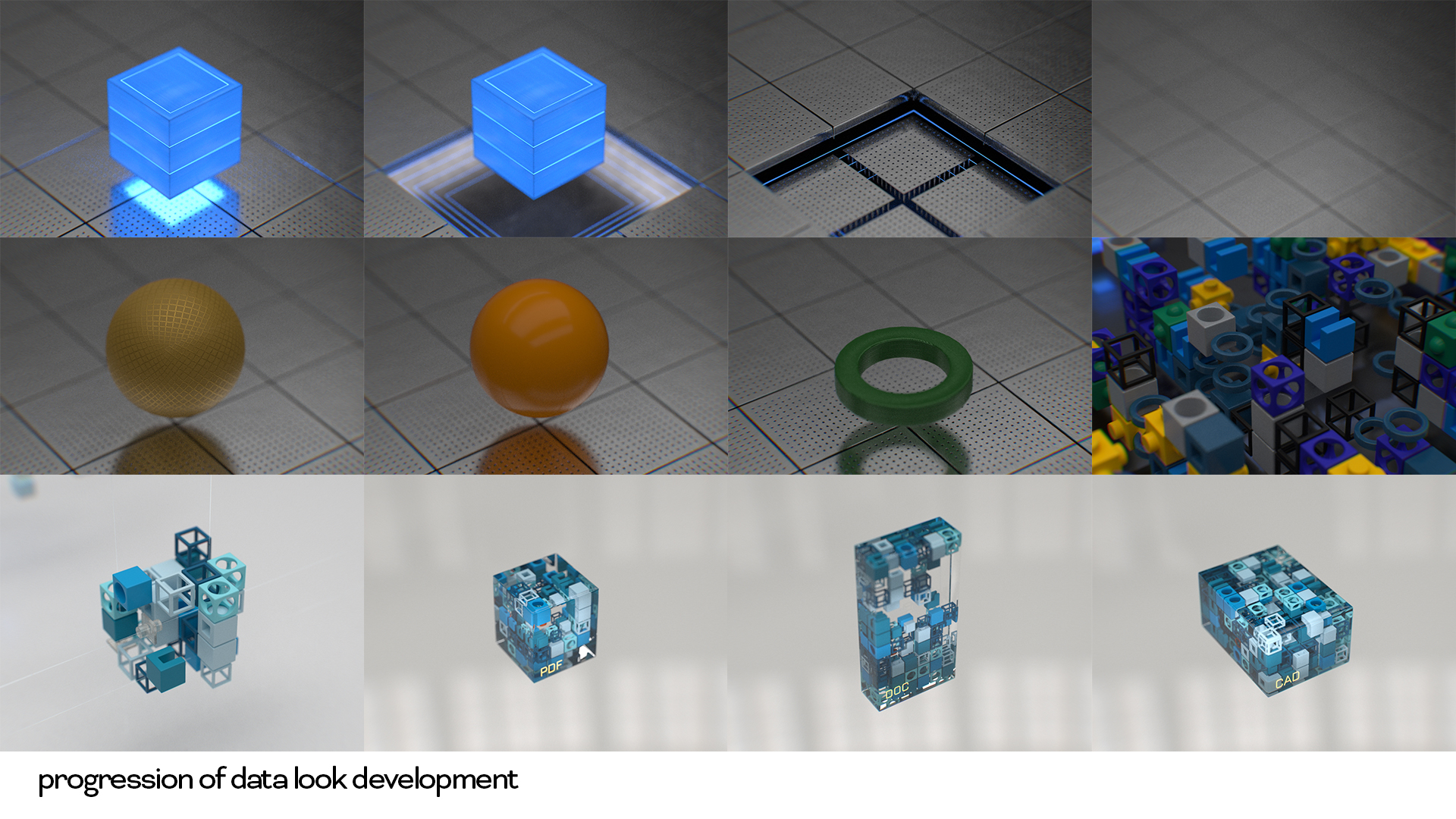
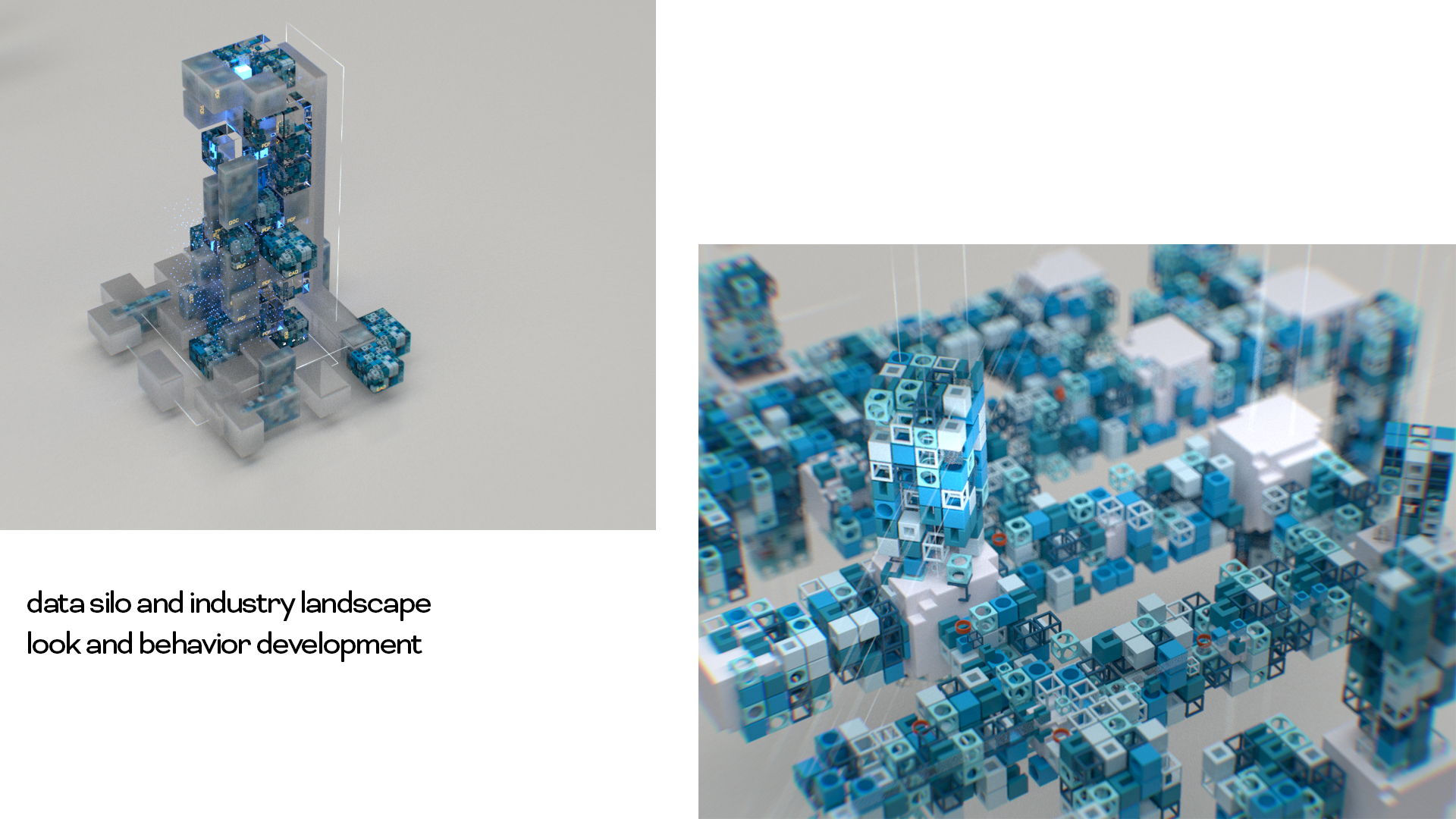
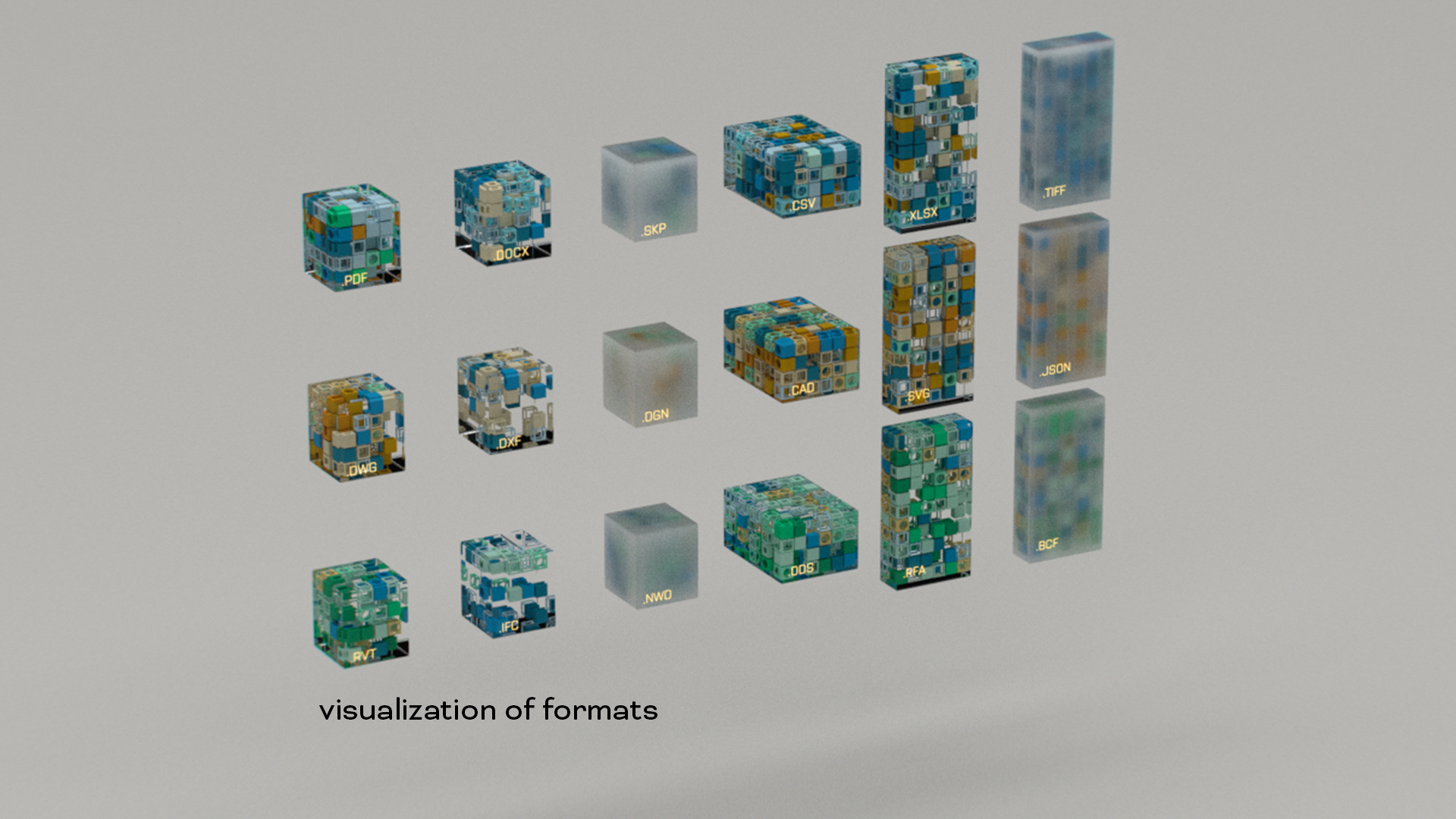
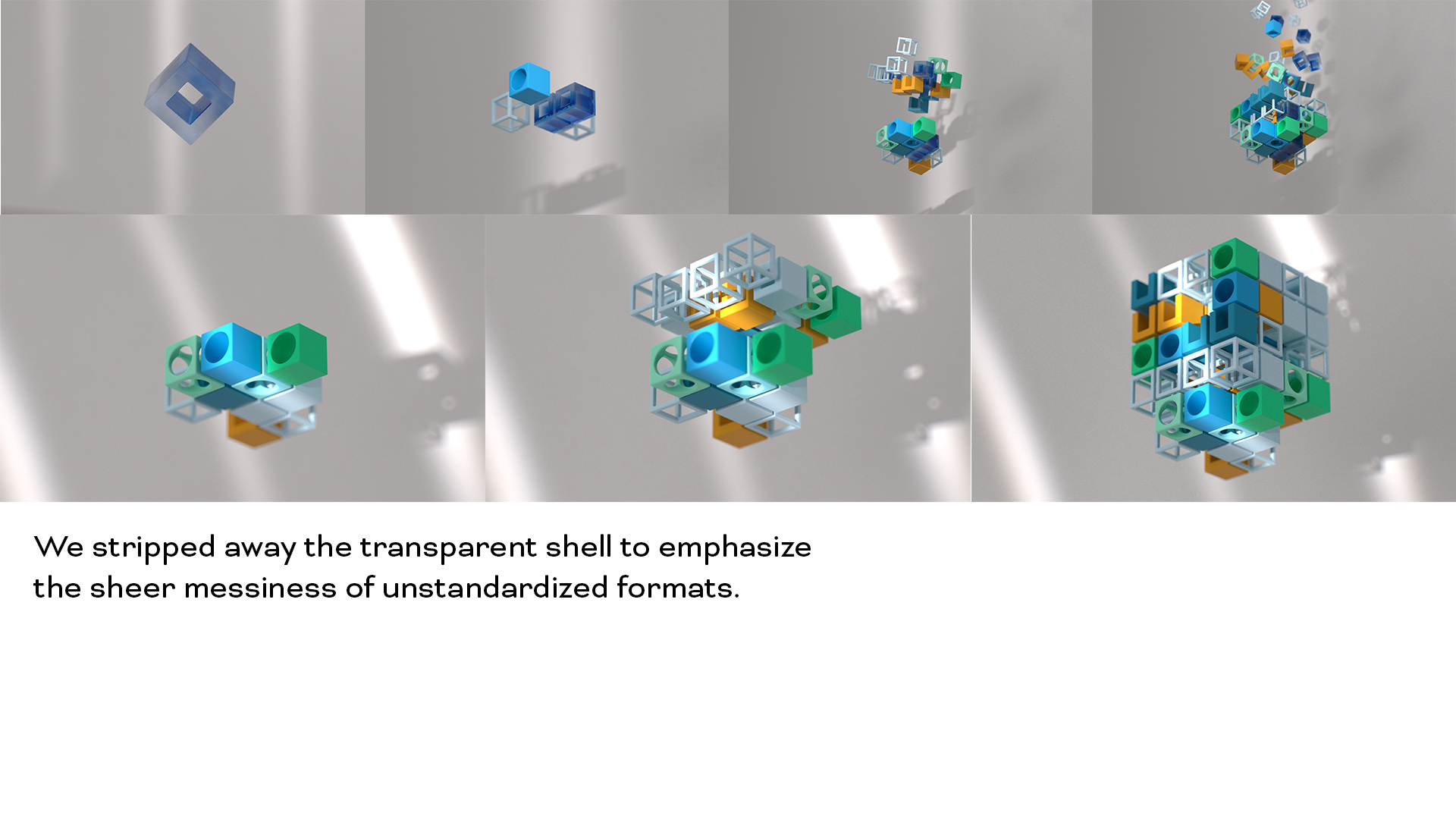
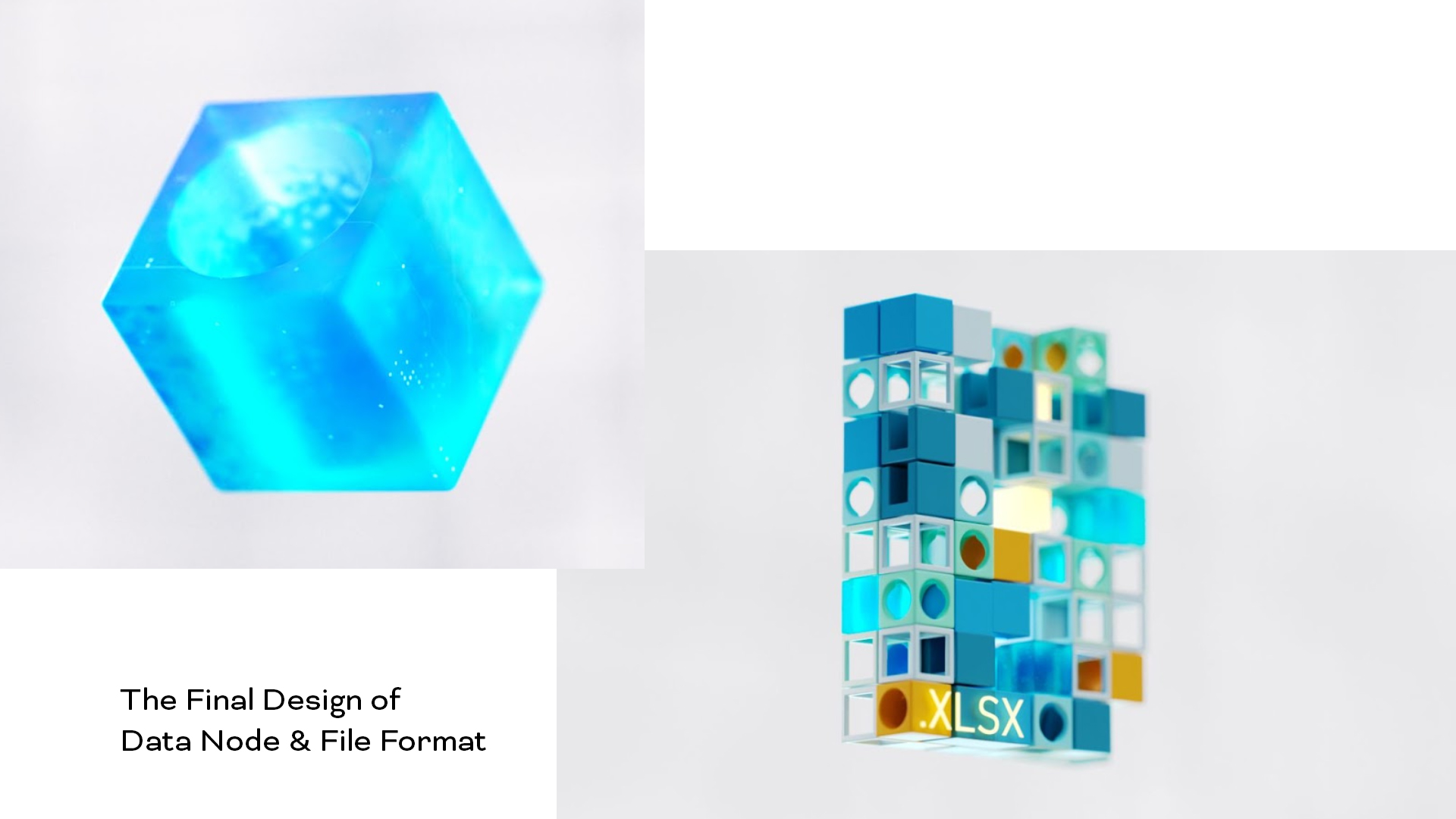
We started with a cube. It is the classic SaaS trope, but here it works because the construction industry reads it as a brick. Distinct silhouettes (full blocks, hollow units, U-shapes) stand for the variety of raw data, grouped into recognisable file formats like Excel sheets and PDFs: organised, but still cluttered.
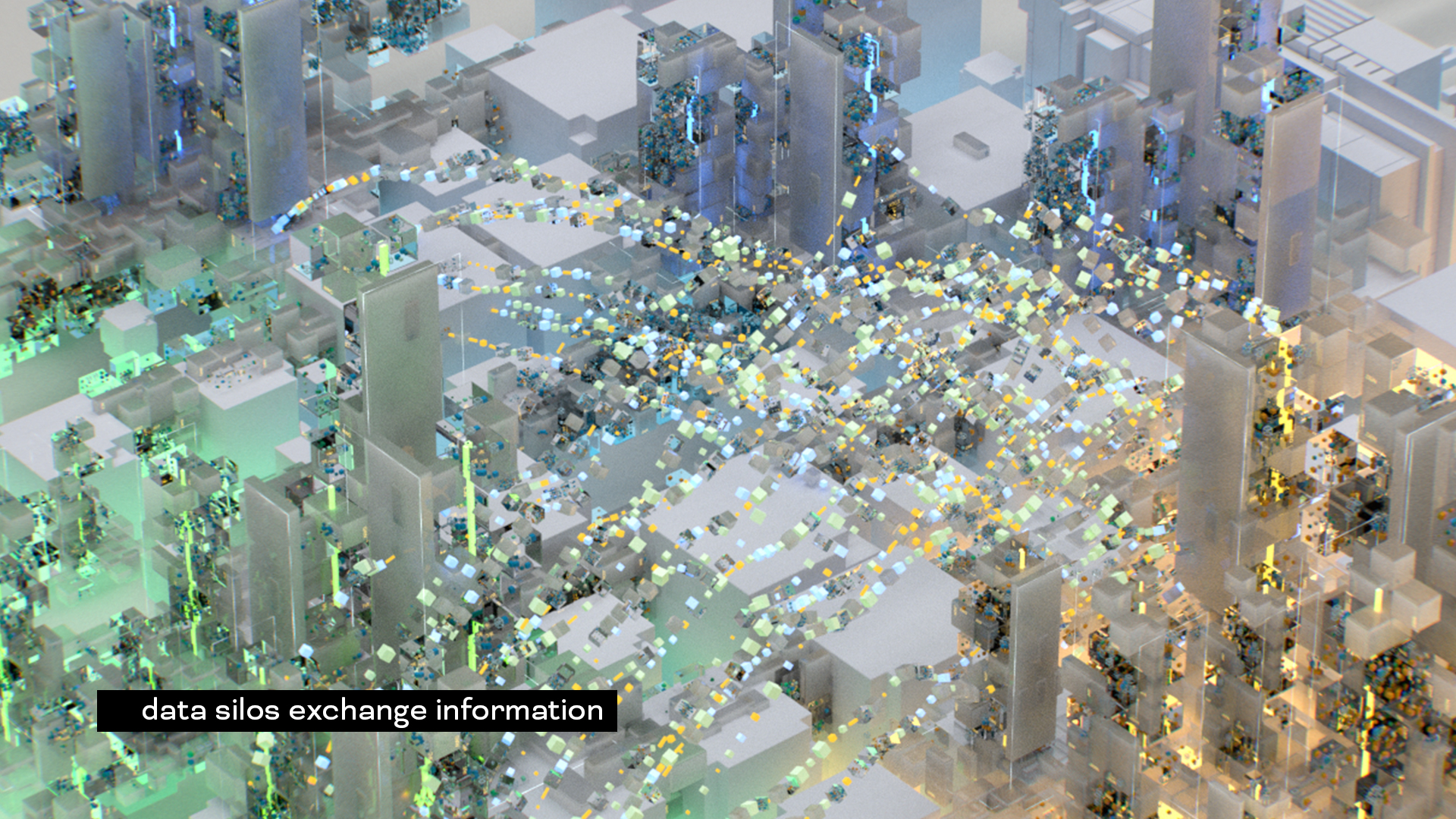
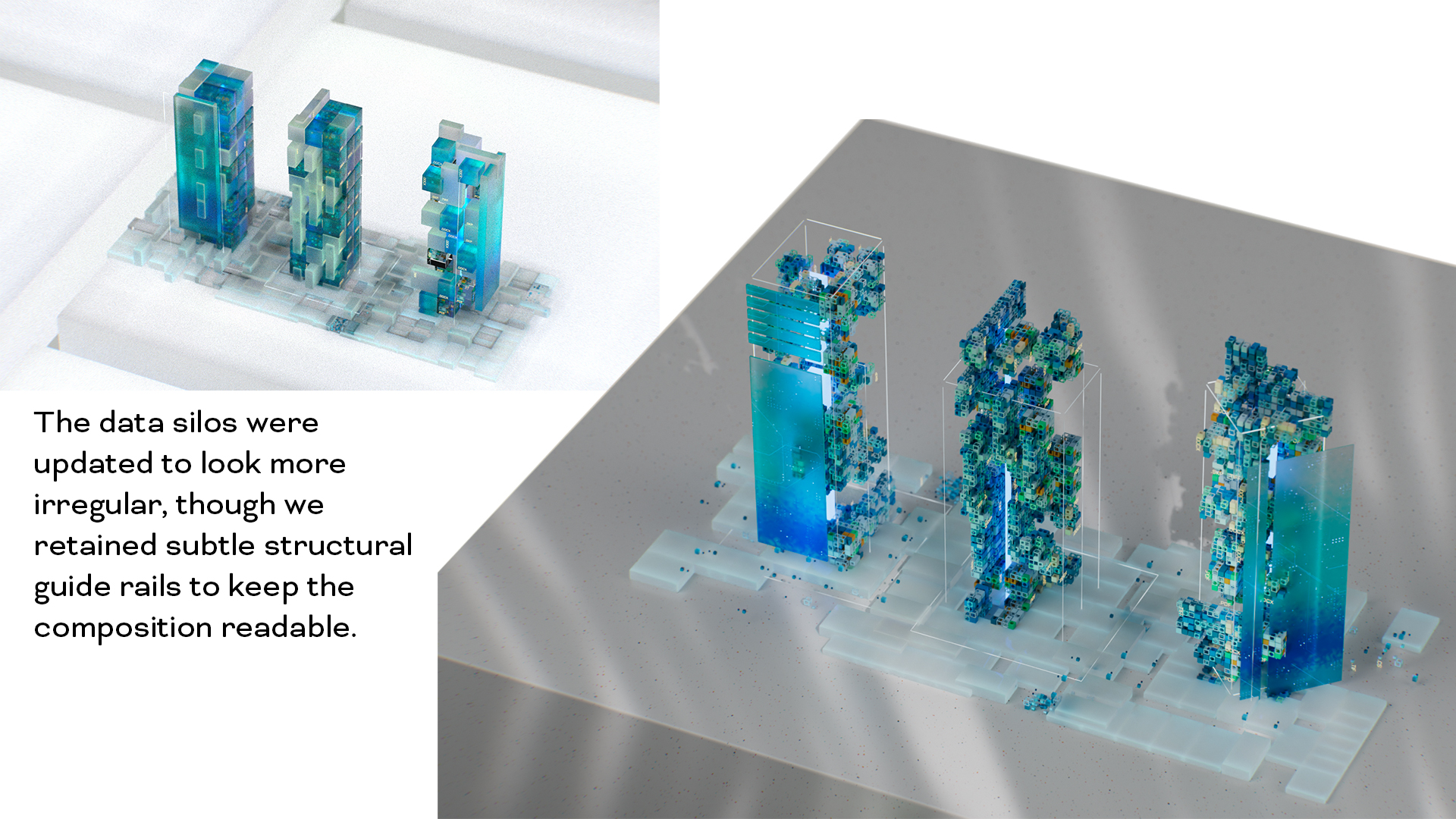
Those loose formats clump into giant information silos, a high-rise slum of data that looks great on screen and is terrible to extract anything from.
Video 2: DEX brand
Network traffic, reimagined
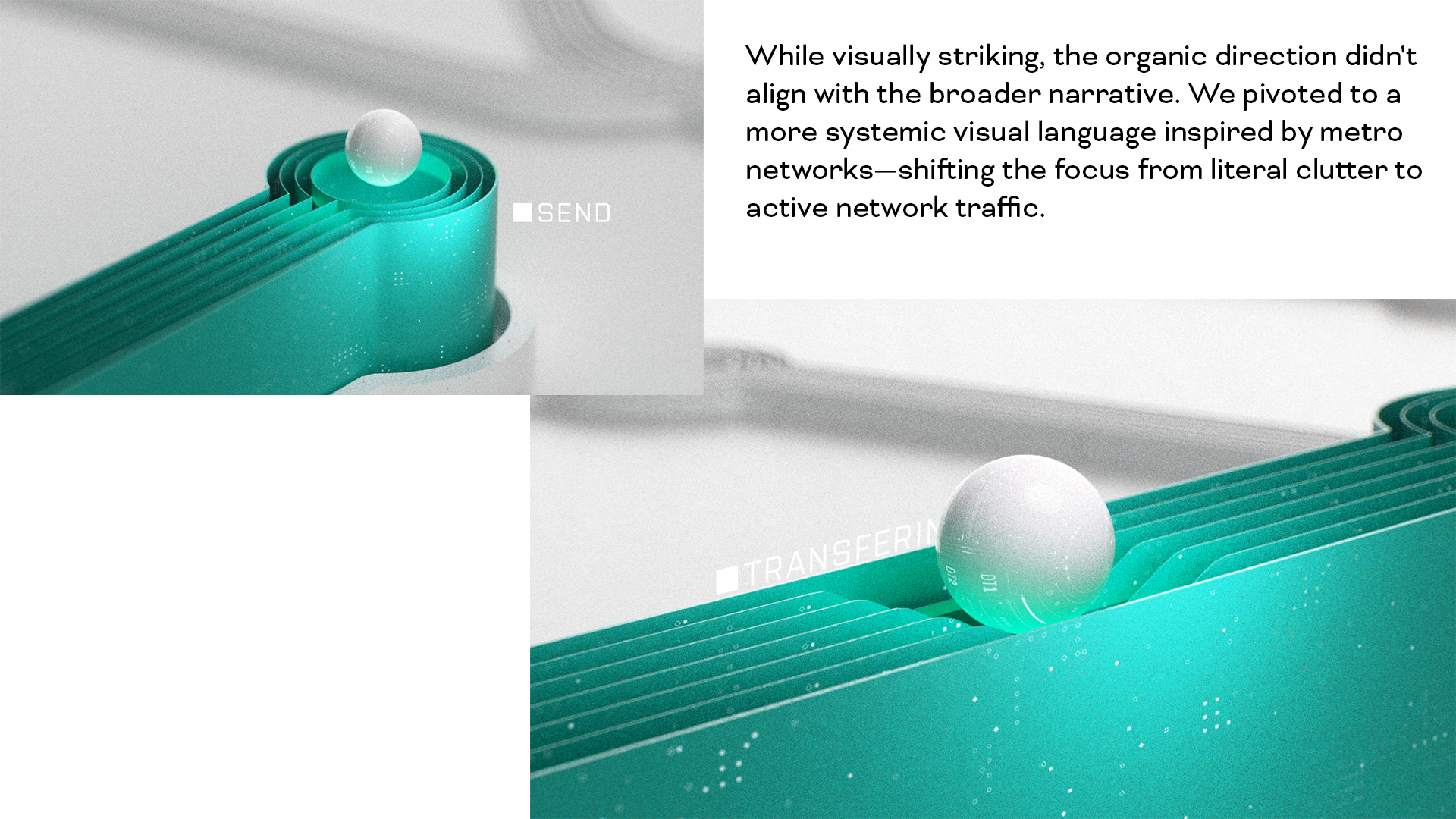
The second film is about transaction speed, sorting pipelines and delivery rather than static files. The narrative problem shifts: however fast a digital pipeline runs, the manual human stakeholder is still the bottleneck.
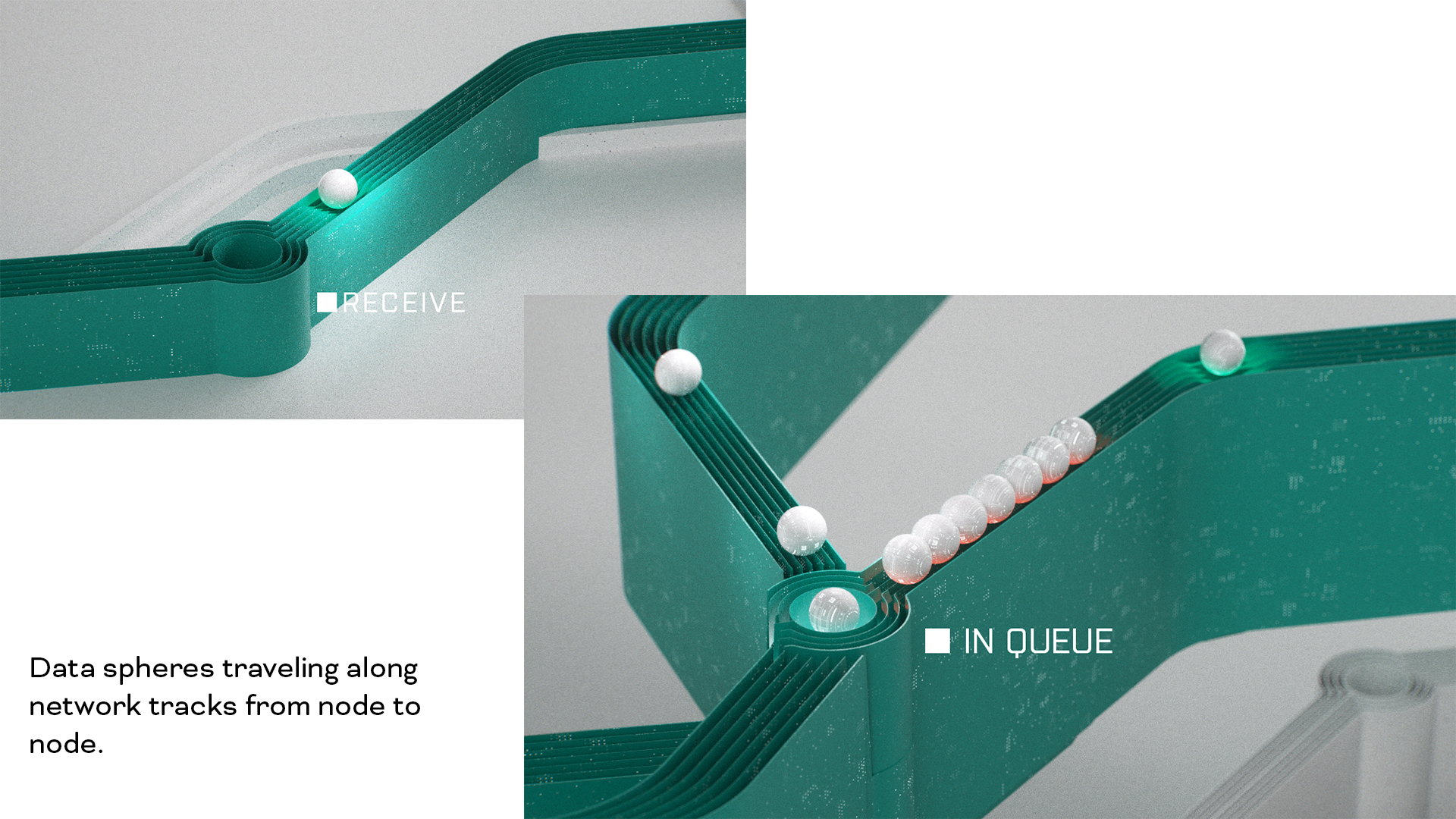
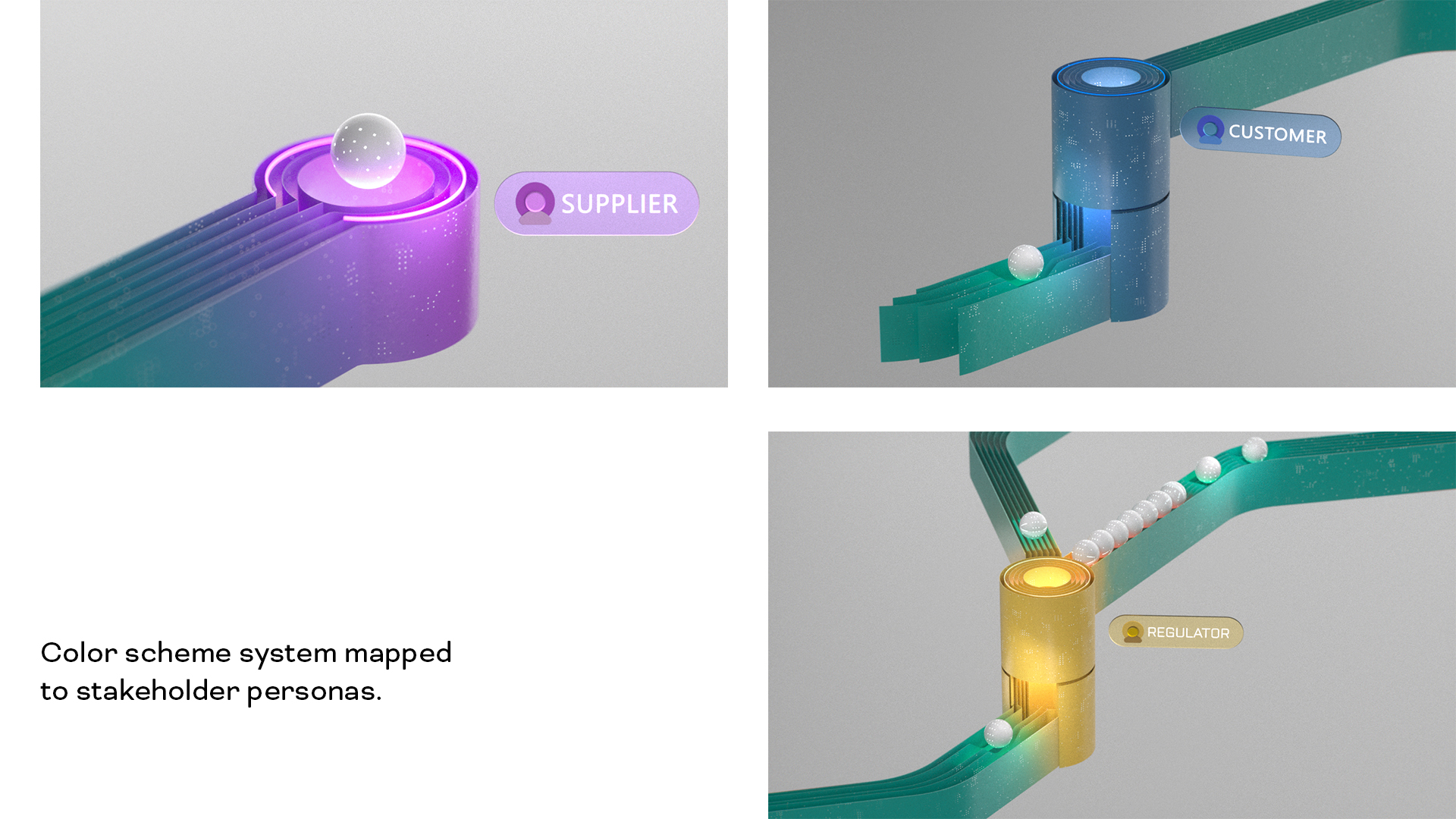
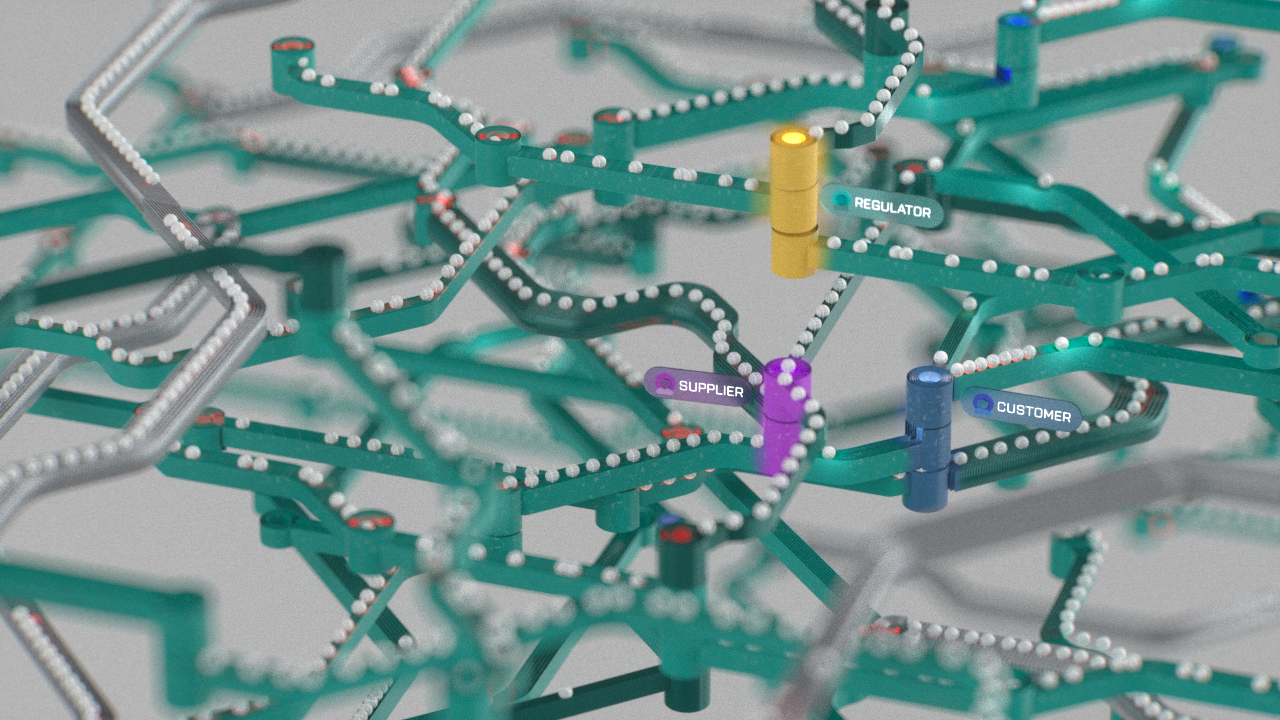
To contrast with the rigid grid of the first film, I moved away from data-as-cubes and took inspiration from pinball machines and ball mazes. Spheres roll through kinetic networks, and every participant is a mechanical node that relays, receives and processes them. Making the nodes mechanical exposes the flaw: beautiful to watch, painfully slow under heavy load.
The scale shift
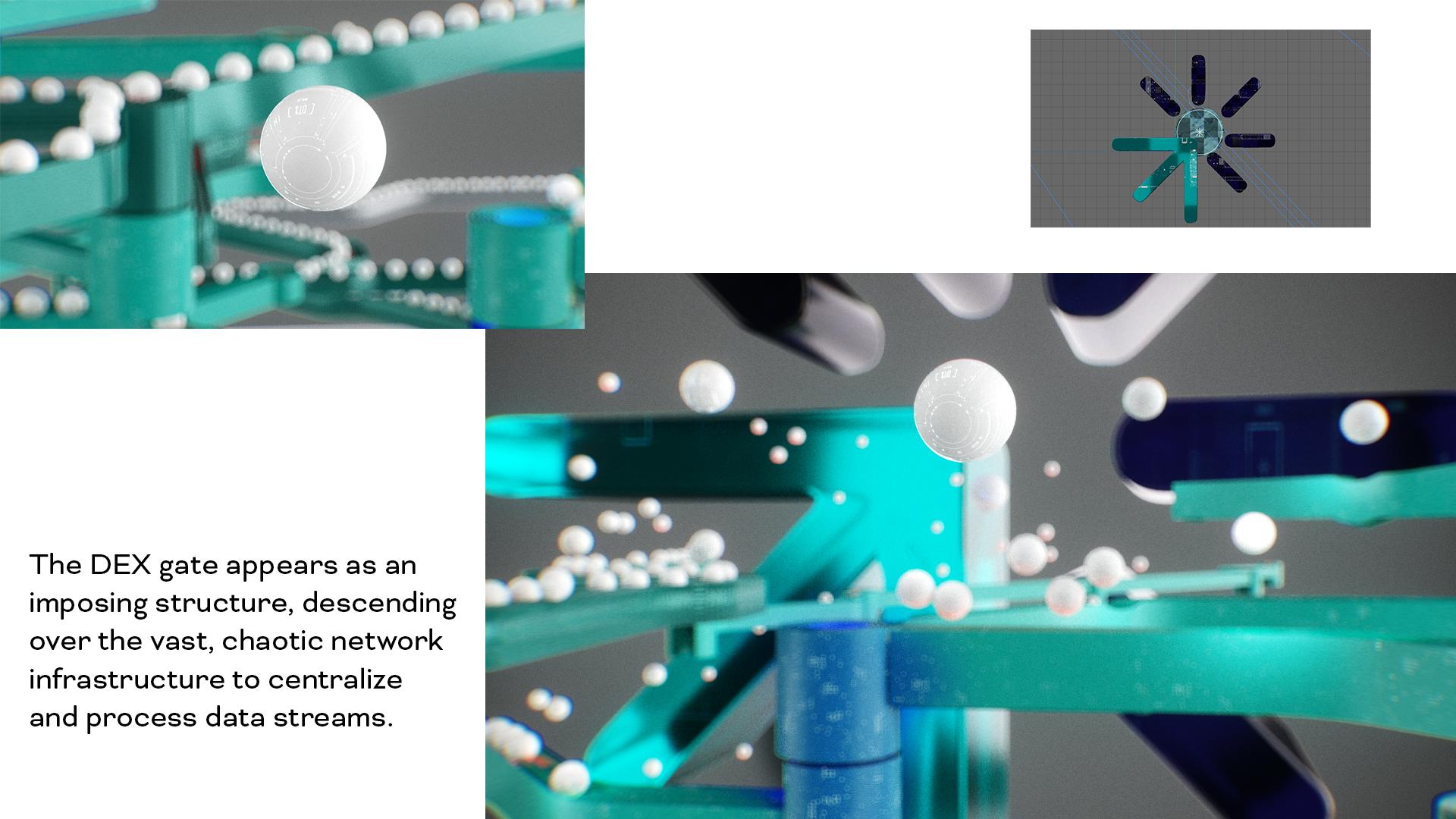
Before the data highway takes over, the world is vast, complex and inefficient. To mark the switch to the product, the DEX gate descends from above as an imposing geometric structure. We kept the motion simple and satisfying: the monolith acts as a vacuum gate, pulling scattered spheres into ordered, high-speed paths.

The shared resolution
Where the two languages meet
Once the data passes through the gate in either film, the two visual languages converge into one high-speed voxel highway. Chaotic shapes and irregular file textures clean up instantly and align into uniform streams on parallel tracks.
Two gates
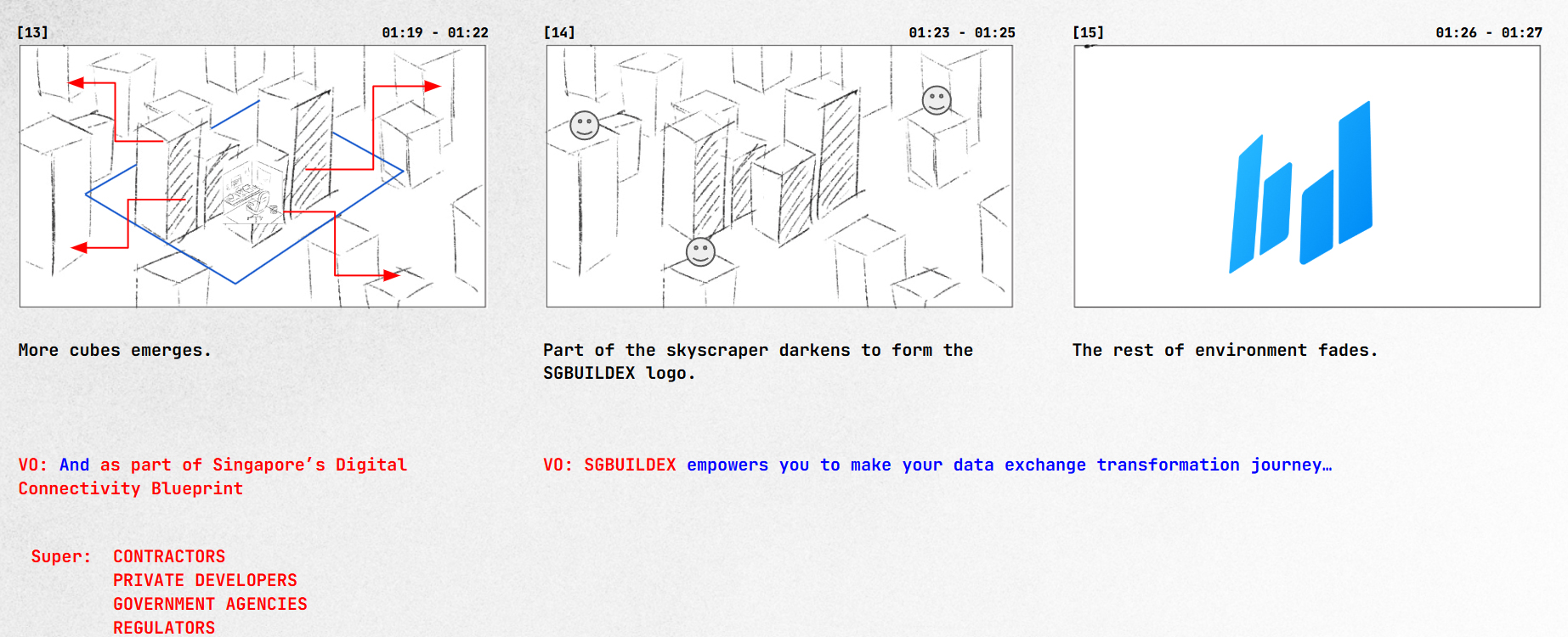
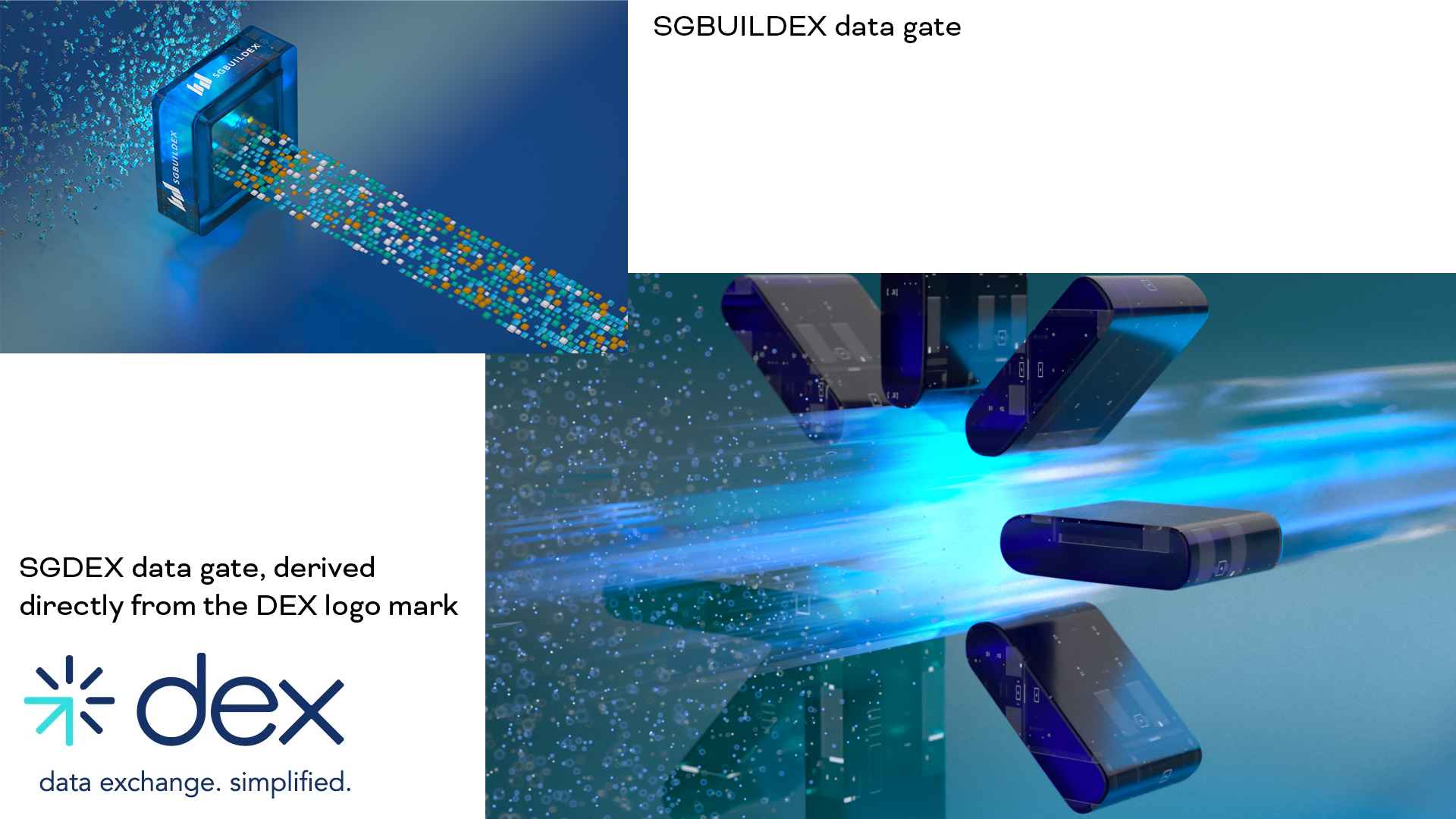
SGBuildex: an imposing square gate, anchored in the blocky, brick-like language of the built environment.
DEX brand: a gate derived from the DEX logo itself. The eight-branch star becomes an architectural portal, and the arrow in the mark becomes a mechanical trigger, a button that activates the gate and draws the data in.
From dashboard to global network
The data highway
Past the gate, both films shift into a clean, organised flow: raw clutter becomes a fast, parallel stream of standard voxel blocks. The camera follows the traffic into the DEX dashboard, showing complex back-end processing resolving into a simple, readable interface.
Back to the physical world
The camera pulls out of the laptop screen into a quiet office. In SGBuildex, the office is one unit in a hexagonal city, where key buildings rise to form the SGBuildex mark: organised data building smarter environments. The DEX film goes further, with data lines linking the Singapore hub to a connected global map.