Case study

The Ascension

A carp becomes a dragon: Vietnamese water puppetry retold through the history of computer graphics, mapped onto a 17-column university facade.

Award
Best Technical Execution, Lightbloom International Projection Mapping Competition 2026
Selection
Top 10 finalist
Where
UEH University campus, Ho Chi Minh City, 23–25 October 2026
Team
Static Collective: Daniel Tran (Visual Obscurity, Melbourne) & Shaun Minh Phuong (Singapore)
Disciplines
Projection Mapping3D & RiggingCreative CodingSound Design
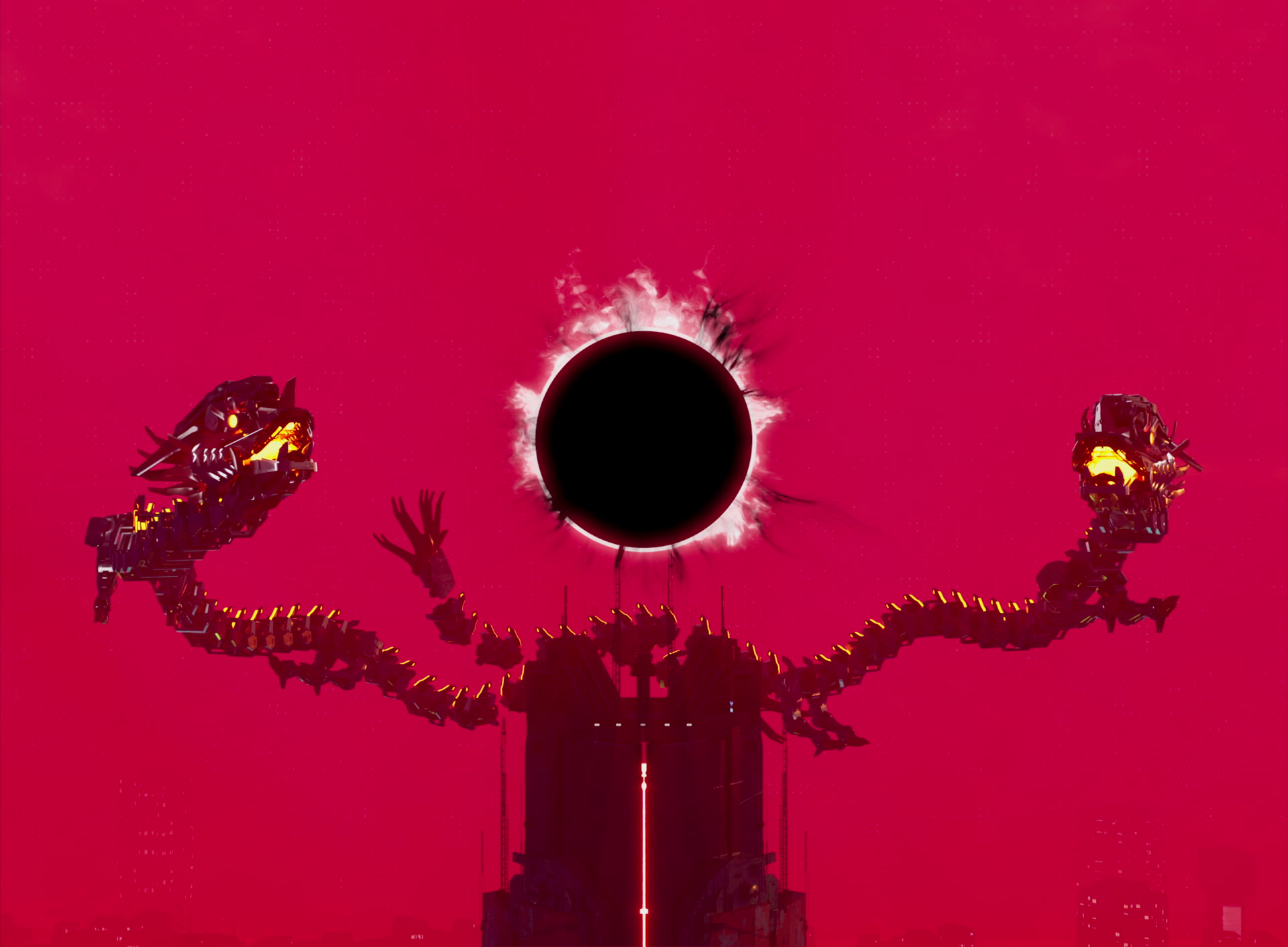
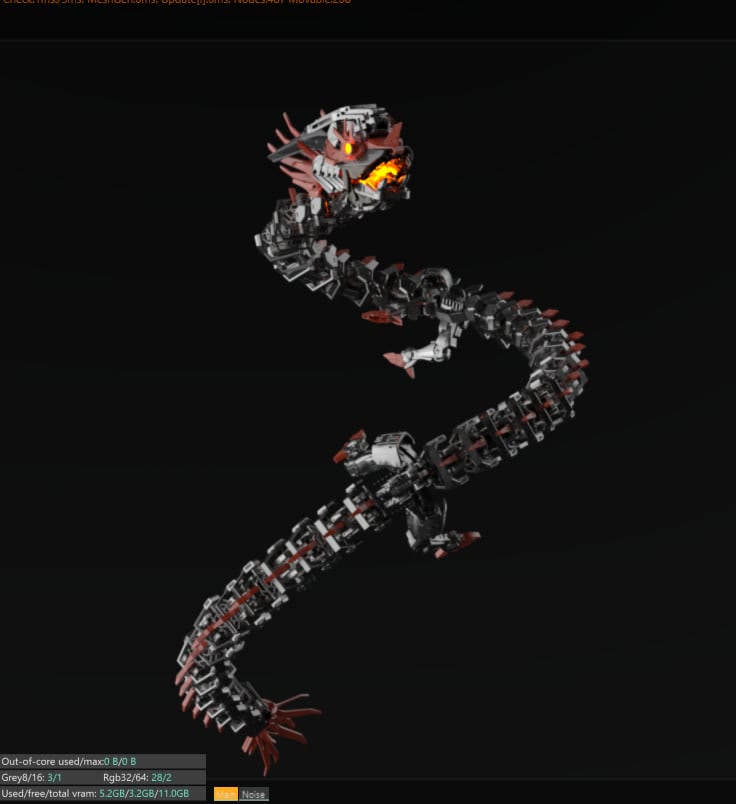
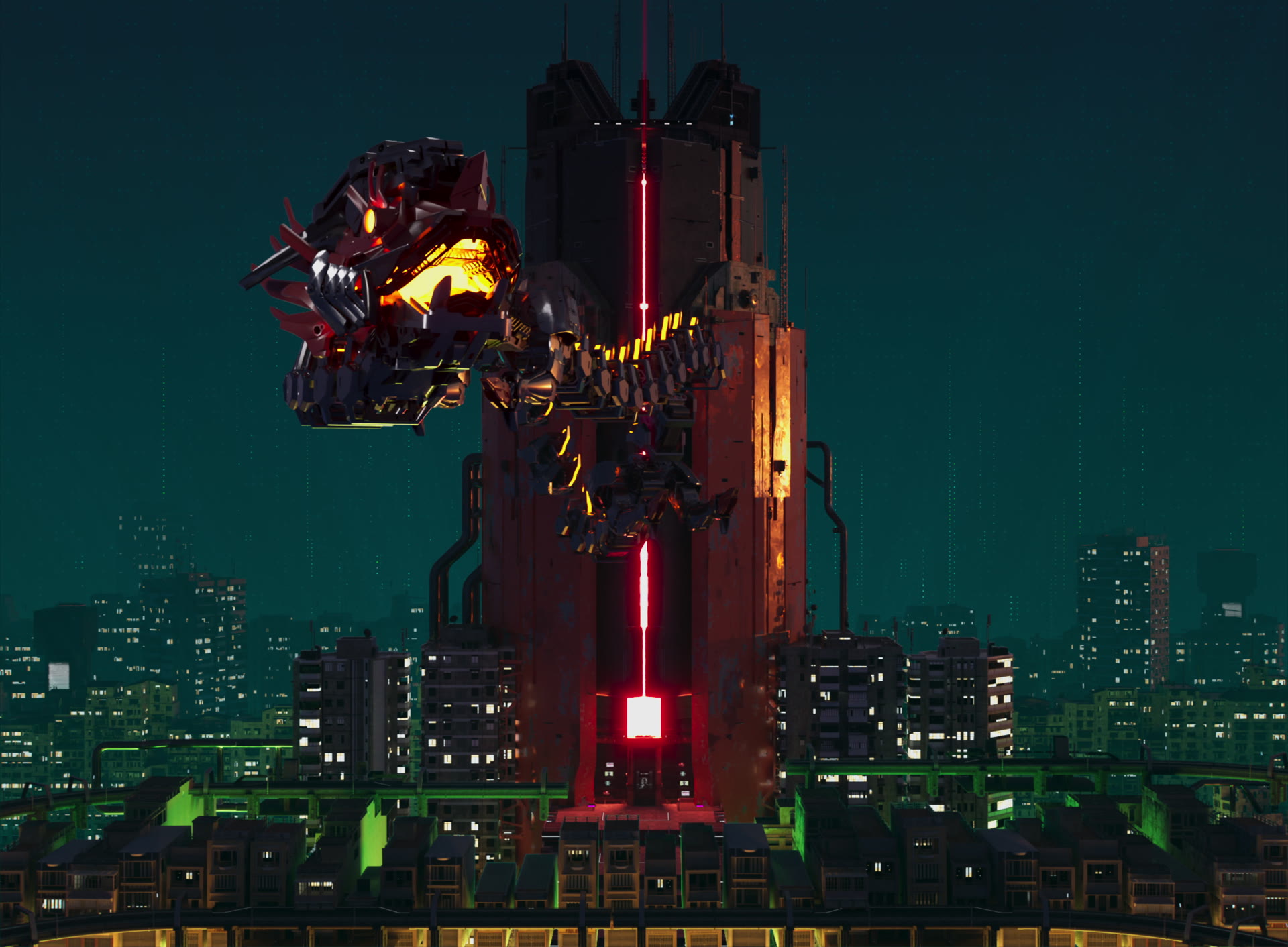
The Ascension: a mecha dragon wrapped around the red tower

The story

Upstream stands the Dragon Gate. No carp crosses it alone. A thousand swim as one, each lifting the next, until together they rise as the dragon.

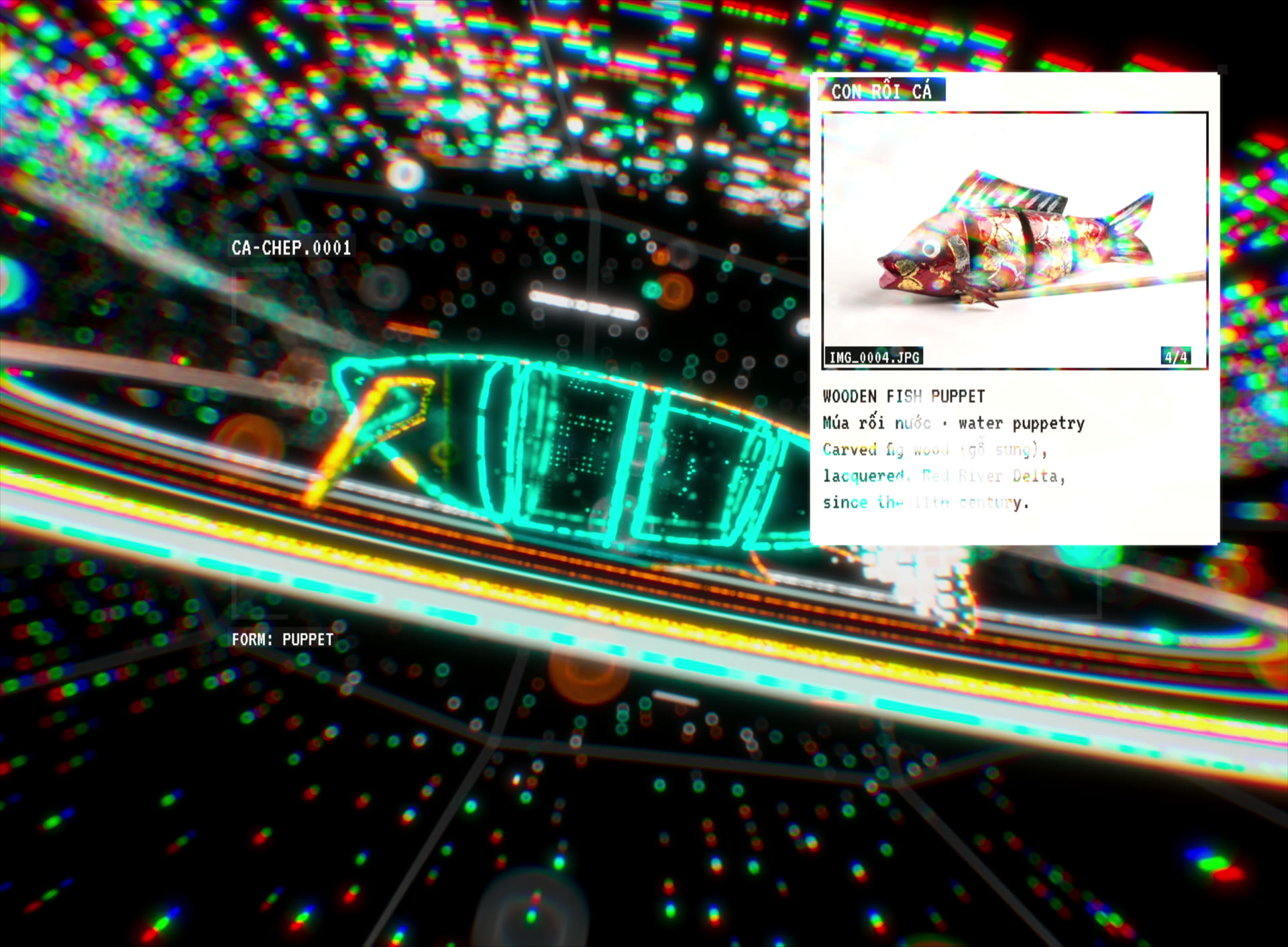
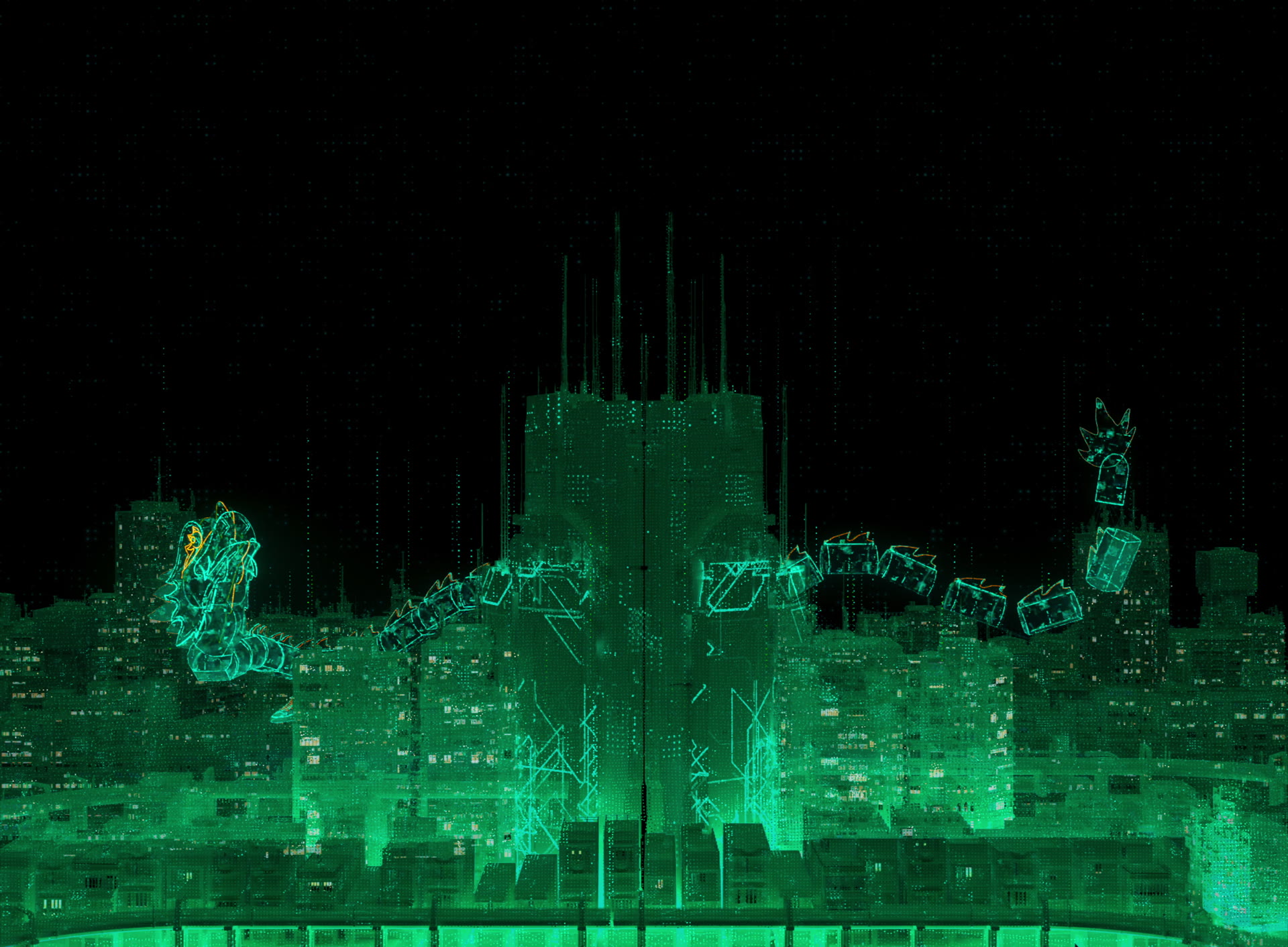
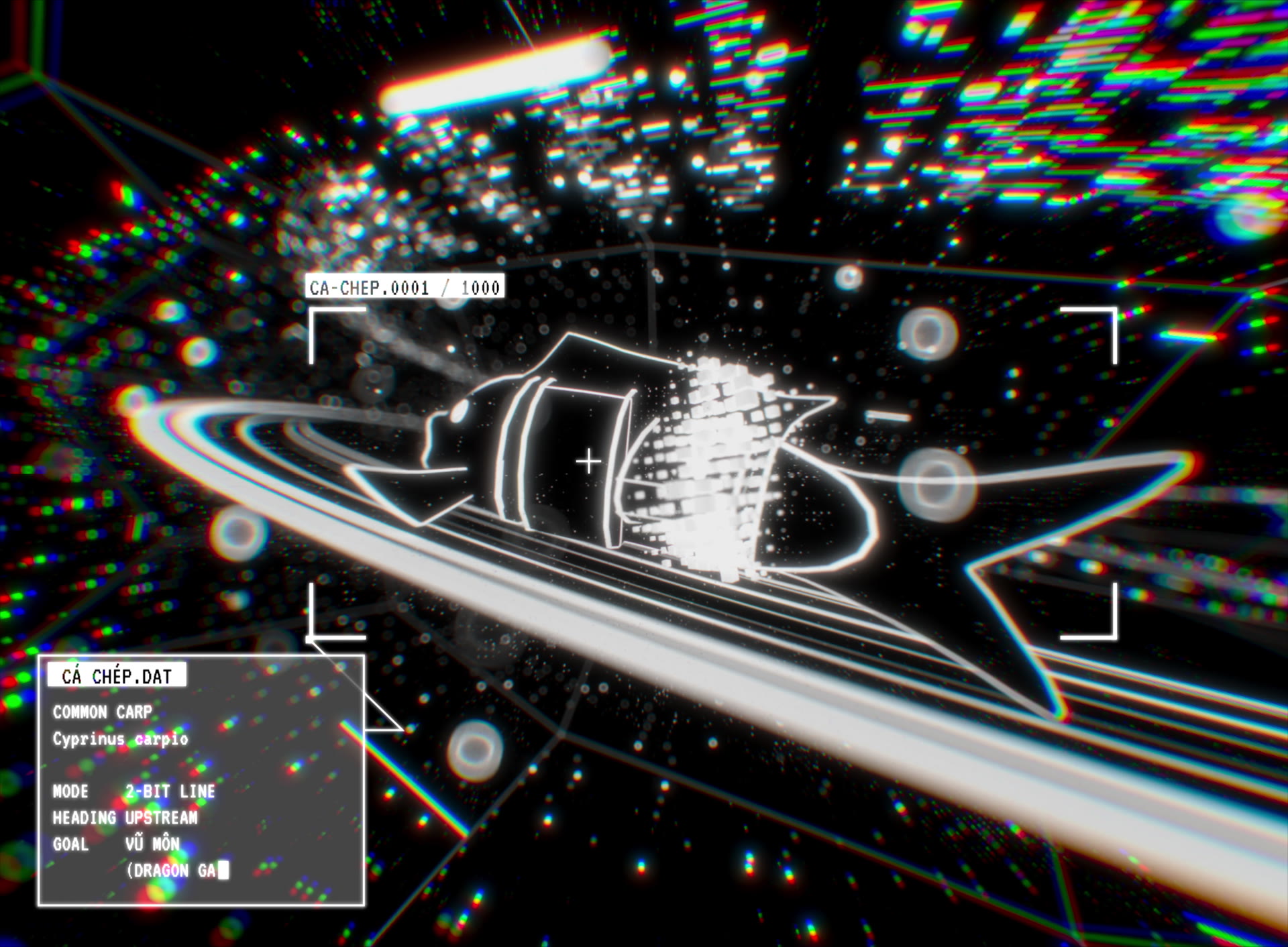
We told the legend of the carp that becomes a dragon (ca chep hoa rong) in the visual language of Vietnamese water puppetry (mua roi nuoc): segmented wooden bodies swaying on the water. Then we pushed it through the eras of computer graphics we grew up with in Hanoi, from Nintendo to PlayStation to PC. Each act “levels up” the image: a terminal boot, an 8-bit pond, a holographic city, and finally a realistic, high-resolution mecha dragon.
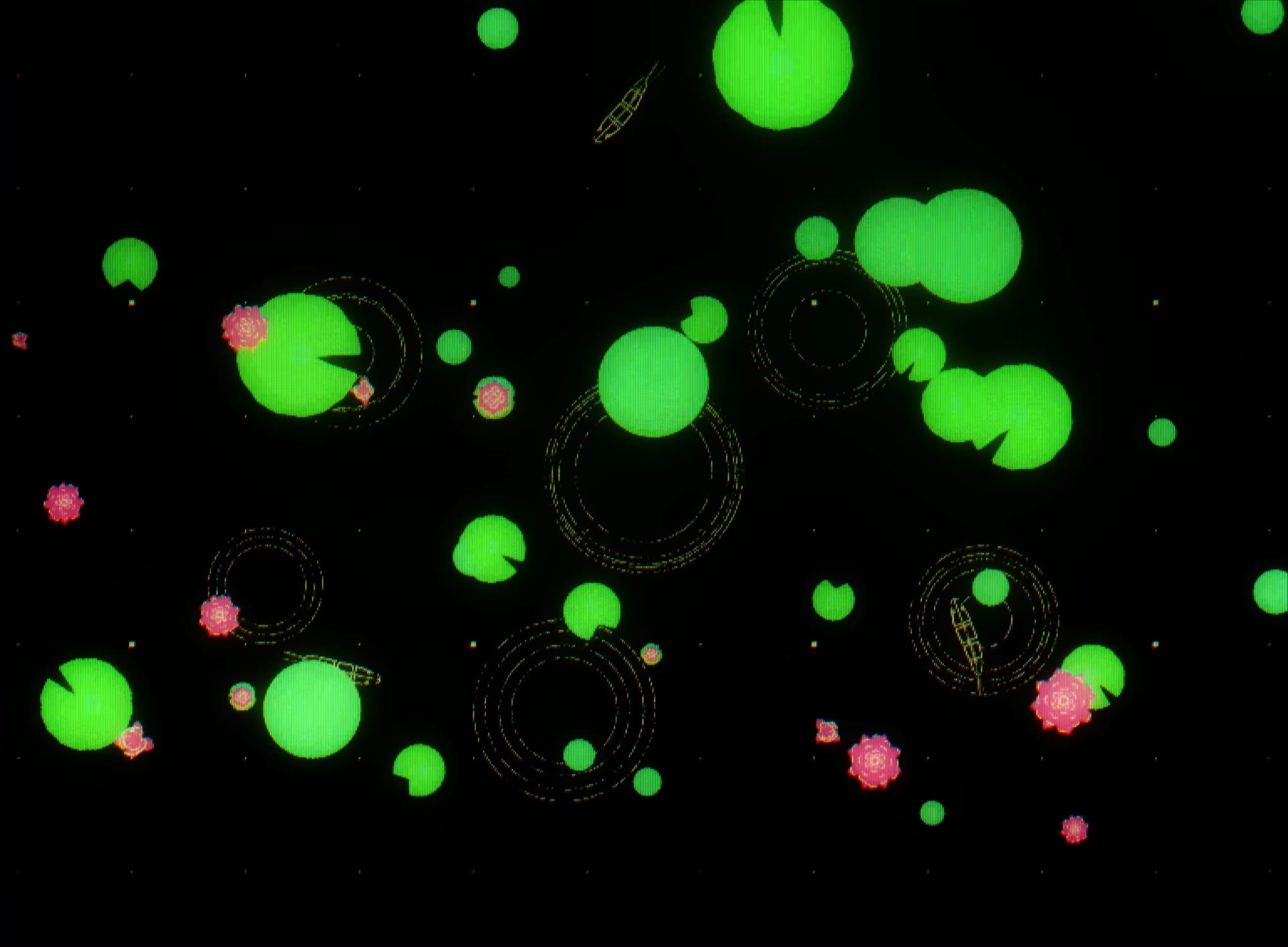
8-bit pond
8-bit pond
Water-puppet carp
Water-puppet carp
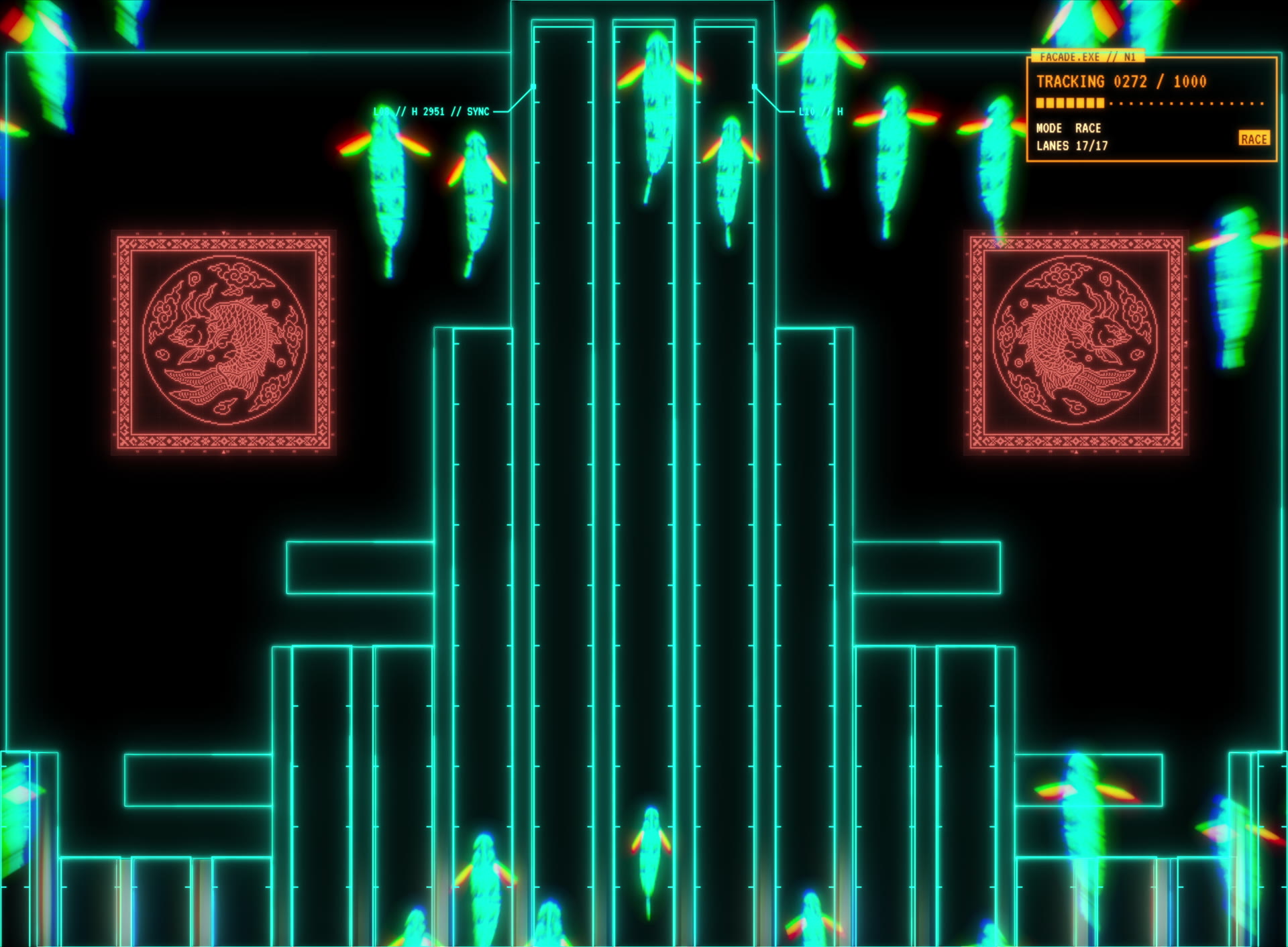
Into the race
Into the race
A thousand carp race up the 17 lanes
Hologram tower
Hologram tower
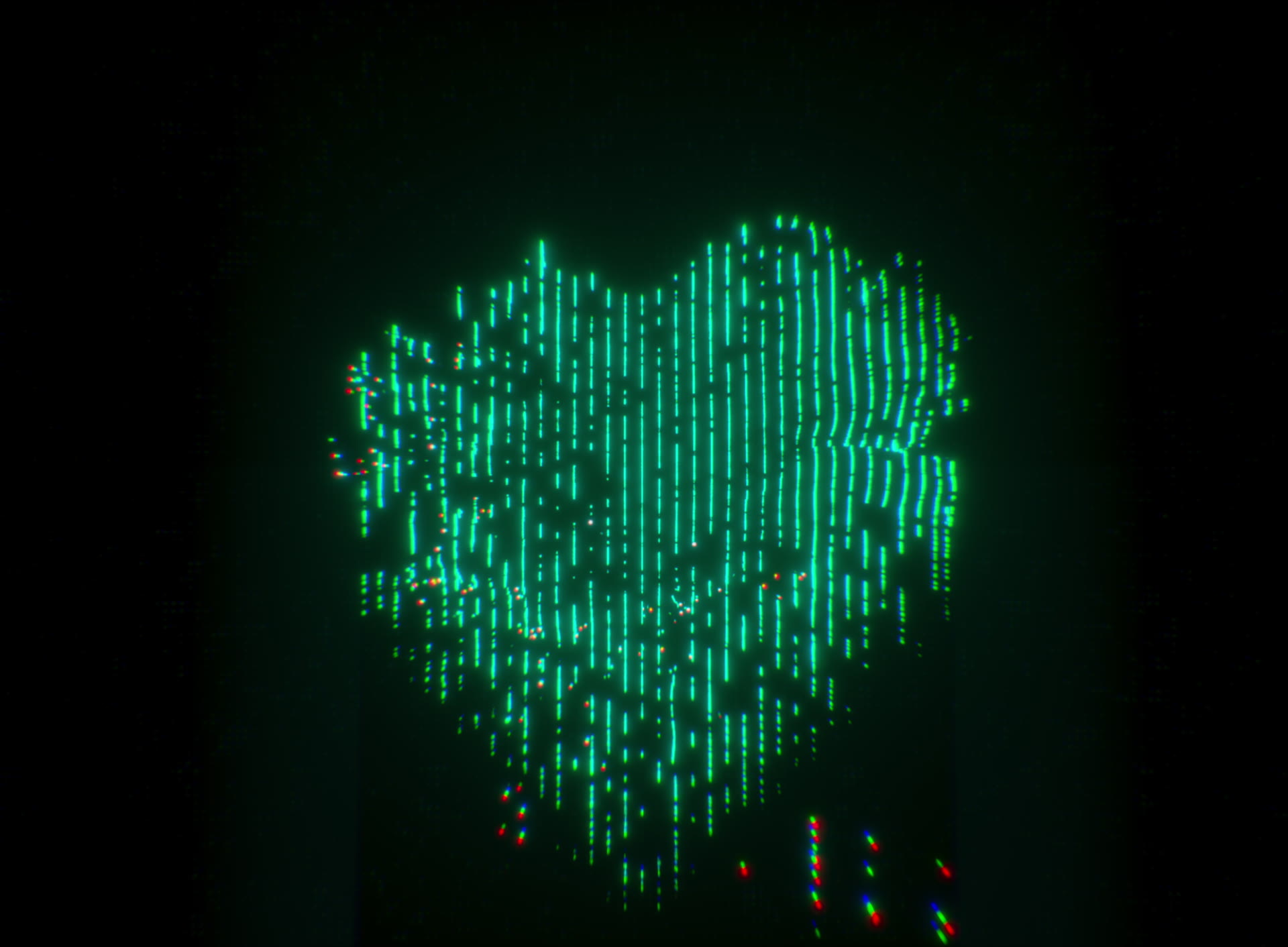
Hologram dragon
Hologram dragon
Hologram city
Hologram city
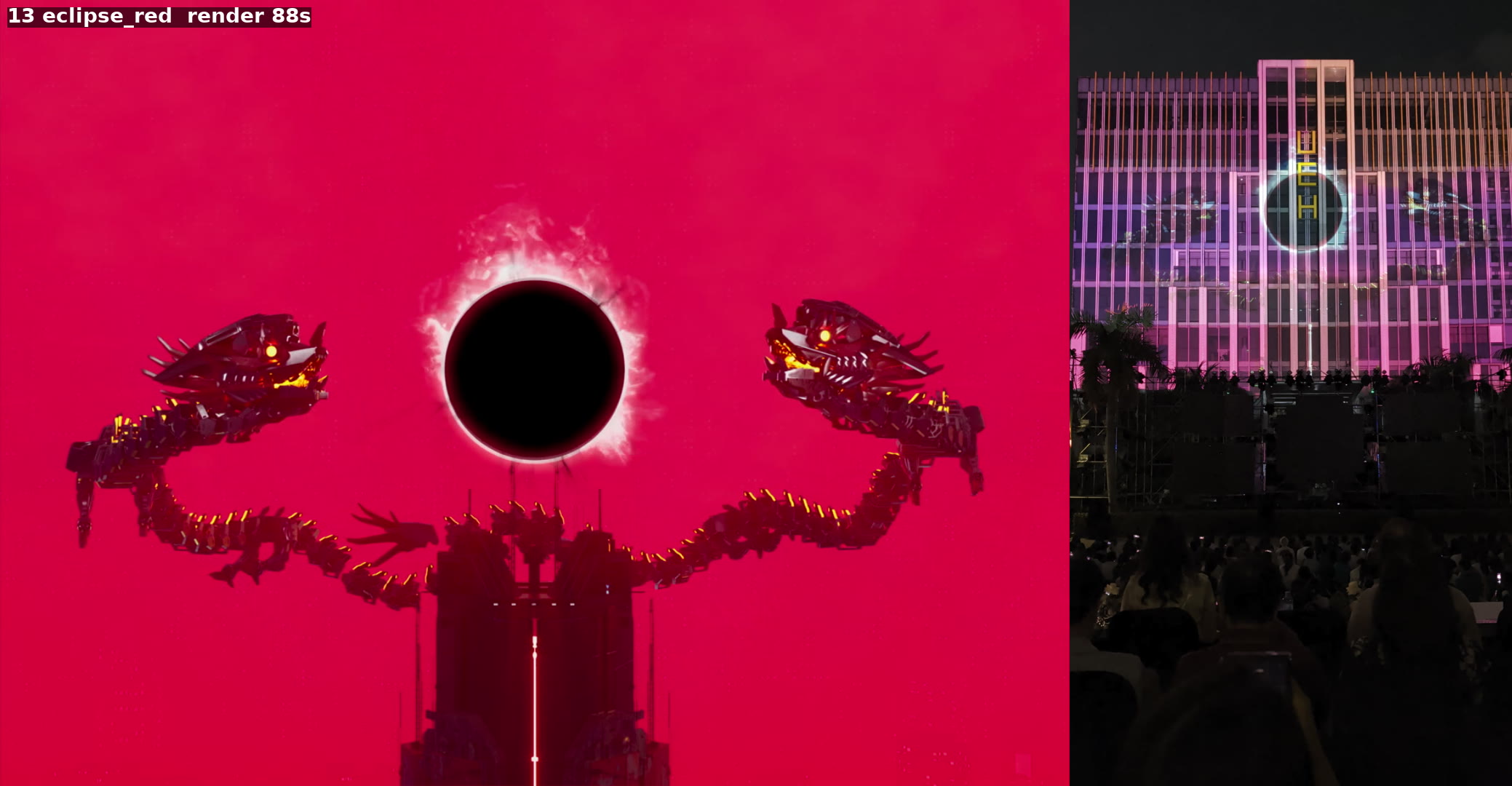
Eclipse
Eclipse

Where it started

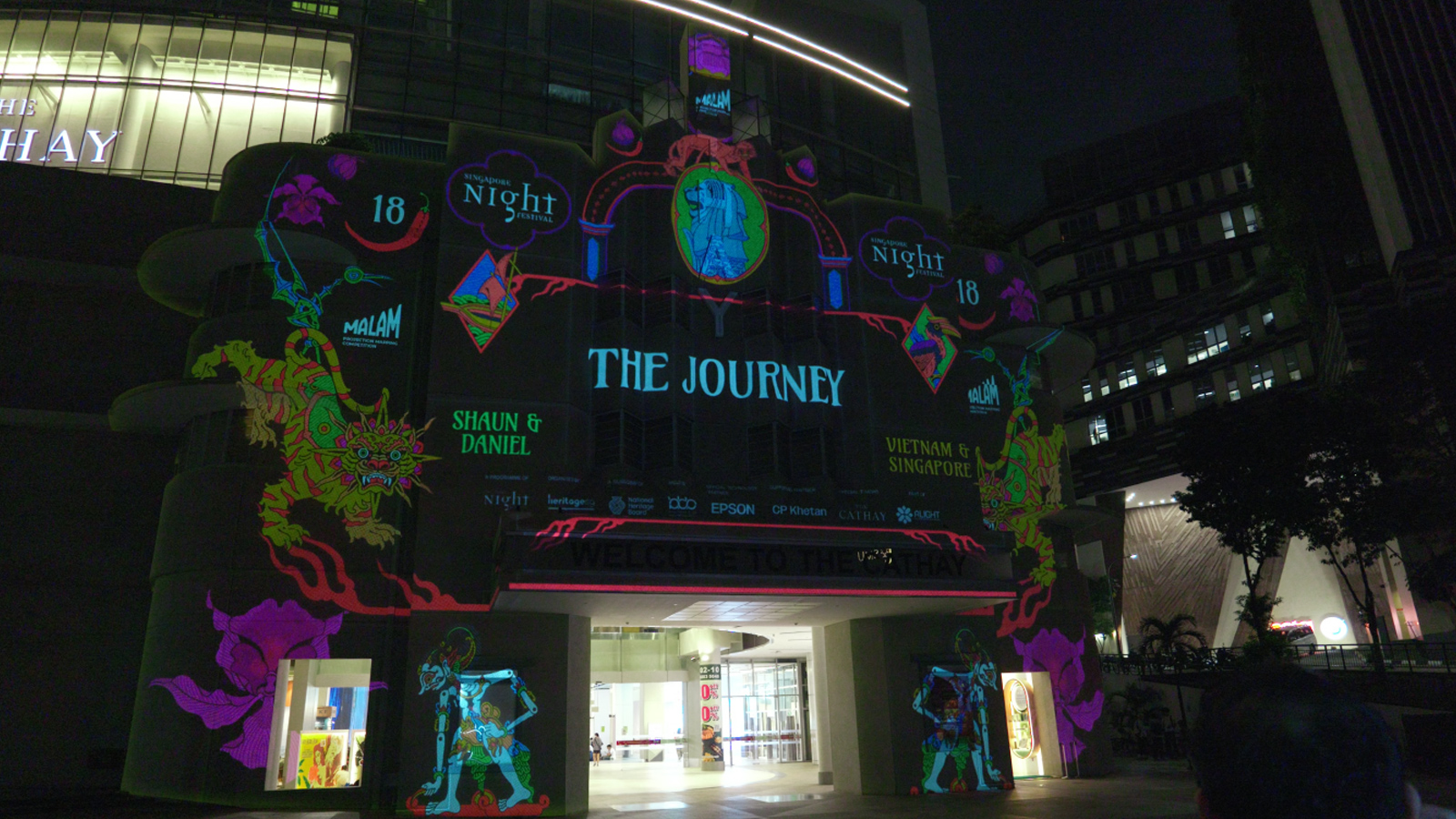
The story began as The Journey, our entry for Malam at Singapore Night Festival 2026, where it was a finalist on The Cathay: a 60-second piece about a Vietnamese creative’s path from home to arrival, told through the same carp and the Dragon Gate in neon, hologram and cyberpunk. Lightbloom was our second projection mapping competition, and the chance to take the story further.

The Journey on The Cathay
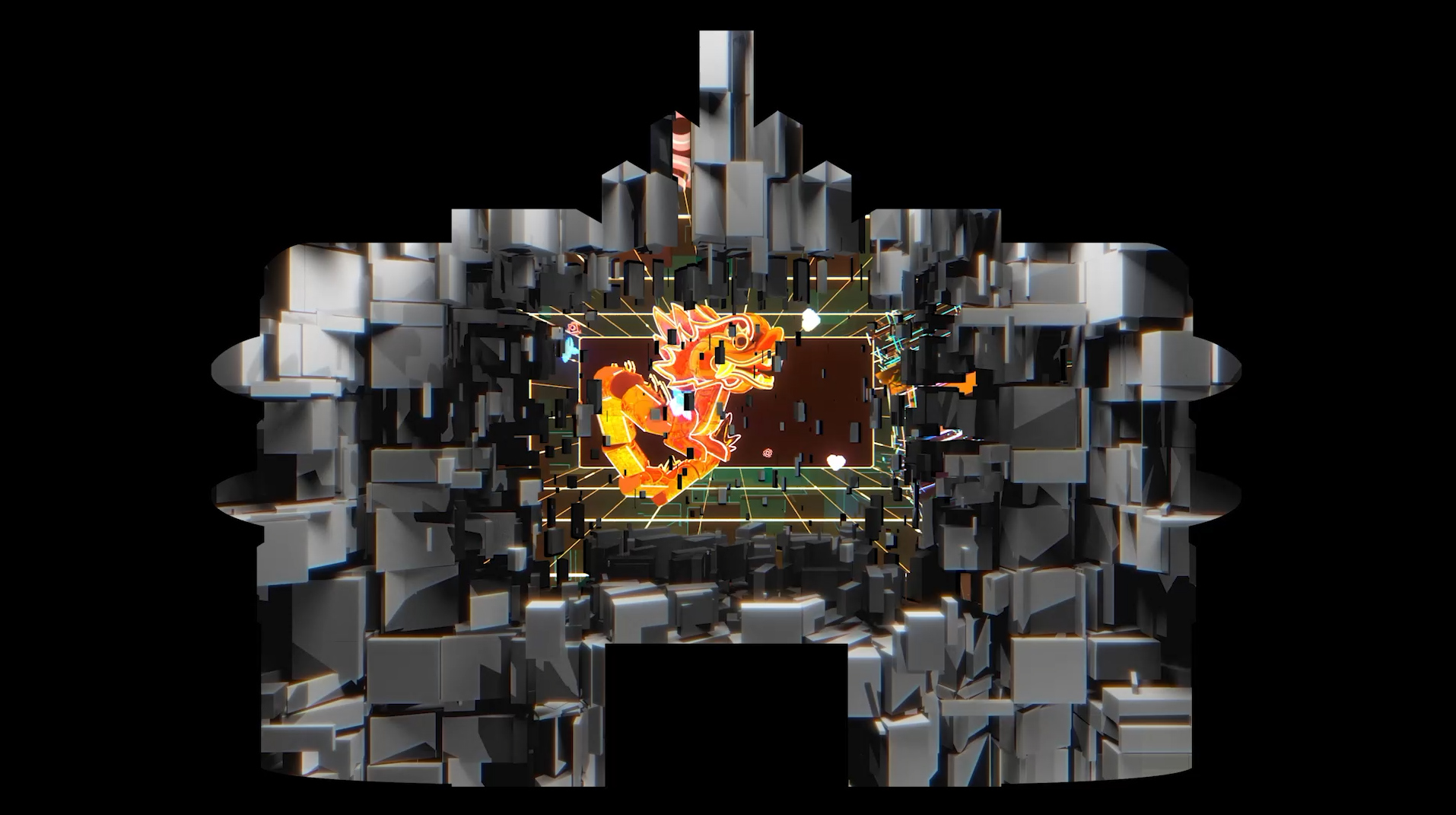
The Journey, frame
The Journey, full piece

Designed for 17 lanes

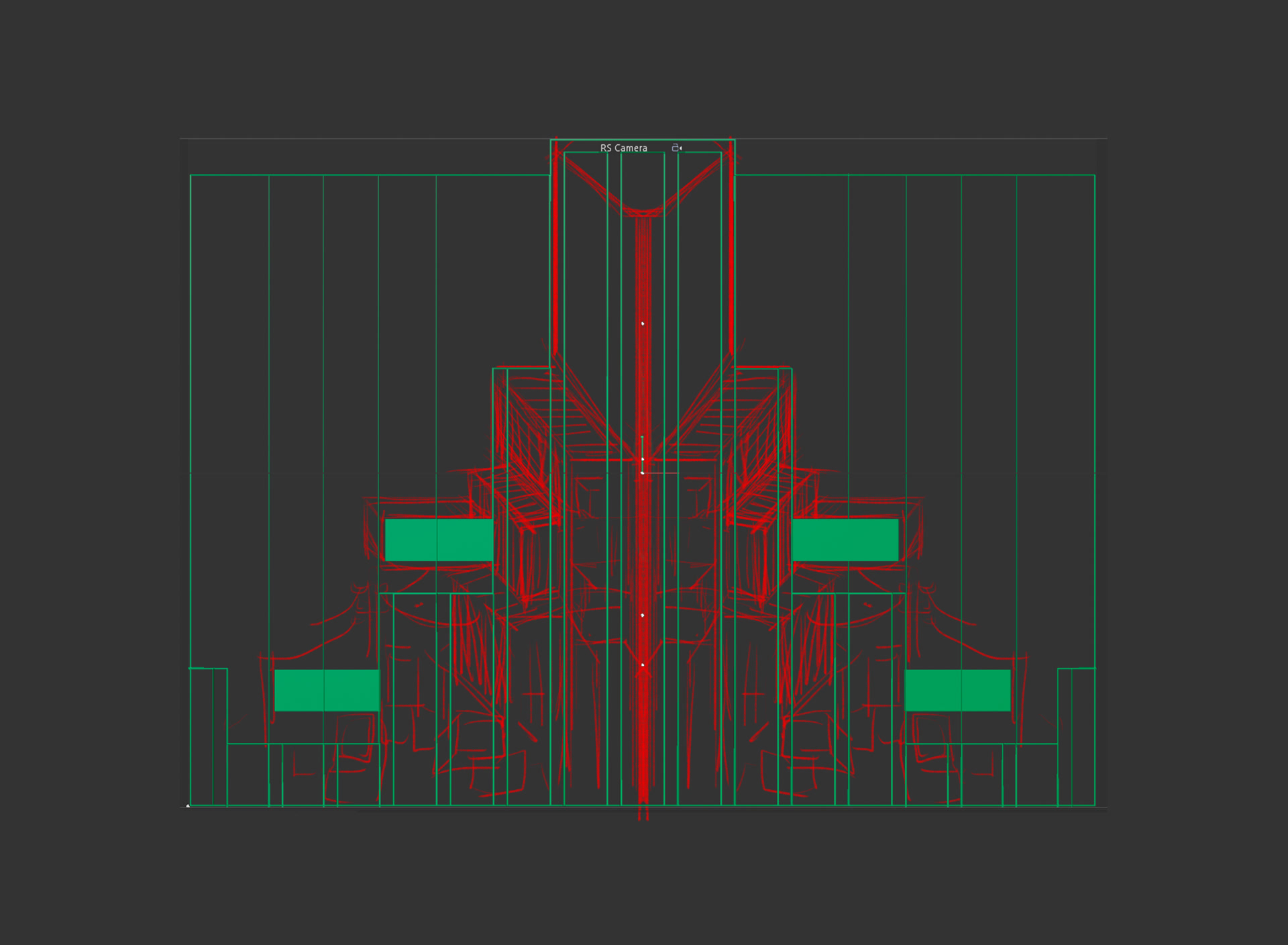
We rebuilt the N1 facade as a 4096 × 3011 px template with 17 vertical lanes (L01–L17) and laid out every shot lane by lane.

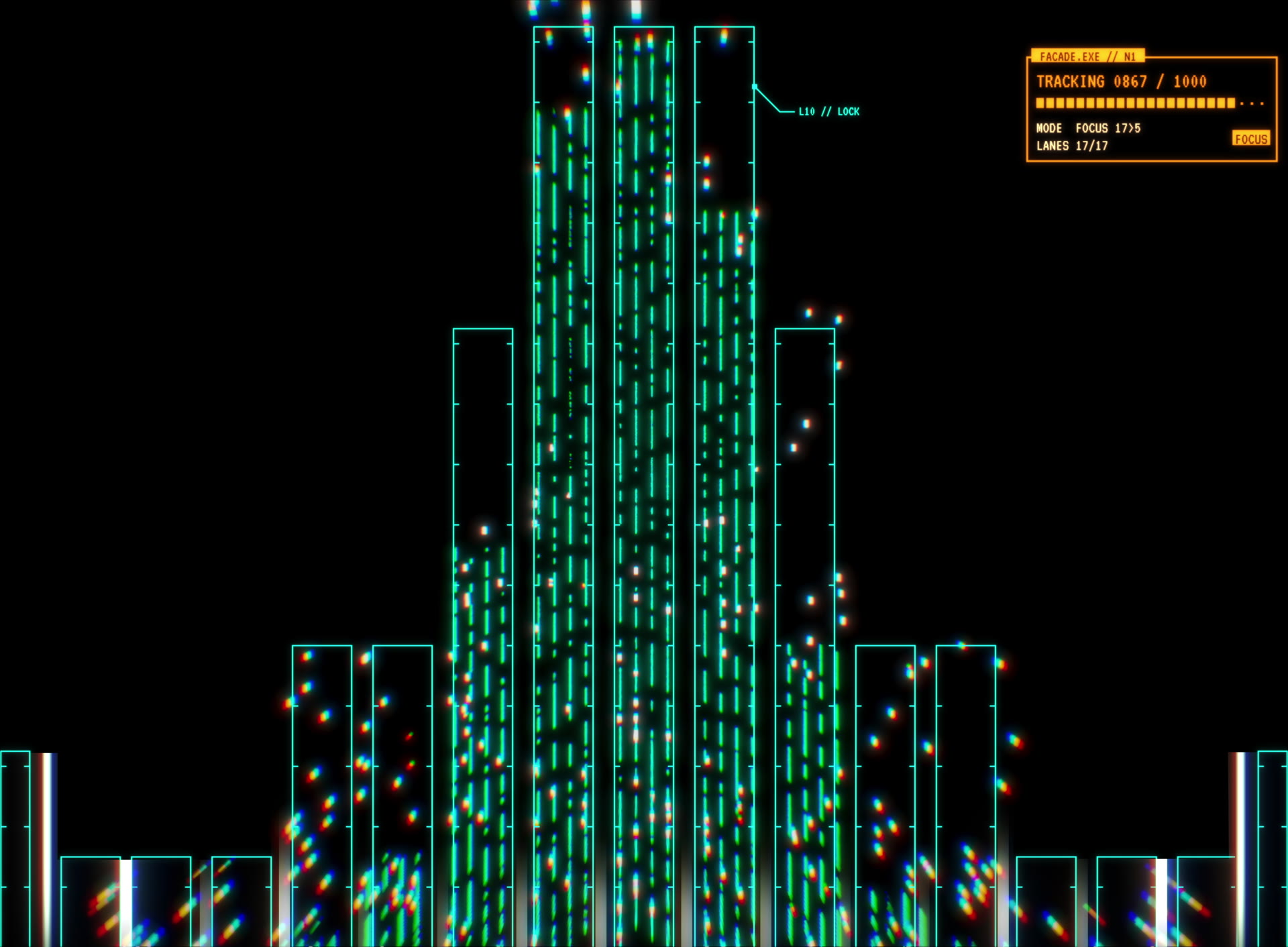
Lane tops, lane focus (all 17 narrowing to the centre 5) and line reveals are keyed to the building’s architecture, so the image moves with the columns instead of across them.

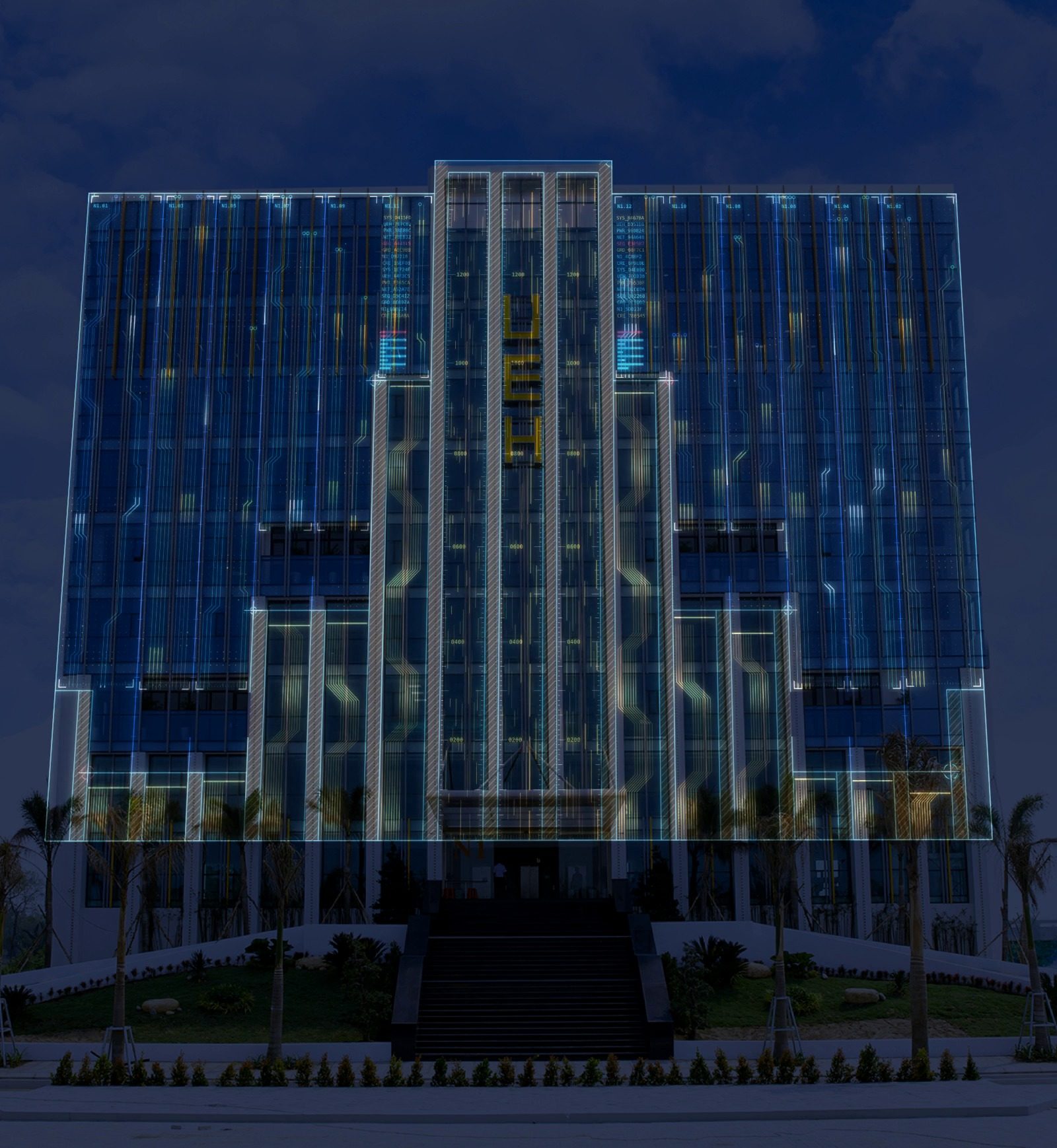
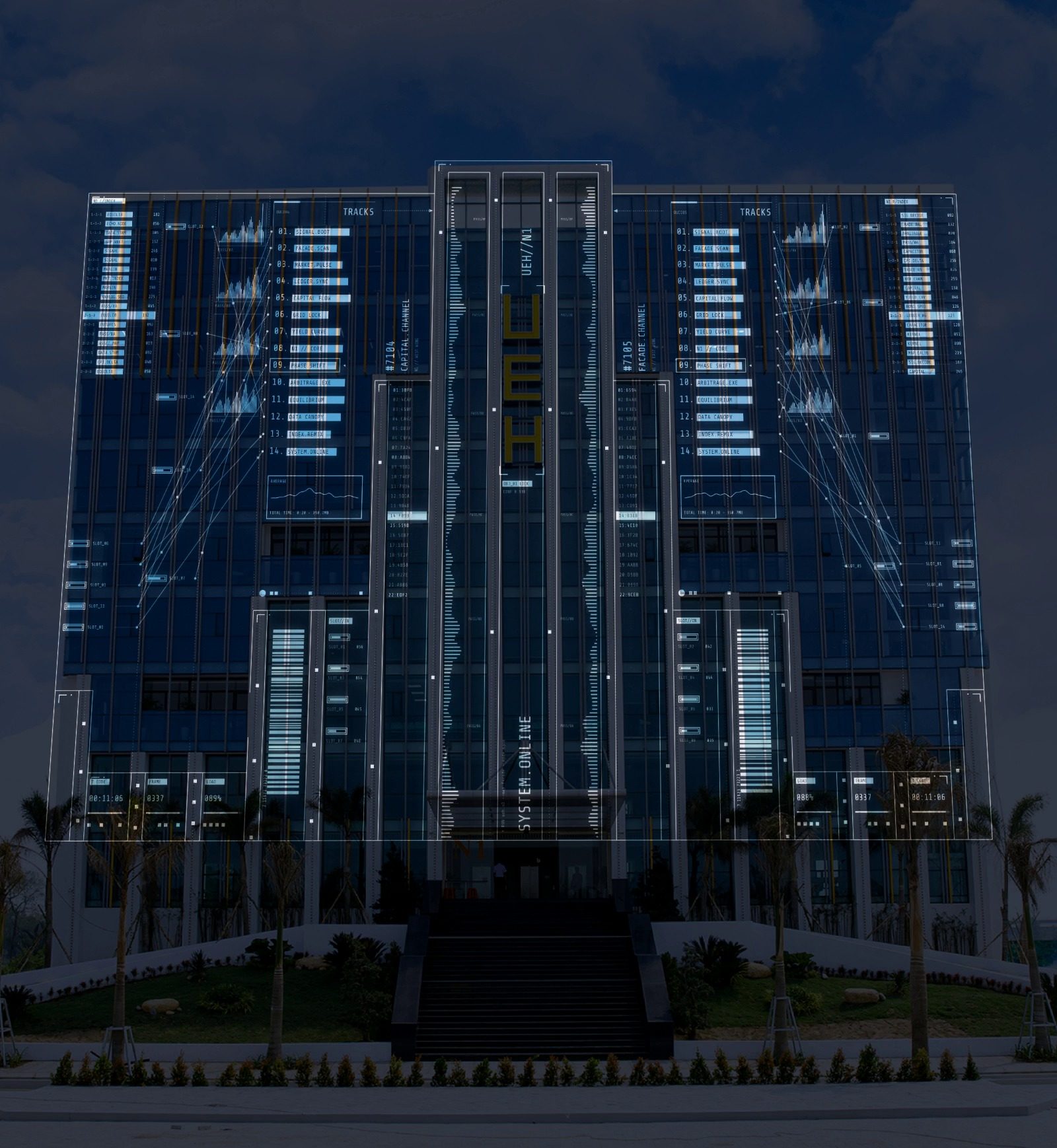
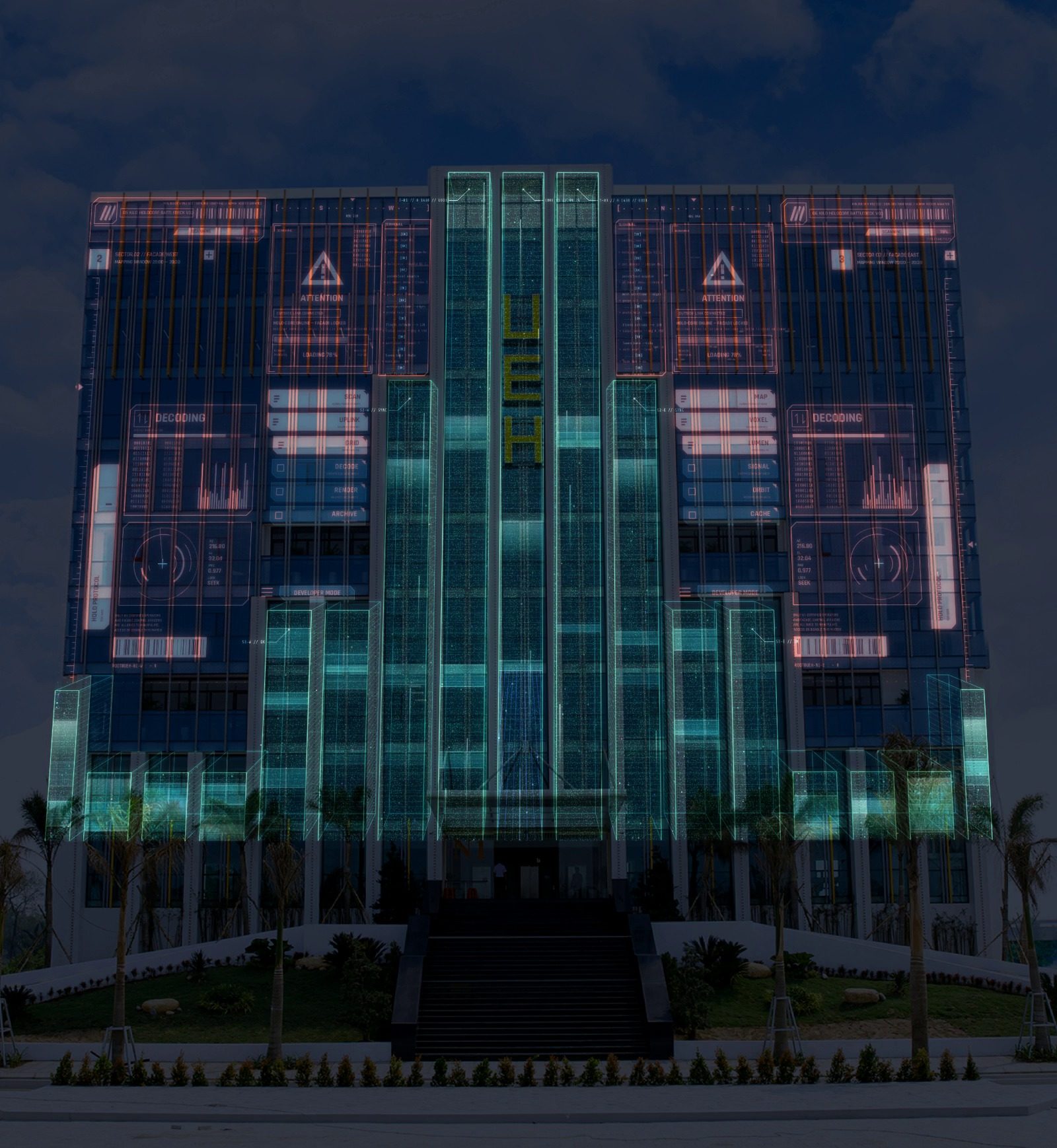
Before the story was locked, we tested interface looks directly on a mockup of the building at night.

Facade template, 17 lanes
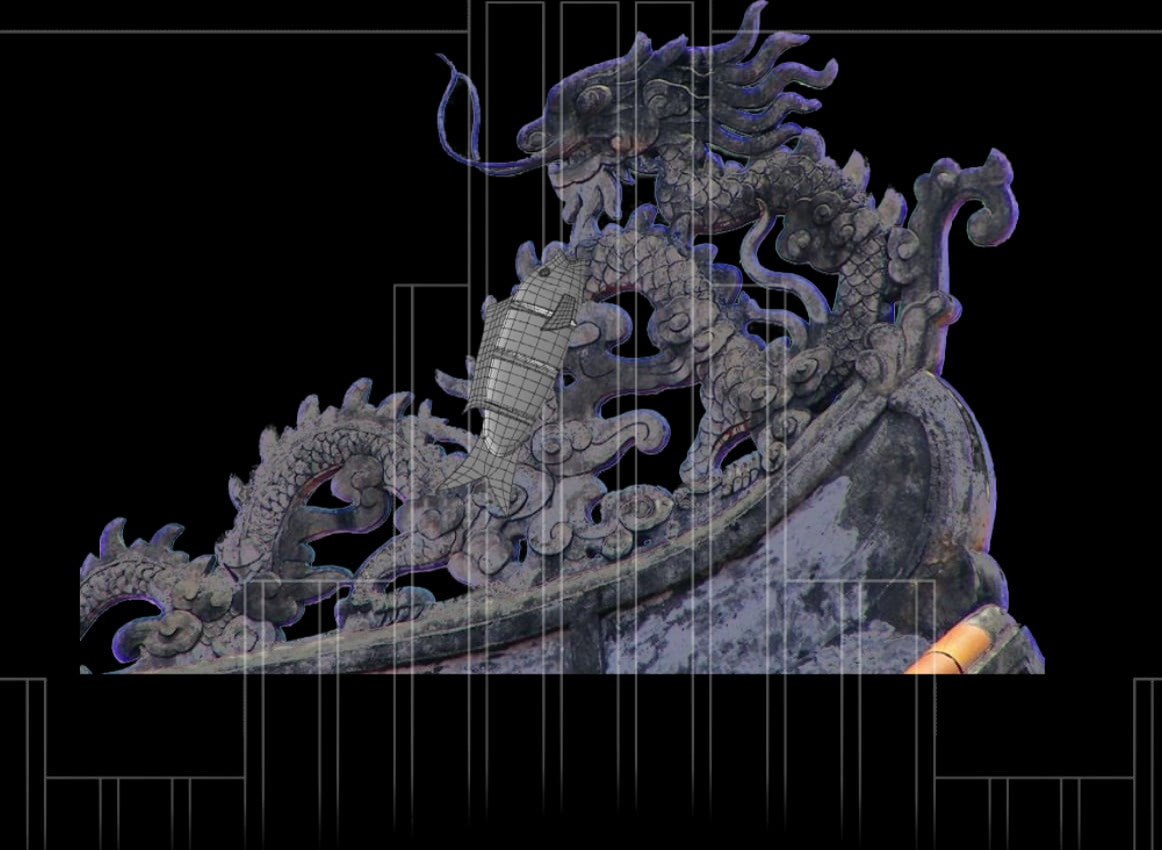
Dragon layout study
Dragon layout study
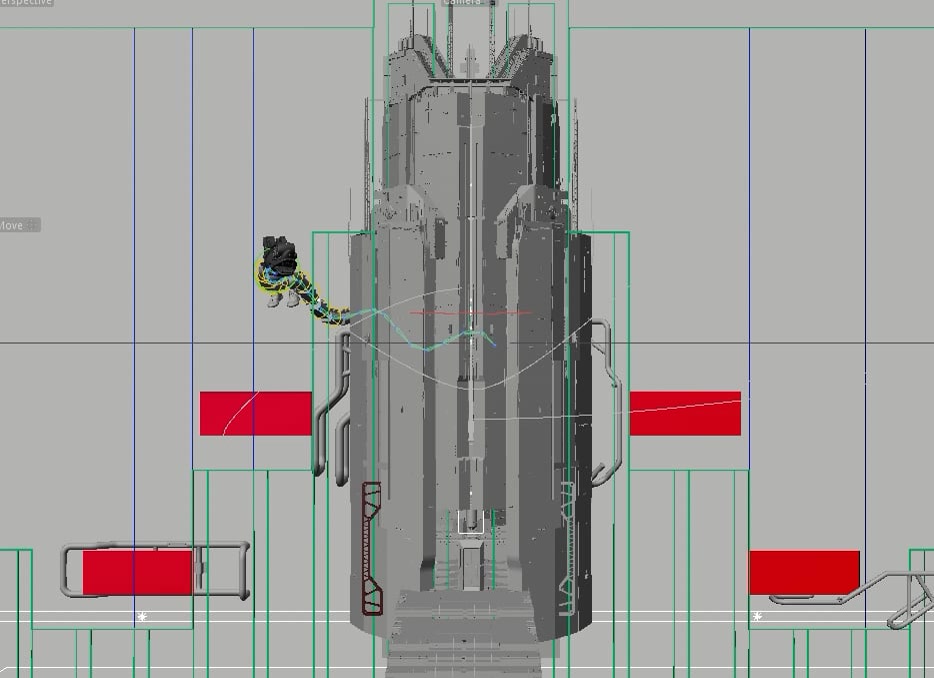
Tower layout against the lane guides
Facade UI exploration 1
Facade UI exploration 2
Facade UI exploration 3

Rigs

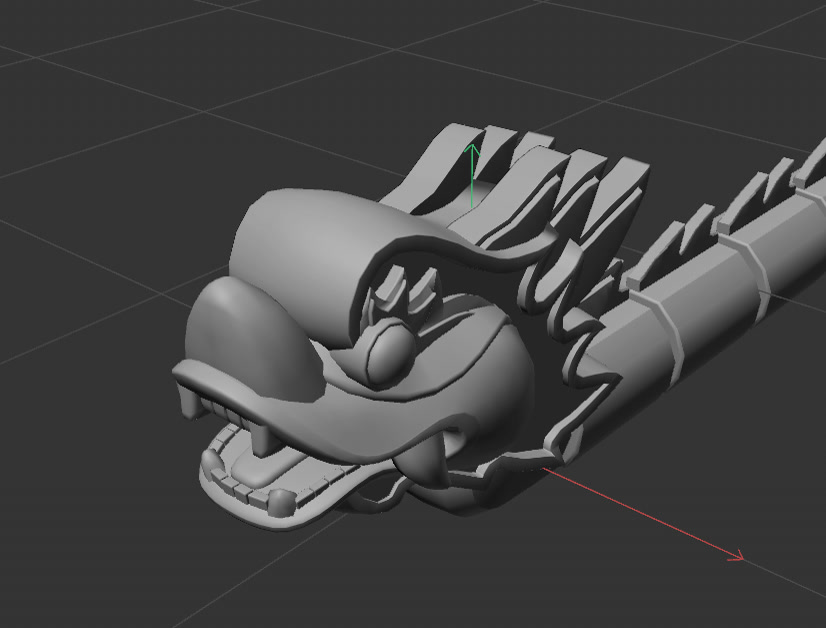
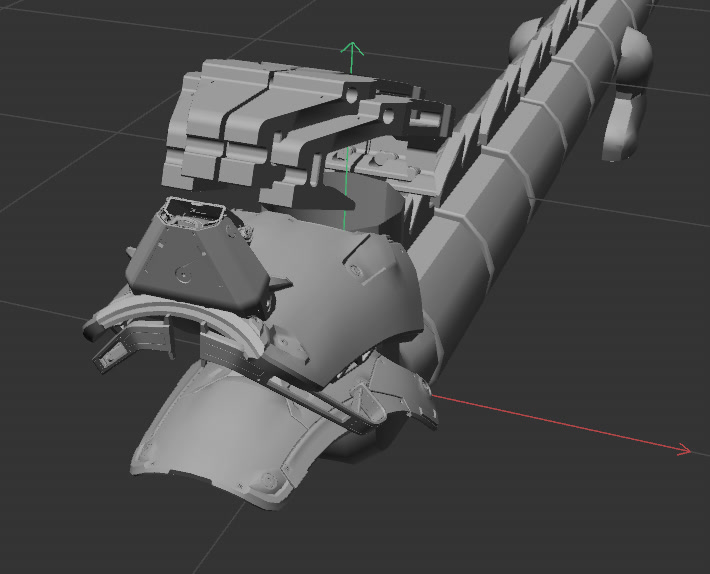
Dragon

A puppet-style segmented body driven by a sine-wave spine, with user-data controls for the wave and a transformation rig for the carp-to-dragon reveal.

Fish race

One Python effector on a MoGraph cloner drives the whole school from a single control panel: carp count, size and size variety, schools, speed, burst-and-glide swimming, overtaking, and the abstraction of fish into dots and dashes.

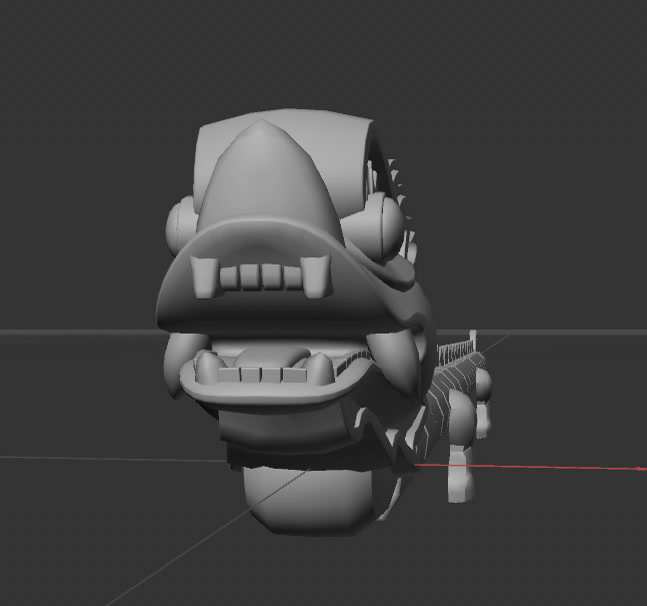
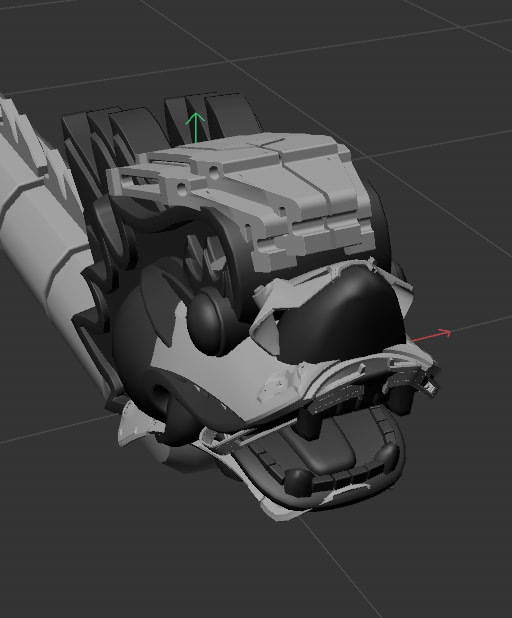
Dragon head, Cinema 4D
Segmented body, puppet-style joints
Dragon head, front
Dragon head, detail
Mecha dragon test render
Transformation rig (2.5× speed)
Sine-wave spine controls
Head lift and coils
Fish race: schools abstract into dots and dashes
Fish race: a big school up the lanes

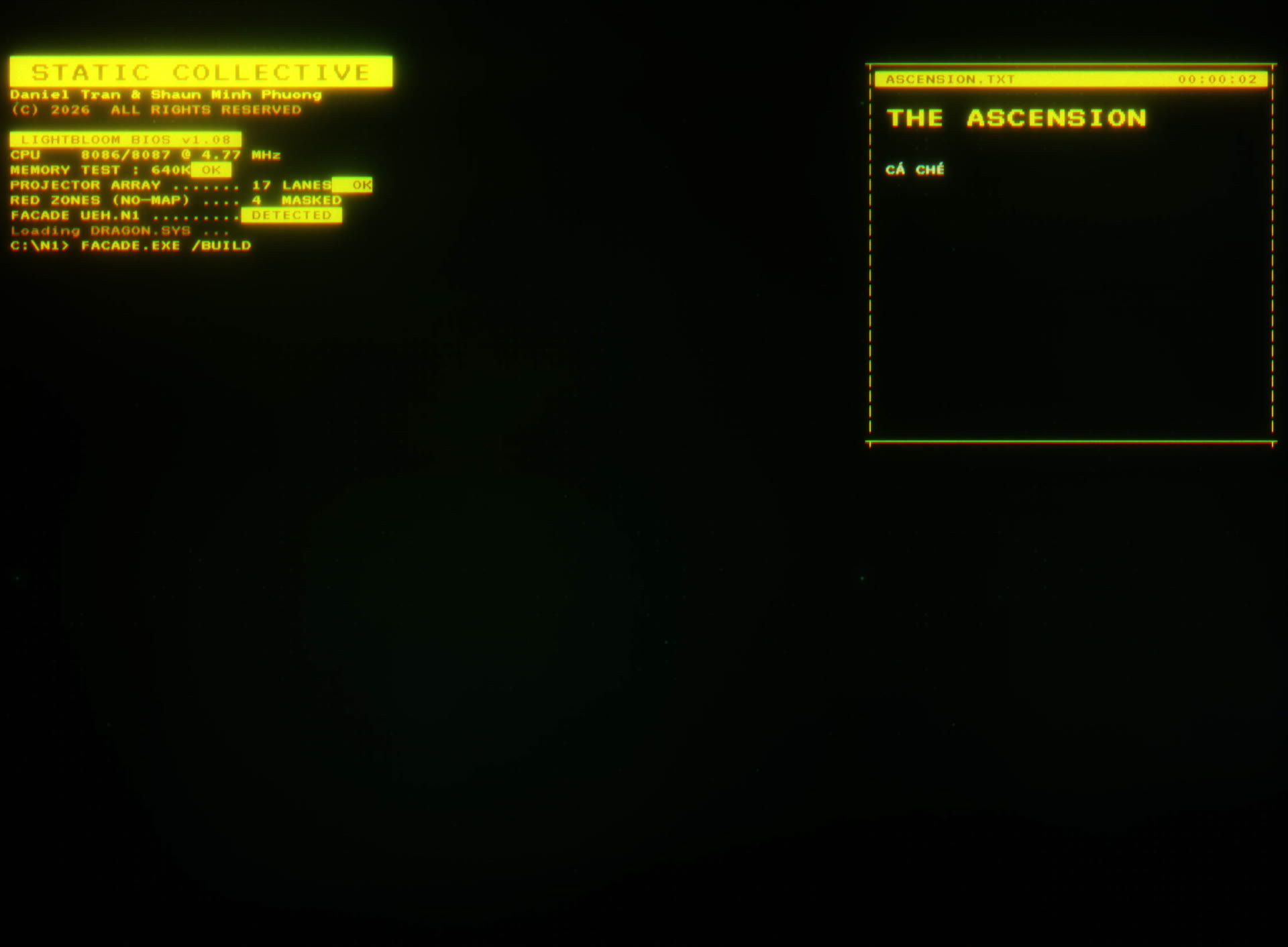
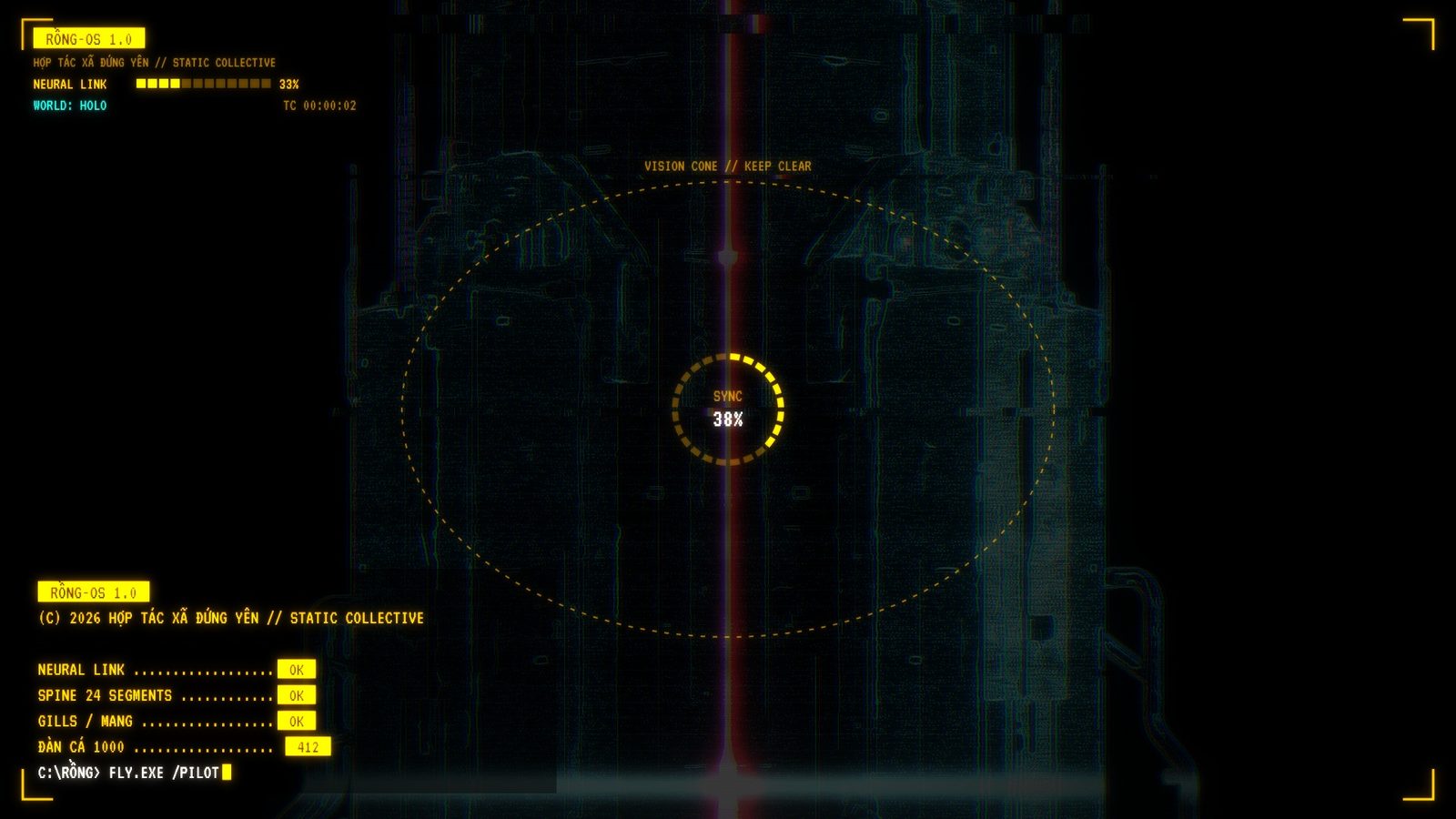
Boot and shutdown, in code

The show opens like a computer starting up. The prologue is a deterministic, code-driven terminal boot (JS canvas rendered to a PNG sequence with Playwright and ffmpeg) that types the story, the credits and stitched ASCII pictures of the carp and dragon onto the lane grid.

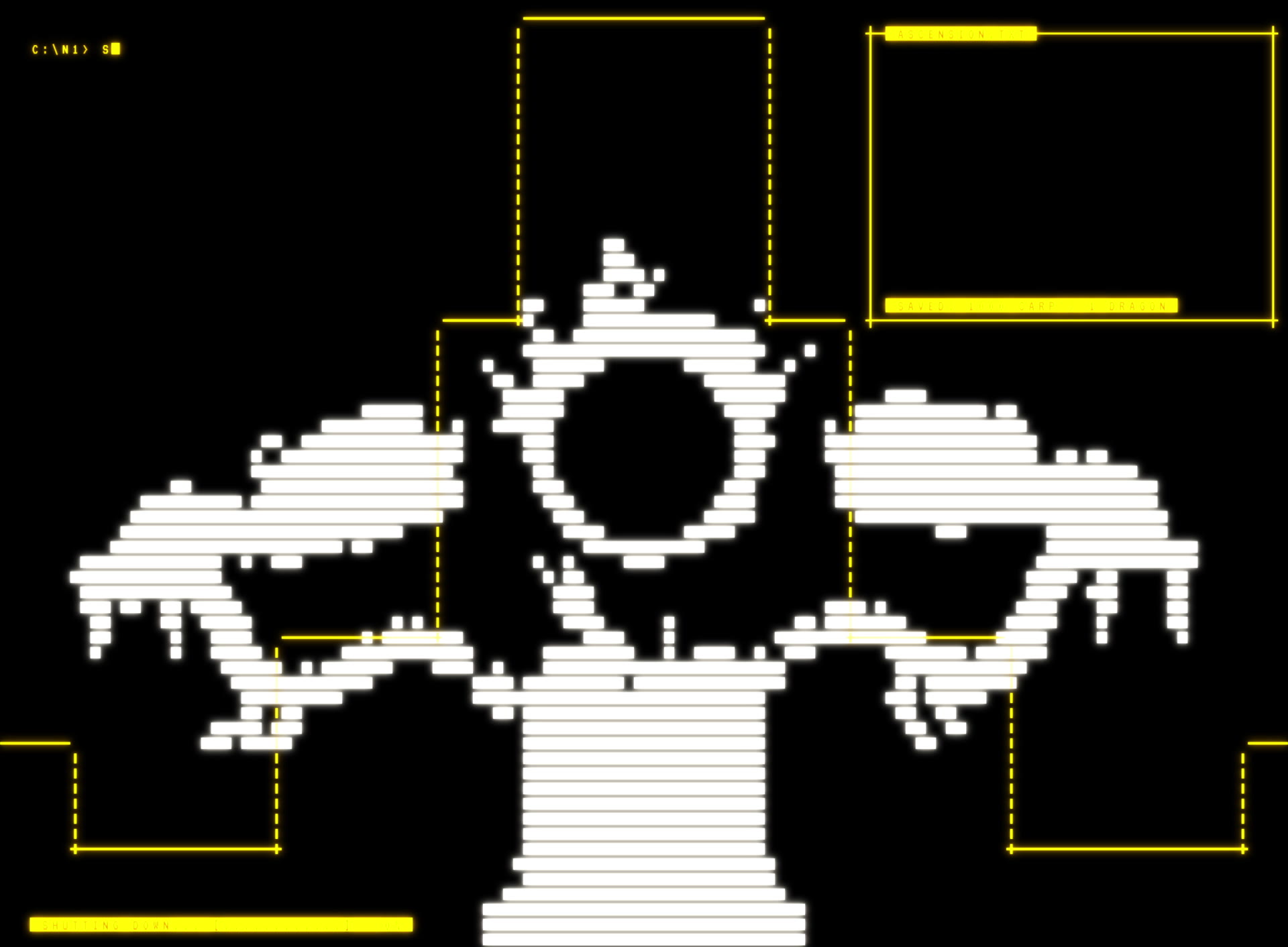
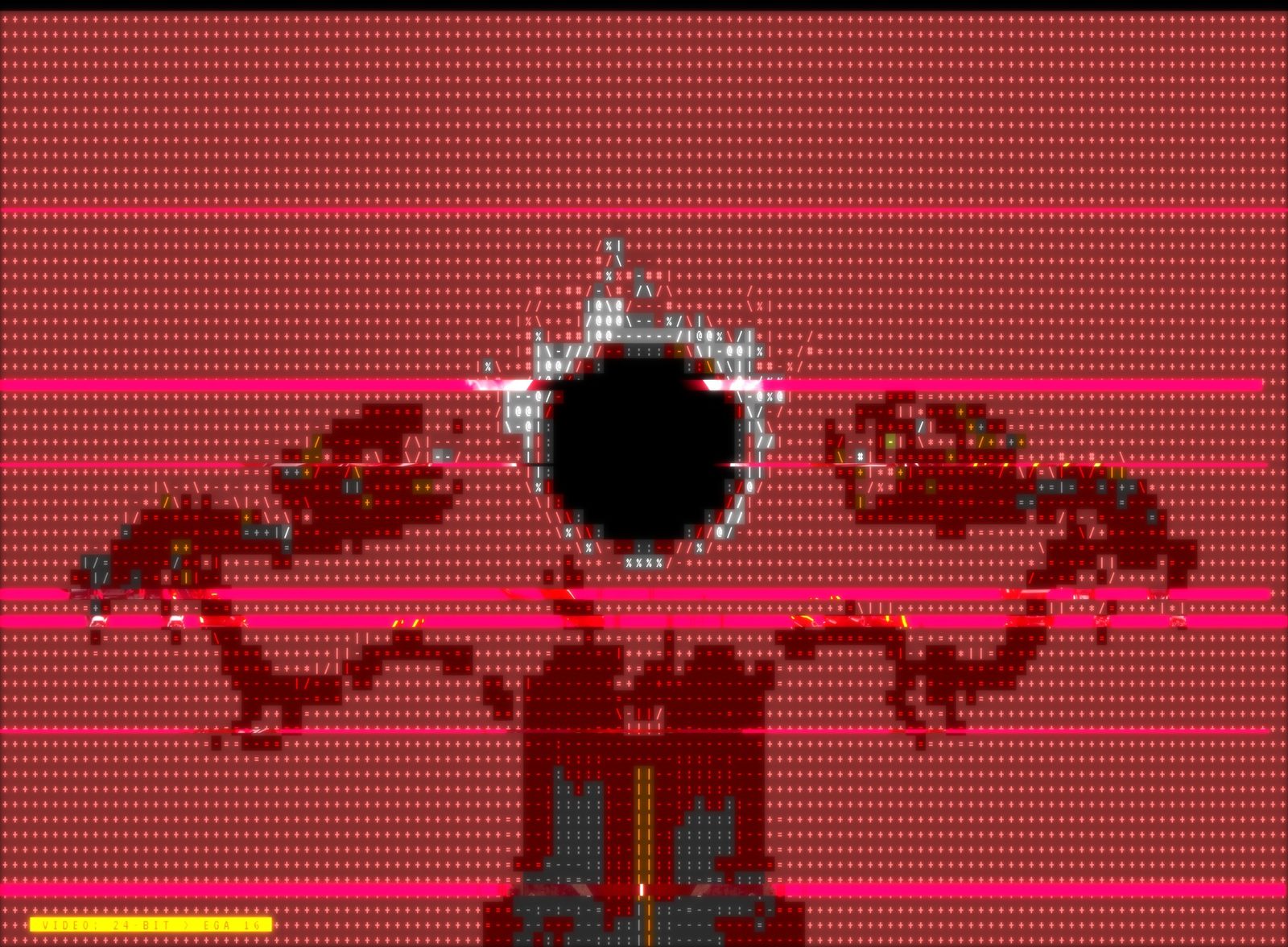
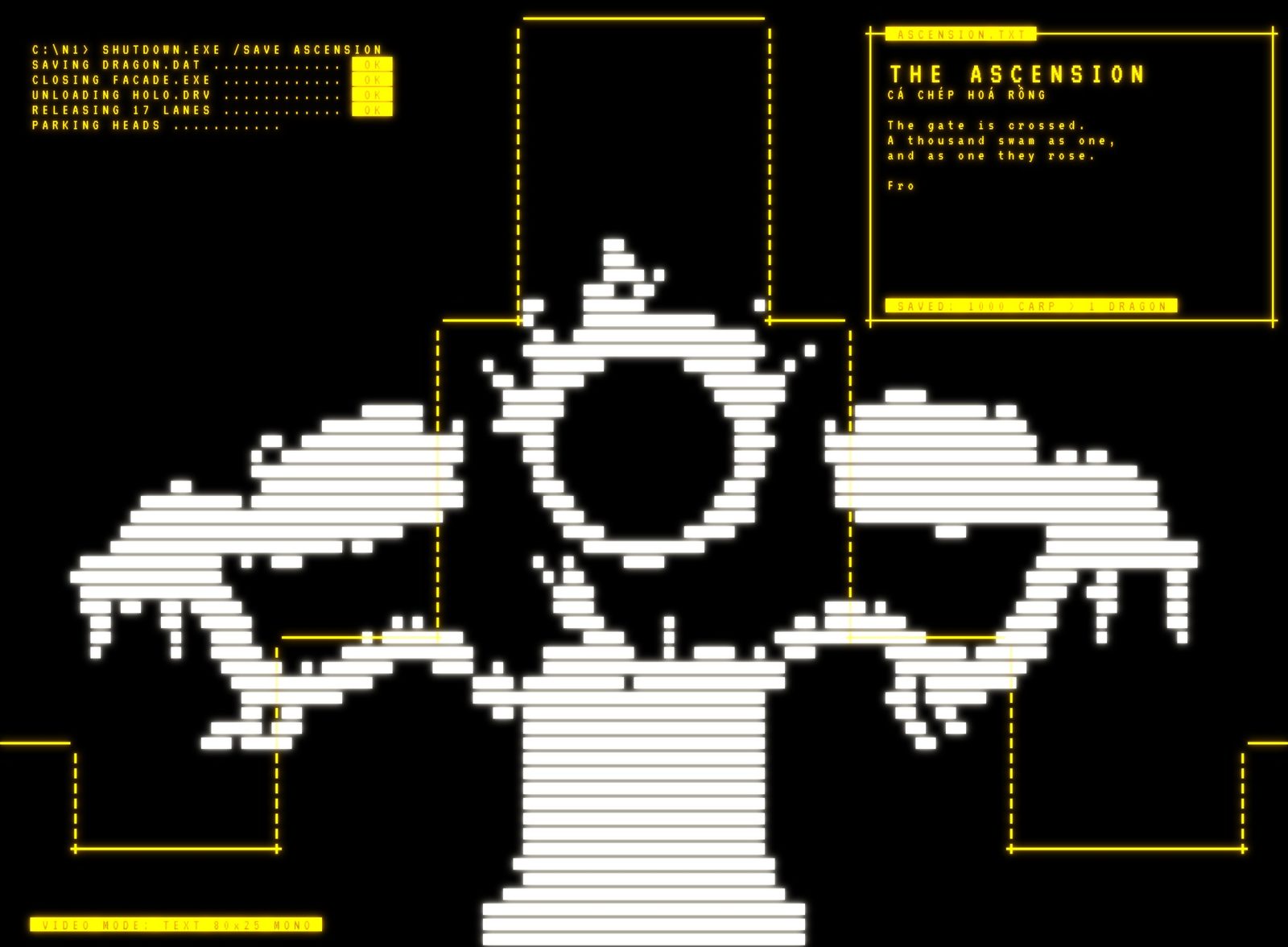
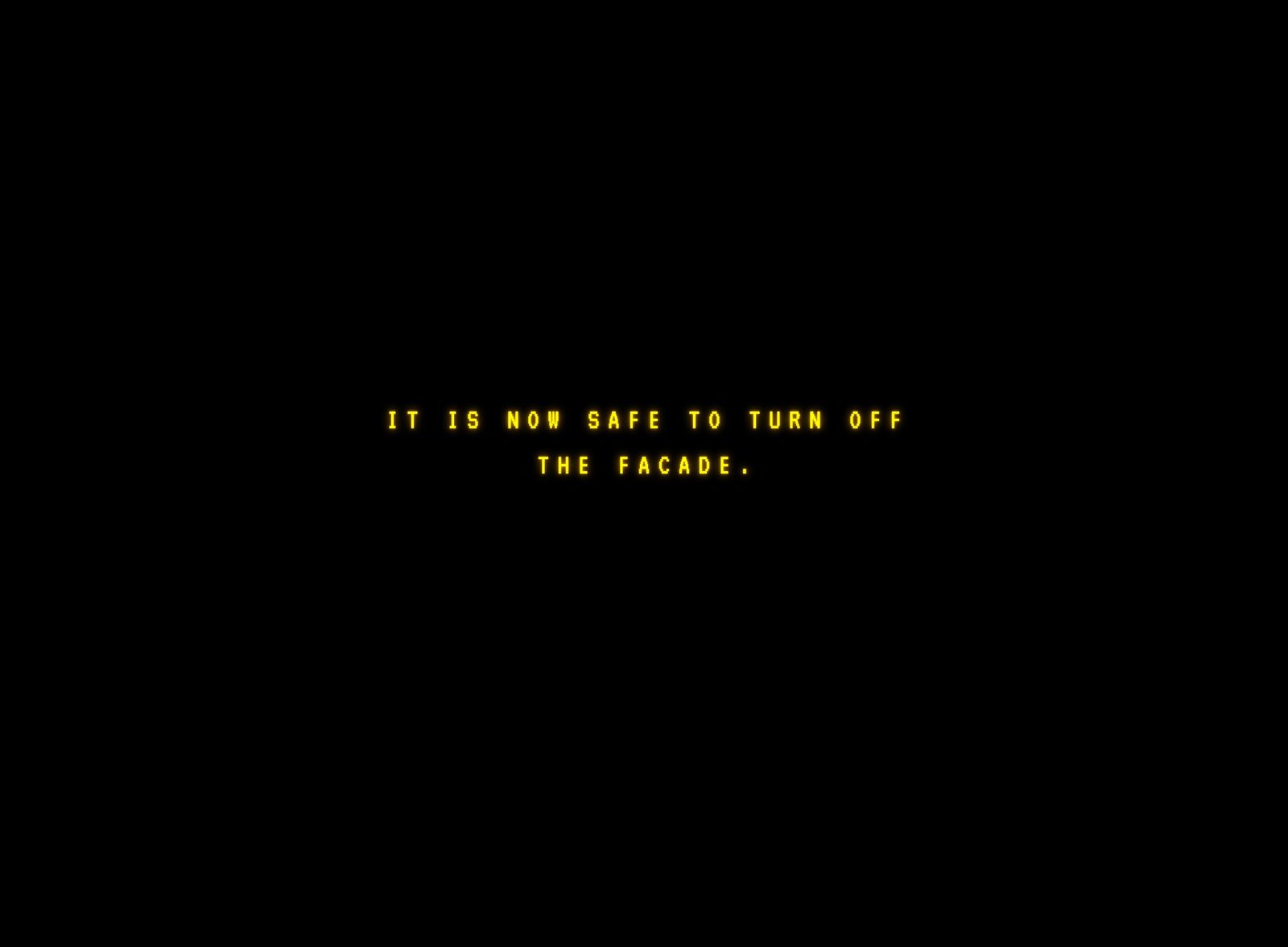
The outro plays it in reverse. A shutdown command types under the final frame, a round glitch wipe opens from the black sun, and the image rewinds through the graphics eras (colour ASCII, EGA, CGA, amber terminal) to “IT IS NOW SAFE TO TURN OFF THE FACADE” and a CRT power-off.

Prologue: terminal boot
Outro: back through the eras
Outro frame, colour ASCII
Outro frame, early graphics
Outro frame, shutdown

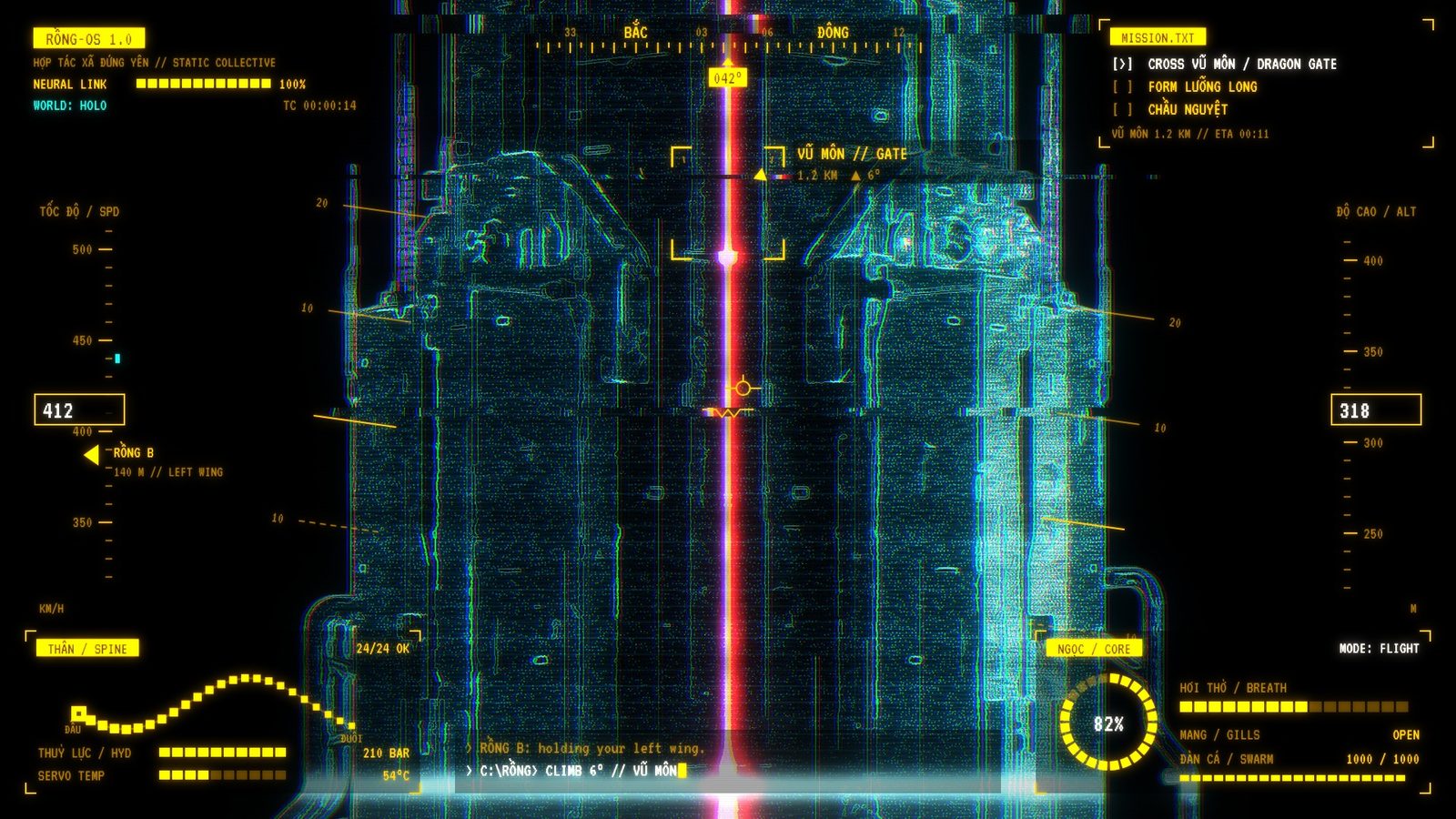
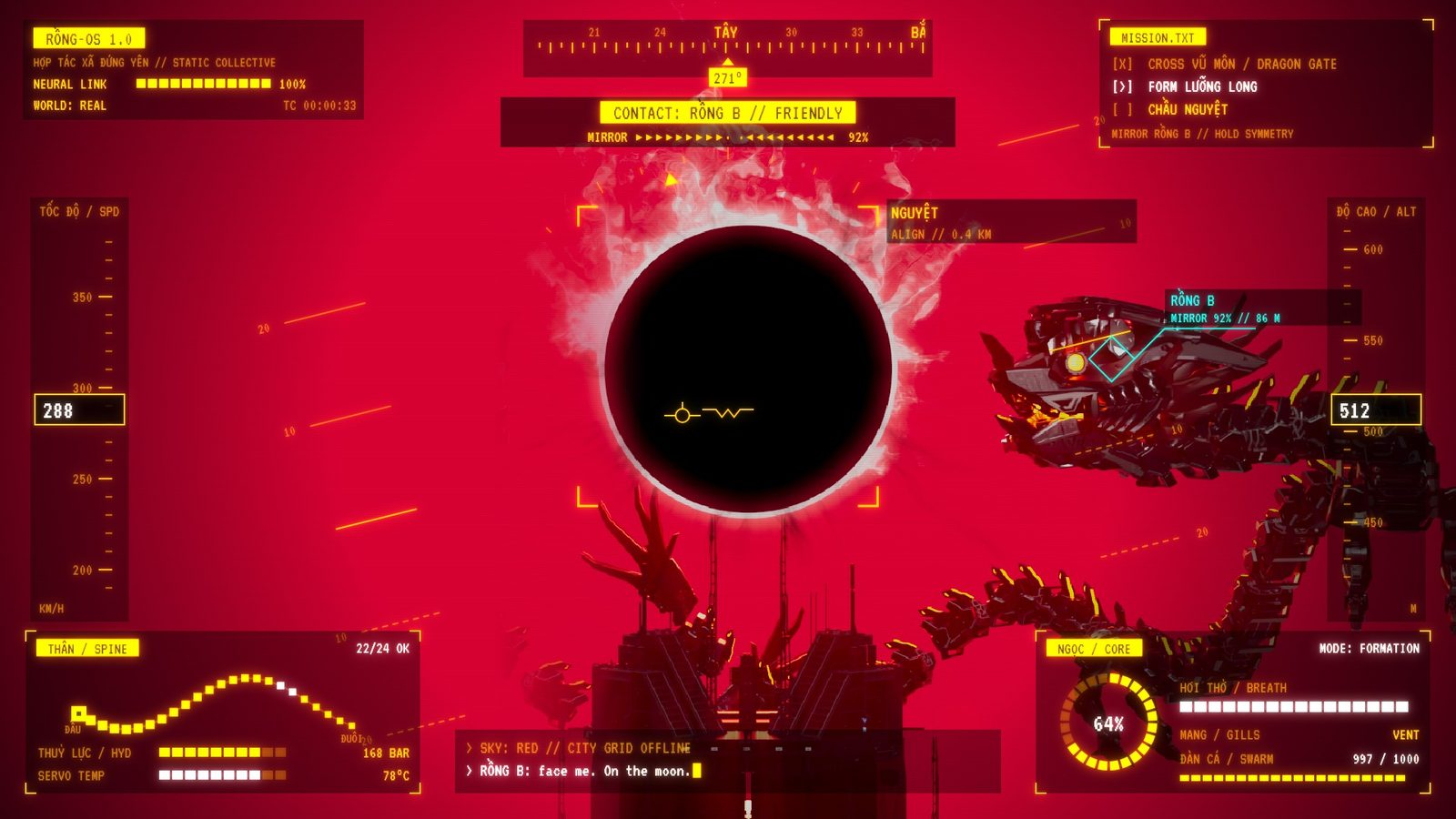
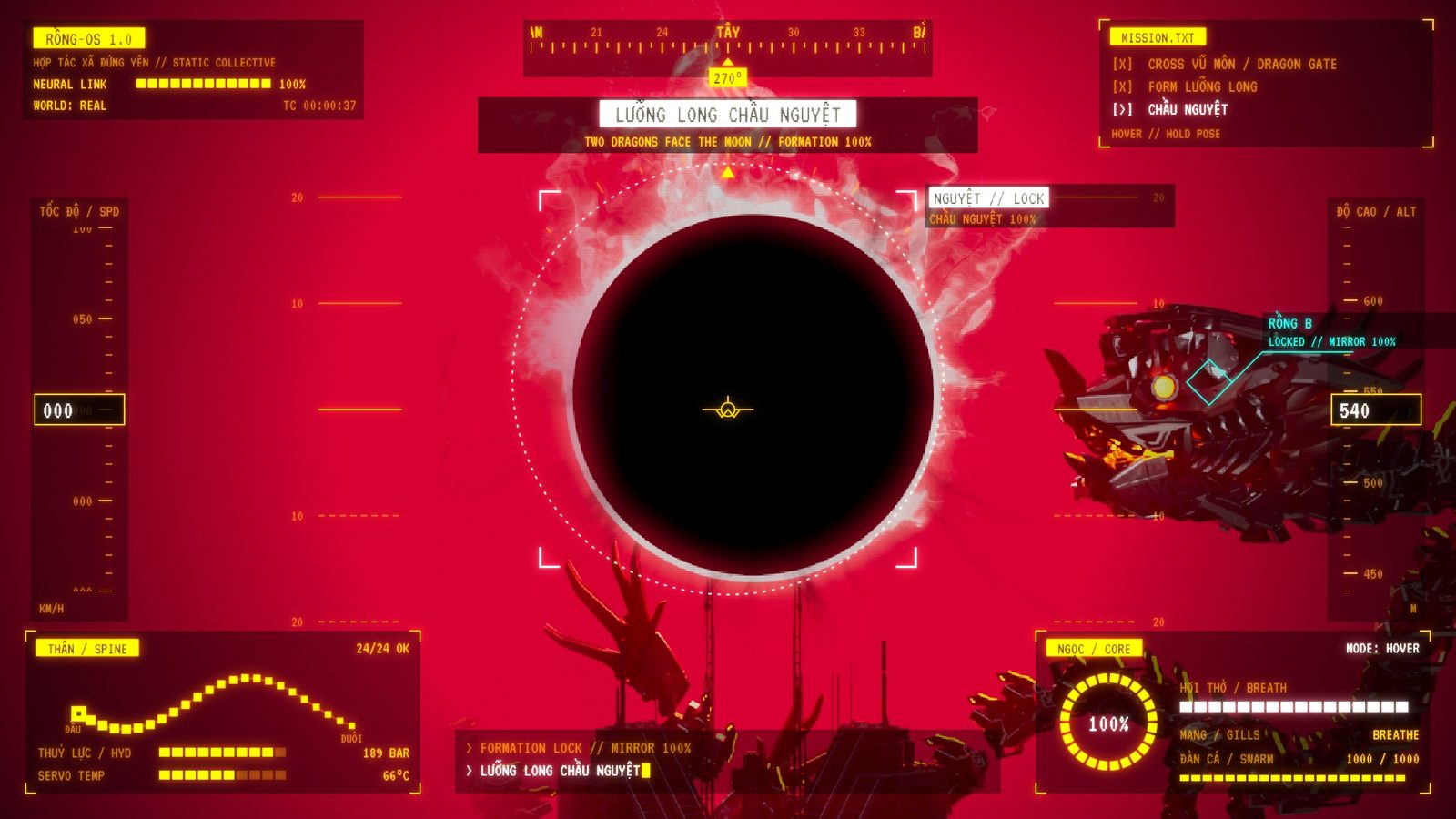
Cockpit UI

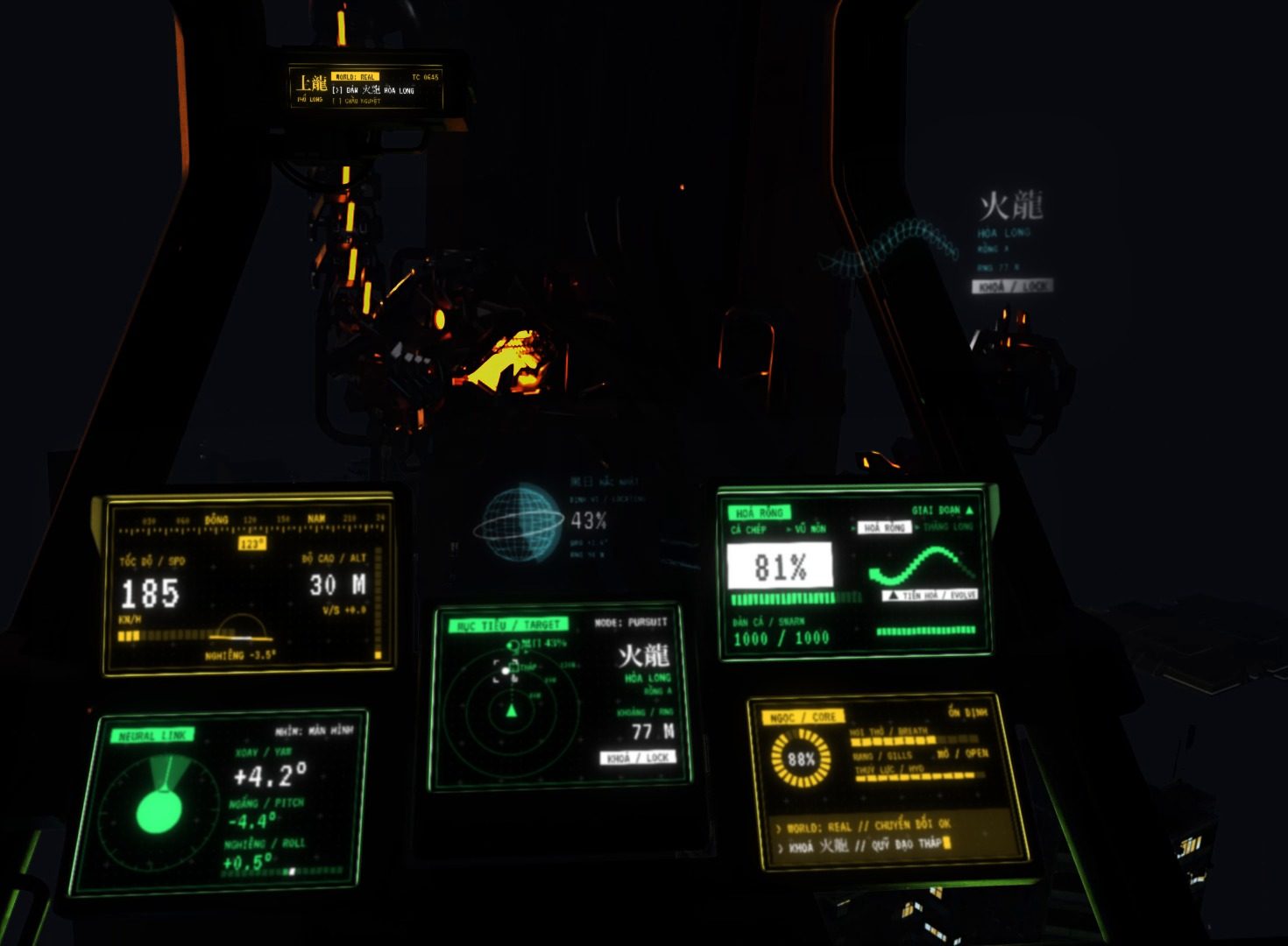
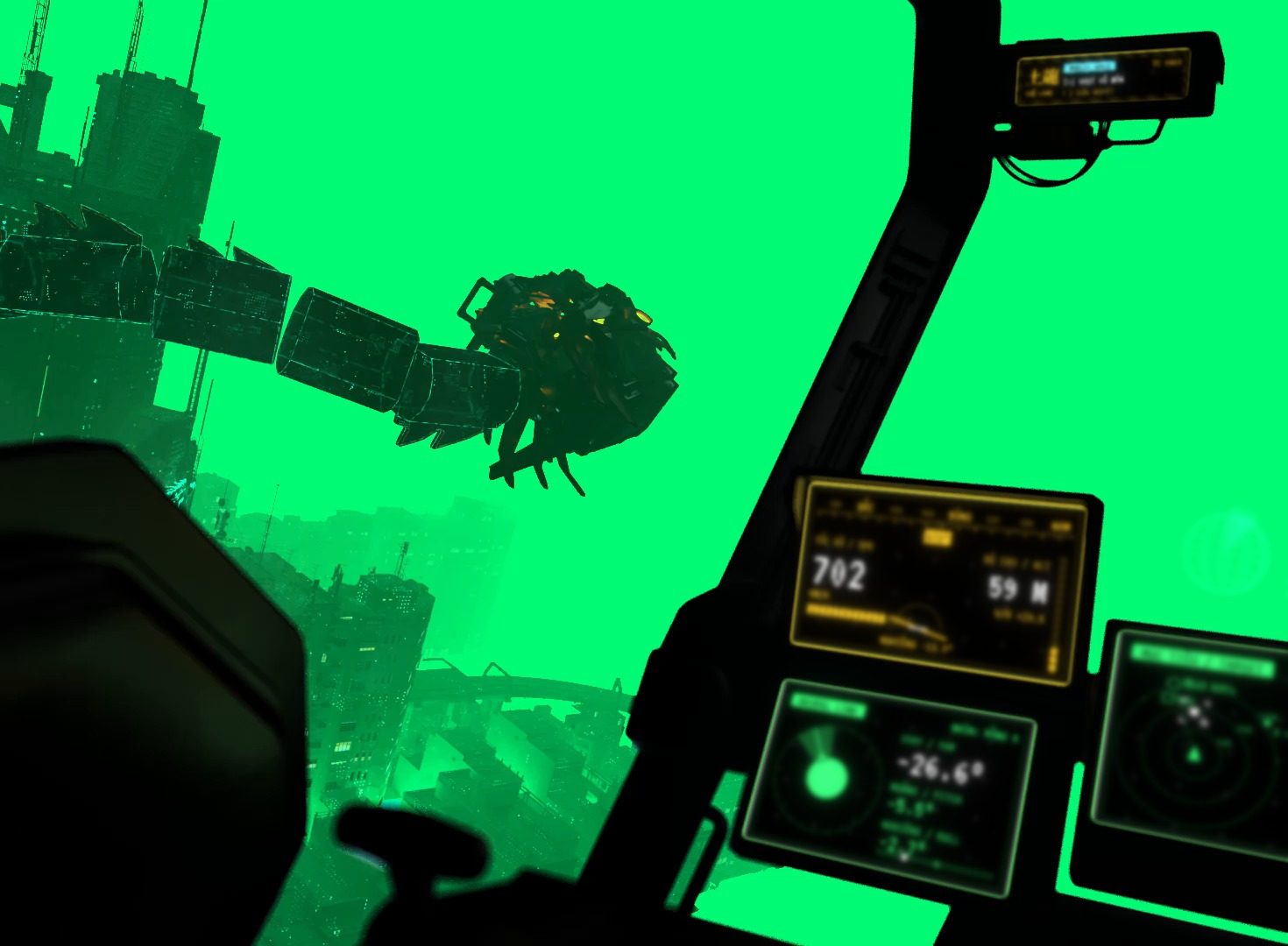
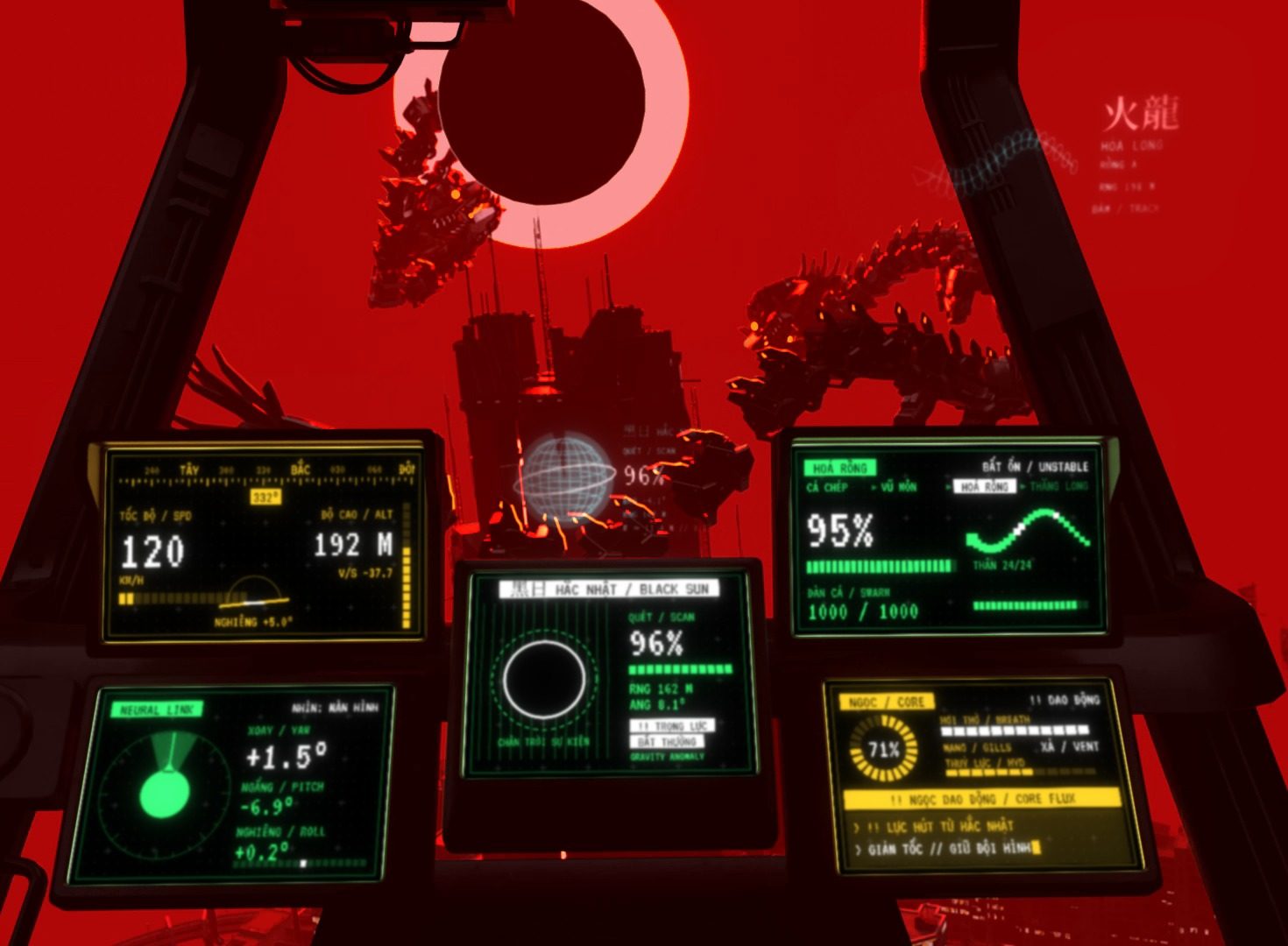
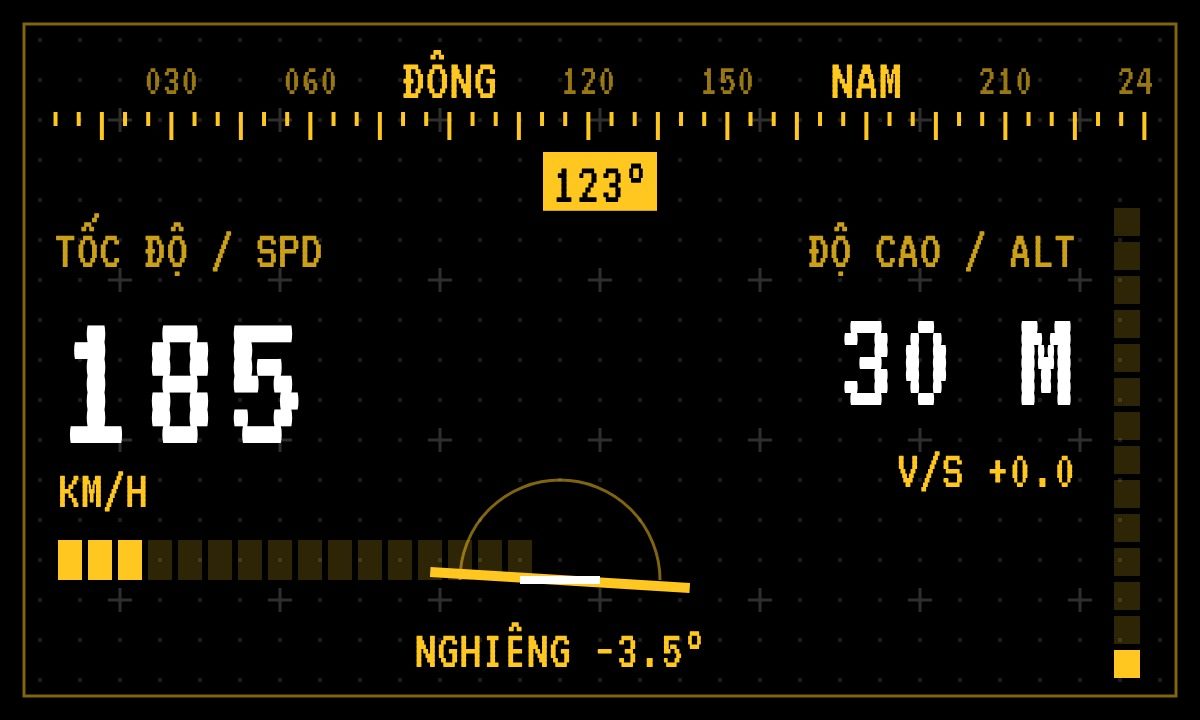
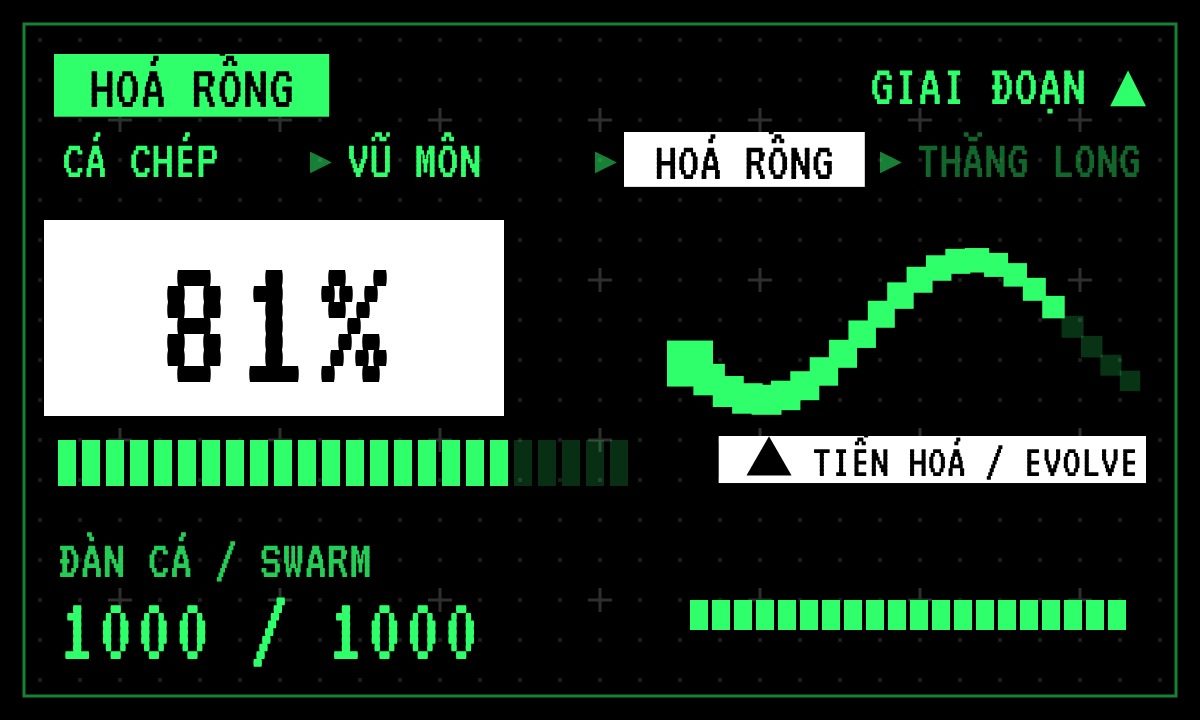
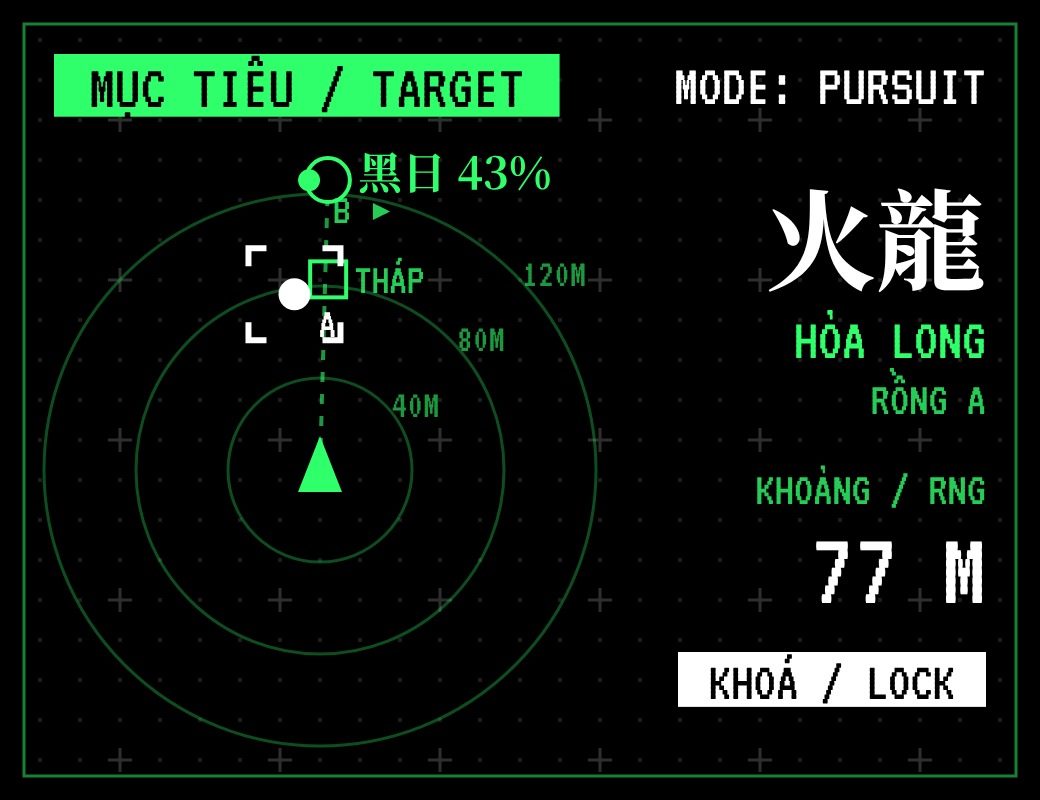
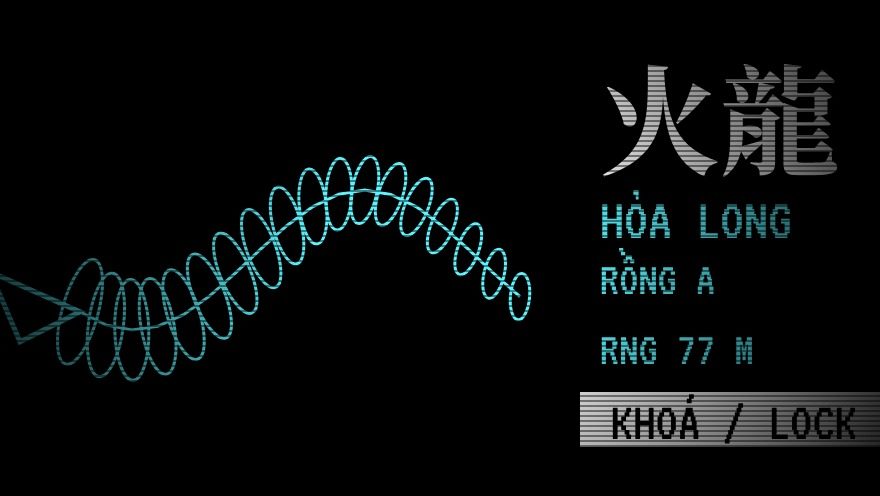
Act 3 puts the audience in the mecha dragon’s cockpit. Its eight screens (six displays and two holograms) show real data: speed, altitude, heading, bank, the pilot’s head-tracking and target ranges are exported per frame from the Cinema 4D scene and drive a code-based renderer, so the interface stays locked to the camera and the story.

The layouts are designed for the lens. Outside the rack-focus moments the screens sit in depth-of-field blur and read only as big blocks and colour; the fine text pays off when the pilot looks down and the focus racks onto the panel. Labels are Vietnamese-first with English, and the screens move through the story’s states, from cruise to pursuit to anomaly, as the black sun closes in.
RONG-OS HUD

Over the cockpit sits the pilot’s heads-up display, which follows the same states: boot, cruise, first contact and target lock.
The cockpit in the shot
Cockpit, cruise
Cockpit, anomaly
Flight data
Flight data
Evolution
Evolution
Target
Target
Hologram
Hologram
Boot
Boot
Cruise
Cruise
Contact
Contact
Lock
Lock

Sound design

Every section has its own sound palette, so the audio travels through the same graphics eras as the picture. PC-speaker beeps and a 50 Hz hum run through it all. The carp close-up uses real Hanoi street-vendor calls, heard through a crushed 2-bit speaker, dry for the puppet and smeared through a loudspeaker for the hologram. The race turns synthwave, and the eclipse goes sacred with a temple bell, mo and chieng.

Every tonal effect is tuned to the music’s F minor, and cues are timed frame by frame from the animation and interface data, so each relay tick, stamp and bell lands on a picture event. Mixed for an outdoor PA.

Sound effects only, 45 s: vendor calls, the race, the transformation, the hologram

On the night

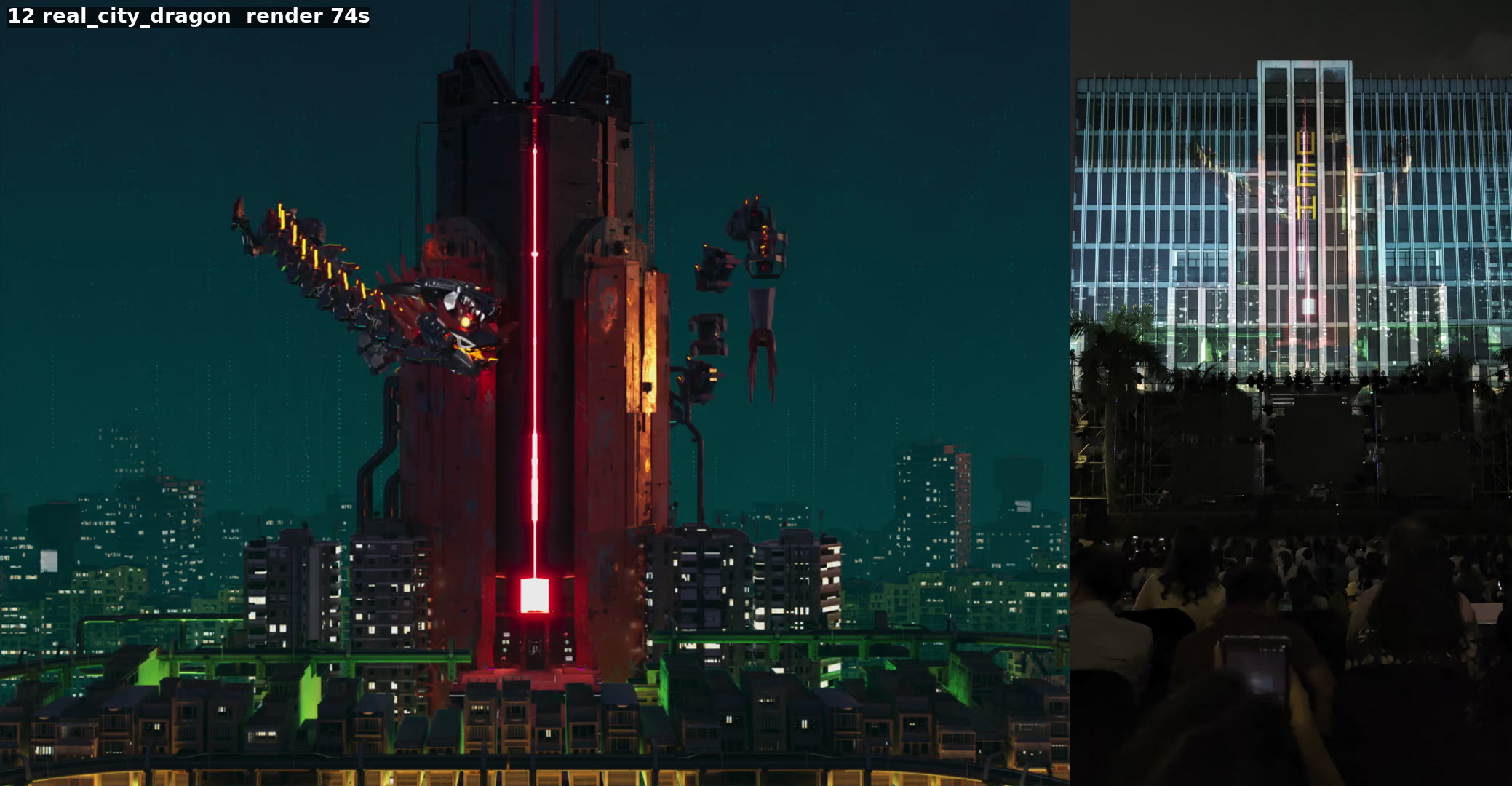
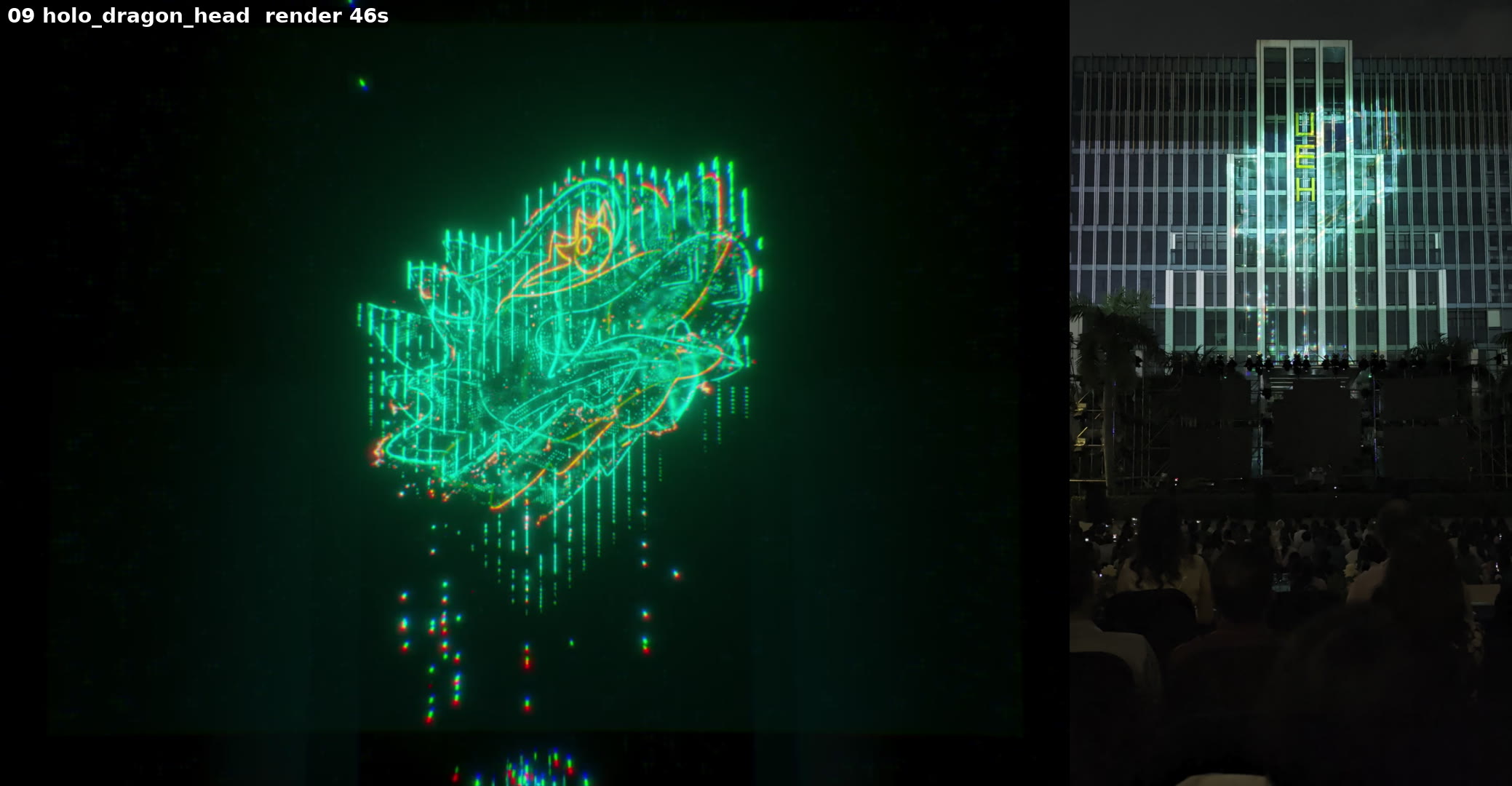
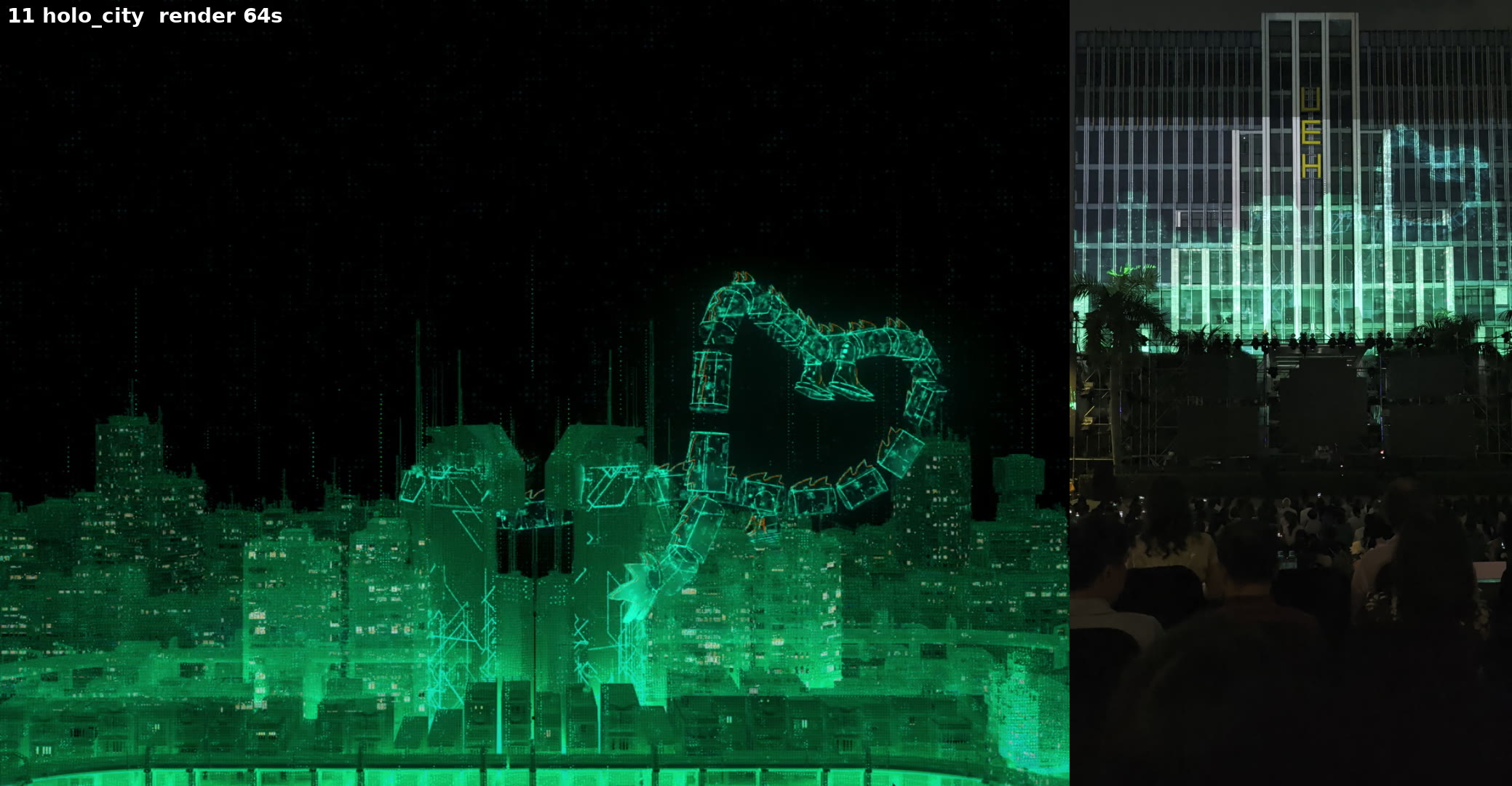
The facade’s extruded grid over glass panels didn’t take light well, so much of the fine detail was lost on the night. Competitions rarely offer an on-site test, so there was no chance to check it beforehand. What worked: bold vertical forms that followed the building’s columns.

Three rules for next time

  • Design for the building, not the screen
  • The smallest detail is one column
  • Simple shapes, high contrast
Render vs the building
Hologram dragon head: render and facade
Hologram city: render and facade
Mecha dragon: render and facade
Eclipse: render and facade
On the night, phone footage

Result

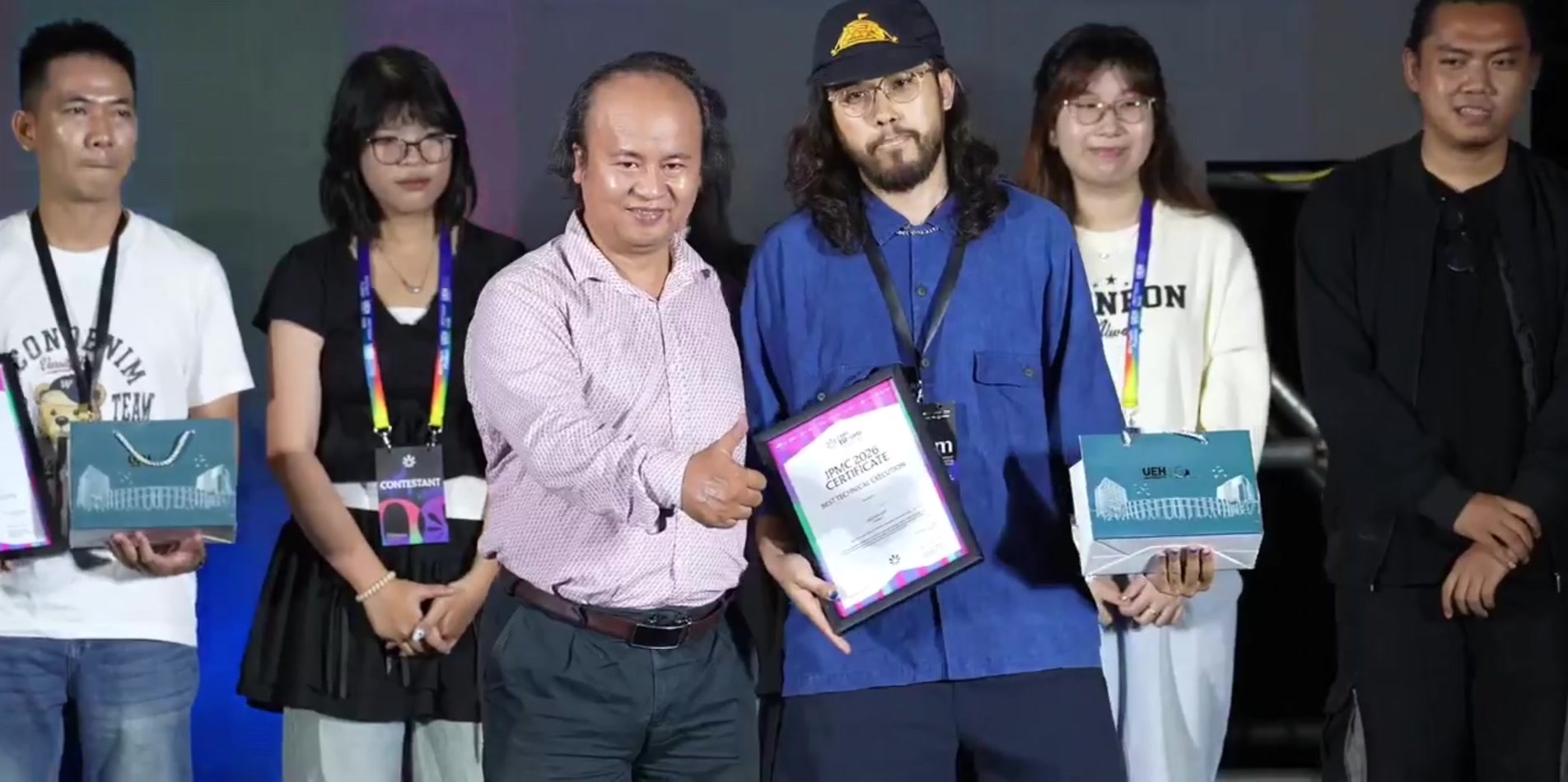
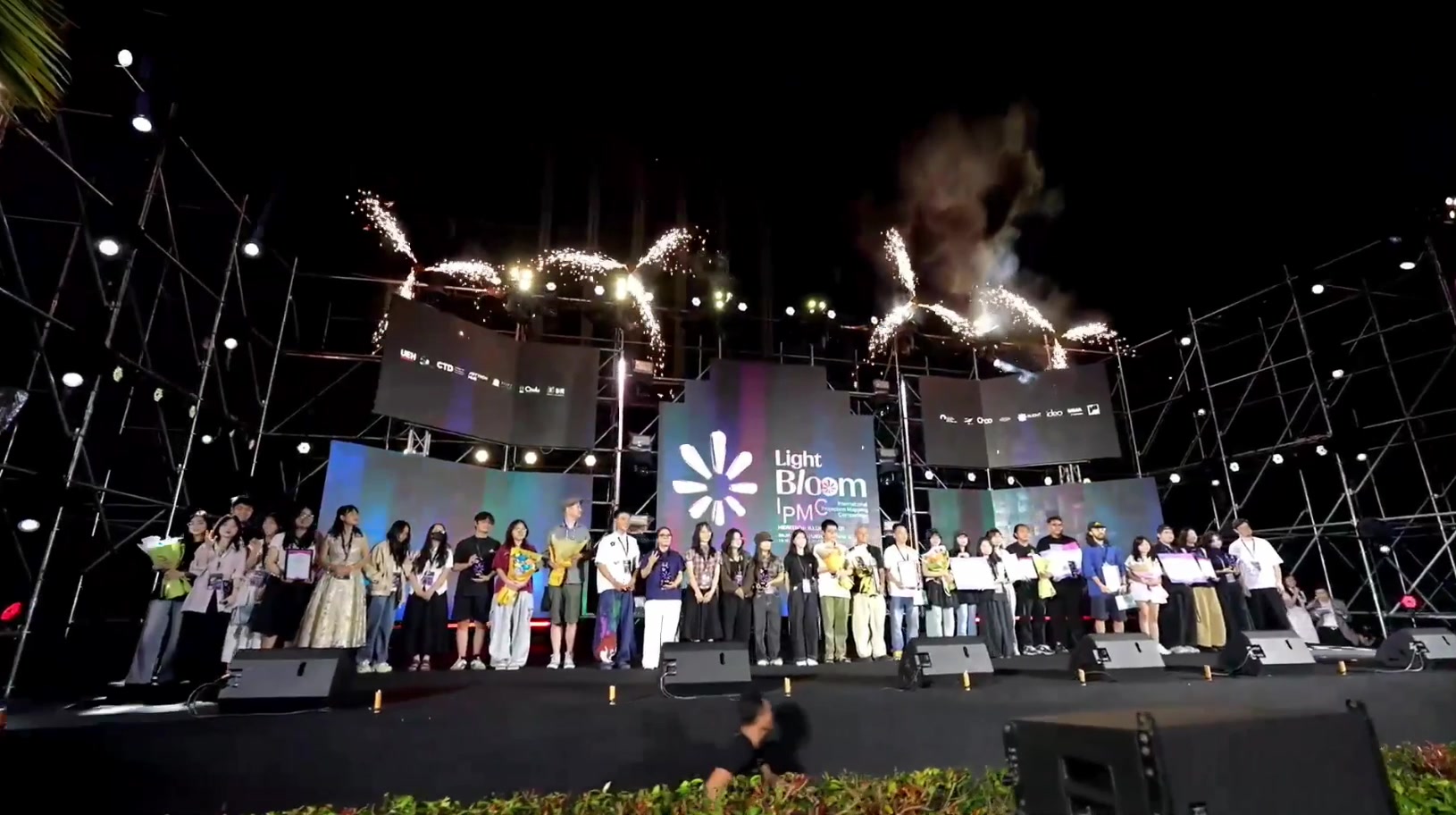
Out of the top 10 finalists projected onto the UEH campus building, The Ascension won Best Technical Execution at Lightbloom International Projection Mapping Competition 2026, organised by ArtTech Hub and UEH University as part of the Alight ASEAN Network.

Best Technical Execution, on stage
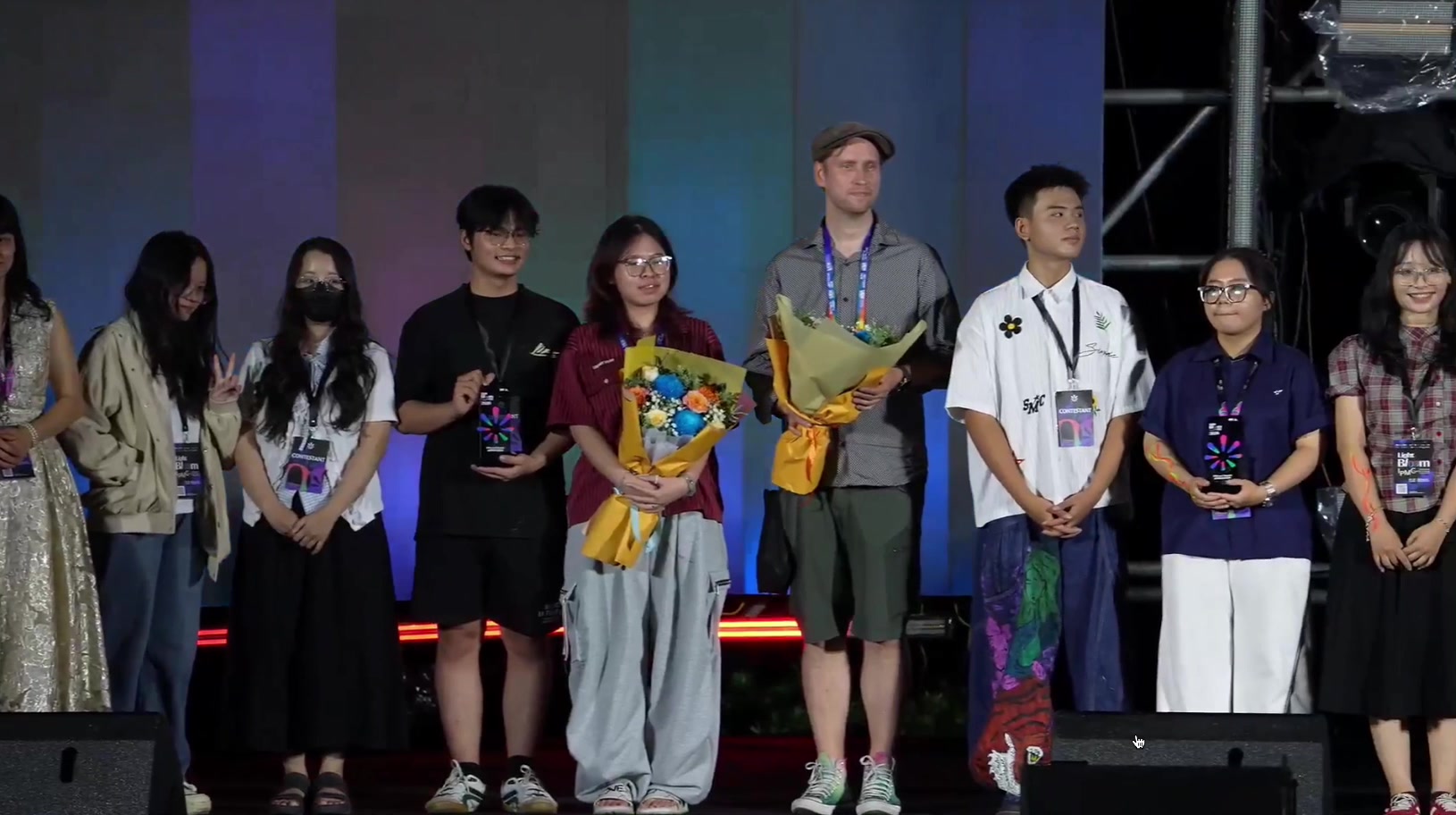
The artists on stage
Award night with fireworks

Credits

Co-directors: concept, direction, design
Daniel Tran (Visual Obscurity) & Shaun Minh Phuong
3D, rigging, animation, look development
Shaun Minh Phuong (Cinema 4D, Octane)
2D motion design
Shaun Minh Phuong & Daniel Tran
UI design
Shaun Minh Phuong
Compositing
Shaun Minh Phuong & Daniel Tran